service genset jogja
Philippians 1:3-5

Unity in Diversity

We are all social animals. We yearn to share our lives with others. Those who don’t know how to play well and get along with others are sometimes referred to as sociopaths. It’s a condition contrary to the normal drive we all have to share our lives with others. Some people are better at it than others 28 fellowshipbut all of us want it. There may be times when we need to be alone just to reconnect with God. Jesus was so surrounded by people that he regularly took time away from people to reconnect with the Father. But that was always a temporary practice. It ended and Jesus returned to His ministry with others. God never intended for us to be lone rangers and to enjoy the things of life as individuals totally apart from a larger community. There would be no need for the Church if He did! No one is wise enough to live alone. No one is strong enough or good enough to go it alone. When we try to isolate ourselves from others sooner or later we’ll learn that God was right when He said in Genesis 2:18, “it’s not good for man to be alone.”

The Church is God’s program in which we share our lives with others and others share their lives with us. The Greek word that is usually translated as “church” is ecclesia. Its literal translation is “gathering of people.” It’s only in communion with others that we can find fulfillment and happiness in life. When Paul was isolated in a Roman prison he wrote the letter to the Philippians. He begins his letter to them in Philippians 1:3-4 by saying, “I thank my God in all my remembrance of you…” Then he adds that he is praying for them “with joy.” What would cause his memory of them be so joyful. The answer is in verse 5; “because of your partnership in the Gospel from the first day until now.” The comment about the first day drives me back to Acts 16 and the founding of the church. He only had three converts; two women and one man. They were extremely different from each other. Lydia was a rich business woman. The slave girl was just that; a slave! Then the soldier comes to Christ. In all you have 3 economic statuses. You have 3 classes. You have two genders, you probably have two or possibly three races. And yet these three came together in a “partnership” to promote the Good News about Jesus.

It reminds me of the Fellowship of the Ring. J.R.R. Tolkien’s task force is made up of individuals of disparate origin and ridiculous diversity that exceed any of our ethnic or social differences: four hobbits, tiny beings with large, hairy, shoeless feet; two men, warriors of the first rank always dressed for battle, one wizard, Gandalf the ancient nemesis of evil, an elf, Legolas, from a fair race of archers of the forest with pointed ears; and a dwarf, Gimli, a stout, hairy, axe-wielding creature from the dark chambers under the mountains. These are very different kinds of beings yet they were bound together by their great mission to defeat the forces of darkness and save the world. In their journey they experienced so much together that they became inseparable. Two of the more radically different beings, the dwarf and the elf became such great friends that Gimli was inducted into an order that had previously been reserved solely for elves. The church is made up of many different kinds of people as well, but our common bond, The Gospel, unites us with an unbreakable bond.


Philippians 1:1, Galatians 3:28

Grace and Peace to You

If you familiar with the Epistles in the Bible you have probably begun to take Paul’s greeting to the Philippians granted. They are simply the common greeting he uses in all of his letters. The 25 snoopystandard letter in Paul’s day included a “from” line. It identified the writers of the letter. In this case it was Paul and Timothy. It then proceeded to note the recipients of the letter and in this case it was the assembly of believers in Philippi along with their elders and deacons. The usual opening then contained a greeting. Sometimes the greeting was “greetings.” That’s what many of the emperors used when they wrote letters to various cities around their empire. It translates the Greek word, “cherein.” It comes from the same root word that Paul’s word for “grace” comes from. But, as Boice observes, “At the same time, however, it is important to note that the words are transformed in Paul’s hands so that they carry Christian meanings. The normal gentile greeting in Greek was cherein, a verb; but Paul uses the noun form of the same root, charis. The difference is slight, but there is a great change in meaning.”

Paul is referring to God’s unmerited favor. He’s reminding his readers that the greeting, although coming from Paul and Timothy actually is from God the Father through Jesus Christ. It’s more than just saying “I greet you.” It’s pronouncing a diving blessing upon the recipients of his letter. God’s grace is the source of our forgiveness. It’s the source of our joy. God’s grace is the basis of our salvation and the assurance of our present happiness and future deliverance from the struggles in this sinful world. It’s the solid basis of God’s love for us. He does not love us because we are such loveable people. He loves us because of His grace. We do not deserve it. We cannot earn it. It is a gift from God through Jesus Christ. Paul has taken the root of the standard Gentile greeting and added to it the depth of God’s unmerited favor to all who come to God through faith in Jesus.

The next part of the greeting in the letter to the Philippians is “peace to you.” The standard Hebrew greeting then and now is the same: shalom. This is the word for peace. Throughout the New Testament we see the war that takes place between Gentile and Jewish believers. Much of the persecution that Christ experienced and that followed Paul from city to city had its roots in the Jewish religious community. As Paul wrote this letter he was imprisoned in Rome because of the accusations brought against him by the Jewish community. Paul is bringing the two greetings together. Because of God’s wonderful grace all men, Jew and Gentile, can experience the peace of God that comes to us through Jesus Christ. As we read further in chapter 1 of the book of Philippians we’ll see that real joy is found in the “peace” that Christ established on the cross for all mankind based on his grace. He wrote to the Galatians that based on the grace that brings peace with God we also have the joy of peace with each other. “There is neither Jew nor Greek, there is neither slave nor free, there is no male and female, for you are all one in Christ Jesus” (Galatians 3:28)

Philippians 1:1

Two Girls and a Guy

We often think that if God is in it, and if we submit to what God wants us to do, everything will go just fine. That just isn’t true. Paul wanted to go east from Troas but God wouldn’t let him. Instead he called him into 24 philippians1Macedonia on the European continent. Philippi was the first stop on his journey. As you may know Paul’s custom was to go into the local synagogue and tell them who were already prepared spiritually that the Messiah had come. It was important to get a foothold in the Jewish community in every city. I think that’s why he had Timothy circumcised before they proceeded on from Lystra to Troas. Paul’s target was the Jewish men. Yet, when they arrived (Luke, Paul, Silas and a circumcised Timothy) in Philippi they found that there wasn’t a synagogue there probably because there weren’t enough men to establish one. If God was in the vision that brought Paul to Philippi you’d think there would have been a synagogue. But there wasn’t. He’d have to change his method! Oh, no! I hate change! When God gave Peter three visions in Acts 10, it was for Him to grasp the fact that God wanted him to change the way he was reaching out. He didn’t want to change either.

They found their way to a site on the river where some women would go to pray. Lydia, a business woman, was the first convert. After Lydia the next convert was the young slave girl who was demon possessed. She used to make lots of money for her owners. I suspect it was by forecasting the outcome of sporting events. Actually, I have no ideas but it had something to do with supernatural forces of evil at work in and through her. When she came to faith she lost the prophetic spirit and her owners had Paul and Silas arrested. They were beaten and thrown into prison. If God was in it, you’d think they would have had an easier time. Further, it was there in the middle of the night that Paul and Silas were singing hymns and an earthquake came and broke open the prison doors. The Jailor, moved by this example of joy amidst tough times, asked Paul what he needed to do to be saved. He became the third convert in Philippi. Two women from vastly different lives and a Roman soldier were the only 3 converts we read about in Paul’s stop at Philippi. If God was in it, you’d expect much greater results.

Paul planted, Silas and Timothy and Luke watered, and eventually God gave the increase. Ten years later while Paul is in prison again in Rome, he writes his short, four-chapter letter to the Philippians and he addresses it to “all the saints, along with the elders and deacons.” From the three very diverse converts came an entire church. It had a very significant body of believers. It had developed and organized around the Biblical model for the plurality of leadership with Elders who provide oversight and deacons who organize various ministries in the assembly. There was no synagogue when Paul arrived but there was a significant church by the time he was done. It might not have always looked like it, but you can believe God was surely in it. We should see that as true in our lives as well. It might not look or feel like it all the time, but when God calls us and we respond, we can be sure God will give the increase sooner or later.

Philippians 1:1

No Title Required

Paul was a visionary leader who led visionary followers to become visionary leaders. Every biography and encyclopedia article about Paul will celebrate his remarkable leadership abilities. What was his secret? He 23 footwashingfollowed the Master’s example. In the opening address to his letter to the Philippians, Paul identifies himself and Timothy in Philippians 1:1 as “servants of Christ Jesus.” Many preachers and commentators fly past these words suggesting that they are just the formal way Paul used in the “from” line of his letters. I think they are worth a little thought. He didn’t identify himself as an elder, deacon, a pastor, an evangelist or as an apostle, but he was truly all of these things. He preferred the title “servant.”

Much of the Leadership literature today speaks about “Servant Leadership.” In the 1980’s the term began to show up pretty regularly in a lot of secular literature on the subject of leadership. But it has proven to be an extremely difficult concept to bring into the corporate world. It’s even more difficult in the church. Religious organizations apply titles of honor on their leaders such as Father, Priest, Pastor, Minister, Doctor, and Reverend to name those that immediately come to mind. We often dress them in special garments that set them apart from others. But Paul would have none of that. Paul’s normal address of himself was simply “Paul.” He often added “a servant of Christ Jesus.” Paul once had all the titles and honors of a Religious leader who could trace his lineage back to Benjamin. But once he encountered the living Christ he counted all his titles as “rubbish.” He hung all his credentials and accomplishment on that rack as well. In Philippians 3 he listed all his credentials and then said in verse 8, “I count everything as loss because of the surpassing worth of knowing Christ Jesus my Lord. For his sake I have suffered the loss of all things and count them as rubbish…” Instead of titles and honors, at every possible point, Paul pointed away from himself toward Jesus Christ. That is the essence of servant leadership.

Jesus is the supreme example and until one becomes a follower and servant of Jesus they will never be able to follow the example that is displayed in such a humble act as foot-washing. Liefeld argues, “First, one must come to the cross of Jesus where his love, forgiveness, and servant hood were supremely displayed. It is the cross of Christ and the subsequent bestowal of the Holy Spirit that are going to reveal to the disciples the secret of servant-leadership. The pre-requisite for understanding and practicing servant-leadership is the acknowledgement of Jesus’ death and resurrection.” After He washed his disciples’ feet he called them, and He calls us, to do the same thing, i.e., serve each other with humility. Jesus calls us all to follow Him. He calls us all to be a servant leader. No degree required! No office necessary!

Philippians 1:1, Acts 16:10-12

On Being a Visionary Follower

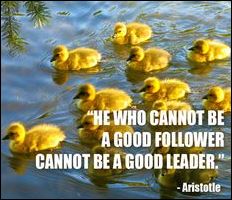
The letter to the Philippians was addressed from “Paul and Timothy.” But Paul had three companions. We know that Silas went with Paul on this journey from Antioch. On his way to Troas Paul picked up Timothy 22 aristotlein Lystra, had him circumcised to make him acceptable to a Jewish audience and then brought him with him into Macedonia. In Troas he picked up Luke as his third companion. The story in Acts 16:10, shifts from third person plural to first person plural meaning that the writer must have joined the group in Troas. Acts 16:11-12 says, “So, setting sail from Troas, we made a direct voyage to Samothrace, and the following day to Neapolis, and from there to Philippi.” Paul did not plant the church in Philippi by himself. He had Timothy, Silas and Luke with him.

Paul was a visionary leader. In Luke’s account recorded in Acts 16:10 he makes it clear that it was Paul that God called with the vision, but they all knew God wanted them to be in on it. Luke writes, “And when Paul had seen the vision, immediately we sought to go on into Macedonia, concluding that God had called us to preach the gospel to them.” They didn’t just say, “Ok Paul we’ll go with you.” They didn’t say “Paul called us.” No, they said that through Paul’s vision “God called us.” They already understood the mission to “make disciples” by preaching the Gospel, but they needed strategic direction regarding the where, how, why and who they should try to reach. These three men experienced God’s call through Paul’s vision. They were visionary followers!

Every Christian is called to be a visionary leader. But most Christians don’t realize that calling because before anyone can be a visionary leader they must learn how to be a visionary follower. Luke, the Physician, became the greatest apologist to ever live. His historically accurate and extremely detailed Gospel has convinced millions of the truth of Jesus Christ. After following the visionary leadership of Paul for many years, Timothy became recognized as the visionary leader for the Church at Corinth and later at Ephesus. Two books in the Bible were written to him! After following Paul’s visionary leadership, Silas became a visionary leader for the church at Antioch. It was Silas who carried the decisions of the Jerusalem Council to Antioch. Terry Muck said, “As editor of Leadership Journal for ten years, I visited hundreds of churches across the country and met thousands of pastors and lay leaders. Among the many things I learned, one issue stands out: how difficult it is to lead a church community today. It is not difficult, mind you, to grow a church, to manage the day-to-day affairs of a church, or to chair committees and task forces. True leadership, however, is another matter. It’s tough to lead primarily because people don’t want to be led.” If you can’t embrace the visionary leadership of someone else, you will never become a visionary leader!

Acts 16:10

The Joy of a Clear Vision

I only got to Ecclesiastes 8:15 in my study of that book but considering that I’m beginning a study of Philippians I couldn’t have ended at a more appropriate verse. Solomon says, “I commend joy, for man has nothing 21 clear visionbetter under the sun but to eat and drink and be joyful, for this will go with him in his toil through the days of his life that God has given him under the sun.” The book of Philippians is Paul’s commendation of joy to us also. James Boice introduces his study of the book by saying, “The letter to the Philippians is one of the most joyous books in the Bible. All the way through the letter Paul speaks of inner joy, of inner happiness—sixteen times in four brief chapters. And he does it in such an artless way we know that the one who advised the Philippians to ‘rejoice in the Lord always’ had himself found the true source of joy. He had not only learned in whatever state he was to be content; he had learned to rejoice in whatever state he was. He overflowed with rejoicing.” We can too!

It was a dream in which Paul had a vision that moved him to travel to Philippi. On his 2nd missionary journey he found himself back in Asia Minor looking for a destination to the east. But he didn’t feel peace about any of his choices. He never even considered going west into Macedonia. That would take him to Europe! He didn’t want to go to Europe! But God wanted him to! In the vision Paul saw a man crying out to him for help, pleading with him to come to Europe. Acts 16:10 says, “And when Paul had seen the vision, immediately we sought to go on into Macedonia, concluding that God had called us to preach the gospel to them.” It’s interesting to me that in Acts 10 it took three visions from God to motivate Peter to answer the call for help from a gentile outside his comfort Zone. Paul seemed to grasp the significance right away. He became the New Testament’s greatest visionary. He had a vision to reach people in Rome and as far west as Spain.

Paul knew his mission well: to preach the Gospel, or make disciples! Paul had a divinely appointed mission, but no divinely inspired vision. That’s why he was frustrated on his 2nd missionary journey until God gave him the vision to go west into Europe. Nothing ever happens if there is no vision fueled by the conviction that this is what God wants “us” to do. Each Christian has a divinely appointed mission; to contribute their time, energy and resources to the overall mission Jesus gave the church to “make disciples.” It’s vision that energizes the fulfillment of a mission. Vision is strategic. It gives us direction! It clears the confusion. It informs us on how we as a church and as individuals can uniquely fulfill our mission. It answers the question regarding “who” we will reach out to. Vision enables us to understand how we as a church or as individuals are distinct from other Christians or churches. It informs us of where our ministry is taking us. It is vision that inspires and energizes us. It also makes life meaningful and fills us with joy! That’s why Paul said, “…immediately we sought to go on into Macedonia.” With a clear vision of what God wants us to do with our lives joy will, “go with us in our toil through the days of our life that God has given us under the sun.”

Luke 8:53, John 16:33

The Last Laugh

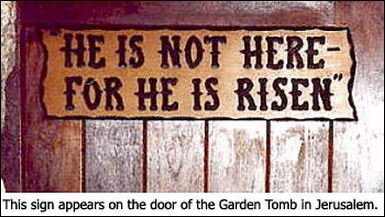
I expect we’ve all heard the saying, “he who laughs last laughs best.” Jesus will always get the last laugh. Do you remember Jairus’ 12 year old daughter? She was near death and Jairus pleaded with 18 risenJesus to come to her and heal her. But Jesus was interrupted on His way by a woman who had suffered many years with a particular illness. Jesus postponed His meeting with Jairus’ daughter to take care of this woman. A messenger arrived telling Jesus not to bother because the little girl had died in the interim. When Jesus arrived at Jairus’ house, it was filled with mourners. Jesus told them not to weep because the girl wasn’t dead but just sleeping. Luke 8:53 records their response: “And they laughed at him, knowing that she was dead.” But Jesus went into the house and raised her up and returned her to her father and everyone marveled. I think Jesus might have laughed! I know I would have!

Abraham, the great man of faith, was promised a son. He then lived for 25 more years, approaching 100 years of age and still hadn’t had a son. God renewed His promise to Abraham and Abraham laughed. No! Genesis 17:17 tells us “Then Abraham fell on his face and laughed…” it sounded so hilarious to Abraham that he lost control and fell to the ground with laughter. I need not remind you that Sarah also laughed. After all she was 90 years old and way beyond menopause! My wife and I are in our sixties and if God, or anyone suggested we were going to have a baby, I would have great difficulty keeping a straight face. Wouldn’t you? But God got the last laugh. A baby boy was born to Sarah as predicted! He directed Abraham to name the boy Isaac, which means, laughter!

Isaac was the son of promise through whom another son would be born who would bring God’s blessing upon the whole world. For several millenniums “Laughter’s” descendants awaited the fulfillment of that promise. Then another child was miraculously conceived by a virgin and brought forth her first born son and named Him Jesus. He brought healing, freedom, joy and laughter to all who received Him. In response the religious community arrested Him, tried Him, convicted Him, abused Him, and hung Him on a cross to die. While suffering, they spit at Him, mocked Him and laughed at Him! But Jesus, once again, gets the last laugh! After three days in the tomb, Jesus rose from the dead! If at no other time, at Easter every believer should be laughing their heads off. It’s the celebration of the last laugh. It is our last laugh also. In John 16:33 Jesus says, “I have said this to you, that in me you may have peace. In the world you have tribulation; but be of good cheer (be happy! Laugh!), I have overcome the world.”

Luke 6:21

A Kingdom of Laughter

There is another pair of verses in the New Testament in which Jesus, Himself, speaks about laughter. He validates the teaching of Solomon regarding the extremes of life; a time to weep and a time to laugh. There is a time for every 17 time to laughpurpose under heaven. They will come to us all. But Jesus speaks to us about a future event when God’s kingdom will come on earth. We all walk through the valley of the shadow of death. We all suffer, we all lose loved ones. As the King of God’s Kingdom, Jesus makes us a promise. In Luke 6:21 He says, “Blessed are you who weep now, for you shall laugh.” Luke 6:25 reverses the promise. It says, “Woe to you who laugh now, for you shall mourn and weep.”

The woe pronounced upon those who laugh is not directed at having a sense of humor or an innocent kind of laugh. As Darrell Bock says, “…γελάω is often tied to laughter that is boastful, self-satisfied, condescending, or rejoicing in the harm that others experience. For example, Lam. 1:7 uses the term of how the enemies laughed or gloated at Jerusalem’s destruction. Thus, the picture is of a person of worldly ease who is indifferent because of self-satisfaction.” That kind of laughter will be turned into mourning. The prosperous, powerful and popular often look at the poor, weak, and the simple with derision. But in the Kingdom of God real joy and real laughter belong only to the poor, the weak and the simple of this life that understand their state and turn to God for salvation.

Laughter is part of God’s plan for us in the mystery form of God’s kingdom, the Church, and ultimately in the realized form of God’s kingdom in the eternal future. I like the way Martin Luther translated 2 Corinthians 4:17; “…After brief weeping comes eternal laughter; after a small sorrow comes eternal joy.” When Jesus taught in the synagogue at Nazareth He read from Isaiah 61:1-4, and then said that this passage is being fulfilled as they watch His ministry of healing, setting prisoners free and preaching good news to the poor. Another thing He does in this passage is give us “the oil of gladness instead mourning.” We still view the mark of faith to be a serious and sober expression. But as Oswald Sanders said, “Should we not see that lines of laughter about the eyes are just as much marks of faith as are the lines of care and seriousness? Is laughter pagan? We have already allowed too much that is good to be lost to the church and cast many pearls before swine. A church is in a bad way when it banishes laughter from the sanctuary and leaves it to the cabaret, the nightclub, and the toastmasters.” Absolutely! Abraham Lincoln said, “If I did not laugh, I would die.”

sewa motor jogja
© Chuck Larsen 2019. Powered by WordPress.