service genset jogja
Matthew 5:18

Israel or Bust!

37 of us will leave for Israel on June 12th. Our route will take us from Omaha to Charlotte to Philadelphia to Tel Aviv. When we land at Ben Gurion Airport in Tel Aviv, we’ll make our way up the Highway by the Sea (The Via Maris) 24 orthodox jewsto the Dan Caesarea Hotel for the night. We’ll pass by Bene Berak, one of the more interesting suburbs of Tel Aviv. It’s the only large city (150,000) whose inhabitants are mainly ultra-Orthodox Jews. It’s a small area with a large population and is one of the poorest cities. Its birthrate is one of the highest in the Country as well. Its name is mentioned only once in the Bible, in Joshua 19:45, as being one of the cities given by Joshua to the tribe of Dan. Thus, it’s a very ancient site. Since the establishment of Israel as a state, many of the “Grand Rabbis” moved their courts to Bene Barak. The city’s religious character gives it a special charm. It has no modish fashion shops, yuppie coffee houses, or posh restaurants, but it has an extraordinary simplicity, modesty and uniqueness. It sounds like an exceptionally large Amish community.

In Bene Berak there are many Yeshivas, Institutes for learning Sacred Jewish Texts. There are a number of “schools of interpretation” in the community, one of which is the school associated with Rabbi Akiba who lived between 50 and 150 AD. He’s been a towering figure in the history of Jewish interpretation. Christian Scholars attribute an entire hermeneutical system to him. We owe a great debt to him with respect to the preservation of the Old Testament. After the destruction of the temple in AD 70, Jews focused more than ever on the study of Scripture. A school arose that focused on the smallest details of the Hebrew manuscripts, and enforced a strict adherence by the scribes to the approved texts. It was Akiba who became the principal spokesman of this concern for textual minutiae. For him the sanctity of Scripture meant that each letter, syllable, and word of the Torah was important. Even the tittle was the inspiration for a multiplicity of interpretative rules. The “Tittle” is not a letter, but a part of a letter that often is the only thing that distinguishes it from another letter.

Many more modern scholars suggest that Akiba is responsible for establishing one standard text from which all other Hebrew texts were copied. I’m not certain the evidence supports all that, but it’s undeniable that the focus on the details of Old Testament Texts that he maintained greatly contributed to the standardization and stabilization of the Old Testament that we hold in our hands today. Jesus, Himself, said, “For assuredly, I say to you, till heaven and earth pass away, one jot or one tittle will by no means pass from the law till all is fulfilled” (Matthew 5:18).

Genesis 28:17

An Awesome Place

We usually choose a theme verse for our trip to Israel and this time we’ve chosen the words of Jacob that are recorded in Genesis 28:17. You might remember the story of Jacob. He ran away from home because he had deceived 28 awesome placehis father and brother. He cheated Esau out of his inheritance and fled in fear for his life. On his way north to Haran, he passed through the Promised Land. In a dream, God appeared to him and said, “I am Yahweh, the God of your father Abraham and the God of Isaac. I will give you and your offspring the land that you are now sleeping on. … All the peoples on earth will be blessed through you and your offspring.” When Jacob woke, he said, “Surely the LORD is in this place, and I did not know it…What an awesome place this is! This is none other than the house of God. This is the gate of heaven.” It became the city of Bethel. It means “The house of God.”

A common phrase used in the Bible to refer to the entire Promised Land is “…from Dan to Beersheba.” The prosperity, beauty and productivity of this land reached its peak under the leadership of Solomon, David’s son. 1 Kings 4:25 give us this testimony about this land. It says, “Judah and Israel dwelt safely, every man under his vine and fig tree, from Dan to Beersheba, all of Solomon’s days.”

We will see the land from Dan to Beersheba. We’ll visit Caesarea on the sea where Paul defended himself before Felix and Festus. We’ll stand on Mt. Carmel where Elijah slain the prophets of Baal. We’ll look out over the plains of Megiddo where the battle of Armageddon will take place. We’ll stand in Peter’s house in Capernaum where Jesus centered his ministry to Galilee. We’ll pray on the Mount of Olives among thousand year old olive trees. We’ll stand in the upper room where Jesus and his disciples shared their last meal together. We’ll pray at the Western Wall of the temple. We’ll walk the path, Via Dolorosa, where Jesus carried his cross to Calvary. From the Garden tomb, we’ll see the place of the skull called “Golgotha.” From Dan to Beersheba, this is indeed an awesome place!

Chuck
For all the archives of past daily devotions: www.chucklarsen.com

1 Corinthians 1:24, 2:7-8, John 1:14

Ultimate Wisdom

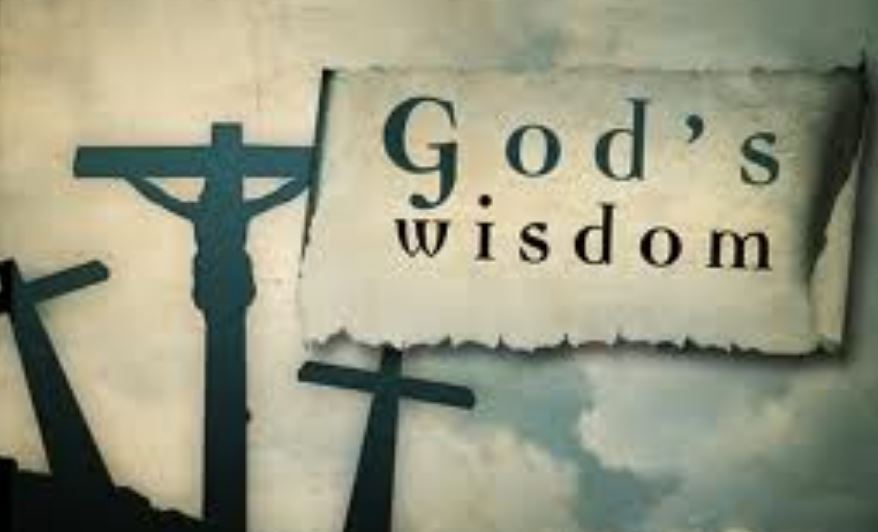
All the wisdom in the world has been summed up for us in a person. His name is Jesus! Paul says in 1 Corinthians 1:24, “Christ is the mighty power of God and the wonderful wisdom of God.” John tells us that no 27 gods wisdomone has ever seen God at any time but that He took on a body of flesh (we call that the incarnation), and pitched his tent with us. The literally rendering of the phrase is “pitched his tent” or “tabernacled” with us. The presence of God was manifested in the tabernacle during the wilderness wanderings which was housed in a temporary, and movable, facility. We call those facilities tents. The Bedouins still live in tents today. We’ll see them next month along the roads when we travel from the northern areas of Israel to the southern ones around the Dead Sea. The tents serve as houses for the Bedouin families. Having seen the tents in Israel, I’ve been very receptive to the writer’s attempt to make John 1:14 come alive for us in the translation that says, “And the Word became flesh and moved into our neighborhood.” He was indeed “God with us.”

Horatius Bonar said, “All that is in God, all that can come forth out of God is contained in Christ. He is the full representative of the invisible and incomprehensible Jehovah. He is the brightness of Jehovah’s glory and the express image of his person. In the works of creation God has displayed portions of his wisdom, but in Christ he put forth the whole of it, so it can be said of Christ, he is the wisdom of God. Thus, the knowledge of Christ not only transcends all other knowledge, but includes them all; the study of this embodiment of all that is in God is not only superior to but embraces all other studies.”

In 1 Corinthians, Paul focuses his lesson by contrasting the wisdom of the world with the wisdom of God. He contrasts the rulers of this world, and their wisdom, with Jesus as God’s wisdom. He says that if the rulers of this world would have “…known the wisdom of God, they would not have crucified the lord of Glory” (1 Corinthians 2:7-8). John Piper summarizes this by saying, “the rulers who put Jesus to death are probably the most vivid example of the fact that you can measure a person’s true wisdom by whether they recognize Jesus as the Lord of glory…You can tell whether a person’s mind is dominated by the wisdom of the world or the wisdom of God by whether he acknowledges the crucified Christ to be not a criminal but the Lord of glory.”

In the Fall I’m hoping to begin a new series on Jesus. If it’s true, that the entire corpus of God’s wisdom is embodied in Christ, I can’t think of a better subject to study. I’m thinking about calling it “Jesus, Jesus, Jesus!” I’m going to argue that absolutely everything from the creation of the world in Genesis to the creation of the New World at the end of Revelation can only be understood through the knowledge of Jesus Christ, the full incarnation of God and God’s wisdom.

Proverbs 3:5-6, Matthew 7:24

Which Way?

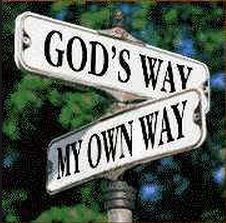
Wisdom isn’t a collection of facts! Wisdom isn’t even an accumulation of days, months and years. Wisdom involves not just comprehension but behavior. Actually, our comprehension of things and methods and 24 gods waypractices can often be contradictory to each other and what is really the truth. No, it’s not the depth of comprehension or understanding that’s truly the important thing about wisdom. It’s the diligence by which the truths we perceive and understand are applied to our lives.

When I was being trained in the Navy on how to scrub a deck (and I did it a lot!), and how to paint a bulkhead (that’s a wall), or clean a head (that’s a bathroom), and how to do just about everything else on ship, I was often told there are three ways of doing things; the right way, the wrong way and the Navy way. One Master Chief, who was the Master-at-Arms on board the USS WALLER (DD-466), told me he only cared about the Navy way. Don’t confuse me with a discussion of what’s right and wrong. We’re going to do it the Navy way! The ways he promoted, he would argue, were tried and true. He didn’t care what we thought or what we’d like, or what we’ve learned in the world. The only acceptable way to do anything, understand it or not, was the Navy way! The interesting thing about this huge, black, Master Chief from Detroit, was that he was always right. We hated that about him. But as we faced many a difficulties on our trip across the Atlantic, many of his ways, proved of great value. We learned to avoid many an unpleasant experience by listening to him and obeying. His instructions saved the life of a young torpedo man’s mate during a storm in the North Atlantic.

This isn’t the place for a bunch of sea stories, so I’ll skip right to the point. If the Master Chief knew what he was talking about how much more does God. Solomon says, “Do what I say and you will live. Be as careful to follow my teaching as you are to protect your eyes” (Proverbs 7:2). Jesus says, “Everyone who hears my words and obeys them is like a wise man who built his house on the rock” (Matthew 7:24). And Jesus’ brother, James, warns us all “Be doers of the word, and not hearers only, deceiving your own selves” (James 1:22). Another most profound piece of wisdom comes from Proverbs 3:5-6. Everyone should memorize this passage. It says, “Trust in the LORD with all your heart, and do not lean on your own understanding. In all your ways acknowledge him, and he will make straight your paths.” According to man’s understanding there’s a right way and a wrong way. But it’s always the wisest choice to do it God’s way!

James 1:5, Proverbs 2:1-5

Ask For It!

God’s wisdom for living a healthy, happy and wholesome life is available to all of us. I’m not just referring to the contents of the Scriptures even though that’s a significant part of it. I’m referring to God’s promise to do 23 askfor us what he did for Solomon. He asked for wisdom and got it. The he promises his son and us in Proverbs 2:1-5, “My son, if you receive my words and treasure up my commandments with you, making your ear attentive to wisdom and inclining your heart to understanding; yes, if you call out for insight and raise your voice for understanding, if you seek it like silver and search for it as for hidden treasures, then you will understand the fear of the LORD and find the knowledge of God.” The desire for wisdom must be the highest priority in our lives. Further, James (the wisdom writer of the New Testament) makes a similar promise. In James 1:5, he says, “if any of you needs wisdom, you should ask God for it. He is generous and enjoys giving to all people, so he will give you wisdom.”

One write identified four truths about God that should encourage us to ask God for the wisdom we need. He writes, “First, God is a giving God. Giving to those who ask from him is natural for God. Second, God gives generously to all. He has no favorite recipients of his gifts, but gives to all classes, races, and types of people. Third, God gave without finding fault. God does not give in such a way as to humiliate us. He does not chastise us for our failures or hold our unworthiness against us. He is always ready to add new blessings to old ones without finding fault in us for our many shortcomings. Finally, God promises to answer those who come seeking wisdom.”

Max Lucado wrote, “Thomas came with doubts. Did Christ turn him away? Moses had his reservations. Did God tell him to go home? Job had his struggles. Did God avoid him? Paul had his hard times. Did God abandon him? No. God never turns away the sincere heart. Tough questions don’t stump God. He invites our probing. Mark it down. God never turns away the honest seeker. Go to God with your questions. You may not find all the answers, but in finding God, you know the One who does.” Jesus’ promise is very comprehensive as well. He says, “And I tell you, ask, and it will be given to you; seek, and you will find; knock, and it will be opened to you” (Luke 11:9).

Ecclesiastes 7:23, Proverbs 1:7

Out Of Reach

When the wisest man in the world reflects on the nature of wisdom in his book “Ecclesiastes” he makes several profound observations. Putting them in my own words they are things like “it takes wisdom to want 22 out of reachwisdom,” or “it takes wisdom to search for wisdom,” but ultimately no matter how much you desire, or how hard you search, man’s abilities are extremely limited. He writes in Ecclesiastes 7:23, “All this I have tested by wisdom. I said, ‘I will be wise,’ but it was far from me.” Many writers have observed that Solomon wrote the Song of Solomon as a young man in love for the first time. He wrote the book of Proverbs in middle age as he reflected and searched for true wisdom for living life. He wrote Ecclesiastes at the end of his life searching for deeper meaning to it all. Thus, the wiser he become, the more he realized how much he didn’t understand. Isn’t this true with all of us as we grow older?

Solomon admitted that the deeper wisdom was far from him. It was totally out of his reach. Commenting on this verse, Smith says, “When he sought to comprehend the grand scheme of the universe and God’s government thereof he was seeking to reach out to the unattainable. Practical rules of life he had mastered; but essential, absolute wisdom was beyond mortal grasp. Man’s knowledge and capacity for knowledge are limited.” It appears to me that Solomon has finally grasped the wisdom of Job who says in Job 11:7, “Can you find out the deep things of God? Can you find out the limit of the Almighty?” The framework of these questions demands a negative answer. Another translation of this passage says, “Can man, by searching, find God?” The expected answer is “of course not!” Smith goes on to make two observations, “First, the final answers to the great questions of life are ‘far off,’ i.e., either in the remote past, even the great past beyond creation; or in the unattainable heavens beyond. One would have to have been present before the world began to see how all the elements which make up experience in this world relate to one another. Second, even when that wisdom seems to be within his grasp he finds it to be …utterly mysterious and beyond the grasp of the mind of man. Man is helpless before the infinite greatness of the universe.”

Thus, even the wisest man in the world got wiser as he got older. We all say things that are true in our youth that we ignore as we live our day to day lives. Even though Solomon knew and expressed the truth that “the fear of the Lord is the beginning of wisdom” (Proverbs 1:7), the experiences of life increasingly pressed this truth into his very being. The limits of our wisdom and the vastness of God’s greatness, direct us to live by faith rather than by sight.

1 Kings 3:13

What Do You Want?

If God were to ask you what you wanted most, what might that be? If he offered you one wish, what would you wish for? I can think of a lot of things. A new body would be nice! How cool would it be to win the lottery? 21 wishesI would ask my wife, but I’m afraid she’d ask for a new husband. A lifetime supply of toasted almond fudge ice cream would be great also. There’s a cute commercial out these days which first aired during the Super Bowl. A Toyota owner rubs the nose of his new car and a genie appears (strangely enough holding a Chihuahua). She offers him three wishes and he asks for his “spare tire” to be gone. He was referring to the extra 20 pounds around his mid-section, but the genie makes the one from the car disappear. Other wishes follow from each member of the family. You can see this at http://www.youtube.com/watch?v=aVhJO3FcBp0.

When Solomon inherited the reigns of the Kingdom of Israel from his father David, God said, what do you want? Ask, and I will give it to you (1 Kings 3:5). Solomon’s options were many. He could have asked for riches, long life, power, prestige, infinite wishes and anything else you might think of. But instead, Solomon says, “Give me the wisdom I need to rule your people…” (1 Kings 3:9). In the next chapter we read, “God gave Solomon great wisdom so he could understand many things…His wisdom was greater than any wisdom…He was wiser than anyone on earth” (1 Kings 4:29). With his great wisdom came everything else he might have wished for in life. In 1 Kings 3:13, God tells Solomon that he will bless him with great wisdom, but “I give you also what you have not asked, both riches and honor, so that no other king shall compare with you, all your days.”

In his commentary on the book of Proverbs, James Kitchen observes, “Suddenly, the value of wisdom is pressed home and made personal. Nothing you can ‘desire’ will ever compare with the value of wisdom. The human capacity for desire is vast, but the exclusivity of wisdom’s worth sets her apart as unique among all others.” Kitchen nails this truth! Indeed, we desire much! Unfortunately, we don’t desire what we need most. God makes it perfectly clear that we must truly want it, above all else, if we’re ever going to get it. Kitchen goes on to quote three Bible verses related to the proper wish: ‘Whom have I in heaven but Thee? And besides Thee, I desire nothing on earth’ (Ps. 73:25). ‘Delight yourself in the LORD; And He will give you the desires of your heart’ (Ps. 37:4). ‘He satisfies my desires with good things, so that my youth is renewed like the eagle’s’ (Ps. 103:5, NIV).”

PTSG

God’s promise to make all our life situations to work out for good for those who love God (Romans 8:28), is a promise for a complex good, not a simple good. C. S. Lewis distinguishes between the two. He discusses in 20 ptsdhis book, “The Problem of Pain” that most of life’s pains are simple pains. There is nothing complex about the loss of a loved one, or the death of a child, or an injury, disease or sickness. They are simple evils. We all understand them and it takes very little intelligence to understand them. Yet, God promises to mix all the simple evils of our lives into a more complex good. It’s the “working together” of both the good and bad and the blending of the specifics into a whole that will always work out for our good. It’s not a simple good, i.e., winning the lottery, getting that promotion, enjoying a great meal, or just appreciating the sunset. It’s a complex good, a mixture of the good things and the bad things in life that will, in the end, result it a far greater good than one can imagine.

Complex goods are far greater than simple goods. One Theological Journal article said, “God is not the author of evil. He does not promote evil, but permits it to bring about a greater good (Rom 8:28). ‘In the fallen and partially redeemed universe we may distinguish (1) the simple good descending from God, (2) the simple evil produced by rebellious creatures, and (3) the exploitation of that evil by God for His redemptive purpose, which produces (4) the complex good to which accepted suffering and repented sin contribute.’”

Coming out of Vietnam and later wars there has been a great deal of literature and discussion on PTSD (Post-Traumatic Stress Disorder.) I like what one writer said about it, “…there needs to be much more dialogue about PTSG (Post-Traumatic Stress Growth!). When seen through a biblical lens, nothing God allows into his children’s lives is an accident. It is not all good to be sure, but difficulties can be used to bring about some greater (complex) good in the person being developed (like Joseph in Genesis 37-50; esp. 50:20), and in the persons witnessing that development. Roses grow in rose gardens, but human beings grow through hardship, trials, and adversity. Even Jesus grew in his humanity this way. The Father made the Son (in his humanity) perfect, complete, and mature through suffering (Hebrews 2:10).”

sewa motor jogja
© Chuck Larsen 2019. Powered by WordPress.