service genset jogja
Ecclesiastes 7:3

Hard Lessons – Happy Life

Solomon said that a good name is better than great riches. He said it’s better to go to a funeral than to go to a party. Now he says, Ecclesiastes 7:3, “Sorrow is better than laughter, for by 07 funsadness of face the heart is made glad.” This verse brings to mind a poem that Robert Browning (I think?) wrote:
I walked a mile with Pleasure; she chattered all the way,
But left me none the wiser for all she had to say

I walked a mile with Sorrow, and not a word said she;
But oh, the things I learned from her when Sorrow walked with me!

Life lessons are valuable and are most often learned through hardships rather than good times. Life lessons learned the hard way seem to stay longer, sink in deeper, and affect greater results. Therefore in living out our lives with lessons learned our hearts are indeed “made glad” because of the benefits of lessons learned. I remember that Solomon often speaks to his son in his writings. God, therefore, is speaking to us as His children. Butler brings into his discussion on this verse in Ecclesiastes the life of Joseph: “Though Joseph was only a teenager and the favorite of Jacob, he was not allowed to sit around the camp doing nothing; for Jacob put him to work tending the flock. Work is therapeutic. It helps build character much better than play. A person needs to learn to work when they are young. Industriousness is a mark of good character.” If you follow Joseph’s life you might see how lessons learned the hard way helped prepare him for the great successes God had planned for his life. He named his children names that reflected a happy heart.

A. W. Tozer said, “God cannot use a man until he has hurt him deeply.” Great men and great women are shaped by pain. There is a time for laughter, Solomon already taught us that and for many of us there isn’t enough of those times in our lives. I’m working on an Easter sermon which I’m going to name, “the last laugh.” I’ve truly enjoyed my research on the role of laughter in the bible and am somewhat excited about what I’m learning. Yet, I have to agree with David Jeremiah when he says, “Man’s highest purpose is not to be happy, but to know God. And we know God the best when we face things we can’t do without Him. …Troubles cause all of us to stop the routine and ask more serious questions about life. For that reason, sorrow is better than laughter.” But if the sorrow leads us to know God better and to love Him more, there is no greater reason to be happy. Abraham and Sarah had many trials before the birth of the promised heir. They named him Isaac which means laughter!

Ecclesiastes 7:2, John 3:16

The Death Factor

Solomon continues to make contrasts between two life experiences for us by identifying the “better” of the two. Unfortunately his idea of what’s better doesn’t always agree with mine. Under the normal order of things I would 06 deathprefer to attend the wedding of a friend than their funeral. But in Ecclesiastes 7:2 he says, “It is better to go to the house of mourning than to go to the house of feasting, for this is the end of all mankind, and the living will lay it to heart.” It has been suggested that Solomon became obsessed with death in his old age. He was a young man when he penned the erotic thoughts in the Song of Solomon. He was a mature king when he recorded the Proverbs, but most agree that he was an old man when he wrote Ecclesiastes. Like me, Solomon probably paid more attention to the obituaries than he did when he was younger, but I don’t think he was “obsessed” with death. He was reminding us all not to ignore the reality of death because it has so much to teach us. In Psalm 90, Moses wrote, “So teach us to number our days, that we may apply our hearts unto wisdom” (Ps. 90:12).

The scriptures don’t condone an unhealthy focus on death; rather it directs us specifically to the appropriate way to deal with its reality. Dr. Ernest Becker wrote a Pulitzer Prize-winning book entitled, “The Denial of Death” back in the 70s. He suggested that the fear of death “haunts the human animal like nothing else.” He also suggests that all the time consuming distractions we invest in are merely activities, “…designed largely to avoid the fatality of death, to overcome it by denying in some way that it is the final destiny for man.” As Solomon looked at all the activities of man “under the sun” we might think that he agreed with Dr. Becker. Solomon sees that a life lived without God is that way. But when he brings God into the picture there is new meaning to life and new freedom to enjoy the gift of life that God has granted us. For those who believe in a loving, caring God we gain insight into what Solomon meant back in Chapter 3, “He placed eternity in the hearts of man.”

It’s a wise person who factors the truth of his mortality into everyday life decisions. I like the way Bill Macdonald says it, “Every thinking person must take into account the fact of death and should have a philosophy of life which enables him or her to confidently face that inevitable appointment. The gospel tells of the Savior, who, through death, destroyed him who has the power of death, that is, the devil, and who delivers all those who, through fear of death, are subject to lifelong bondage.” This is why John 3:16 is such a famous verse: “For God so loved the world that He sent His only begotten son so that whoever believes in Him will never perish but will have everlasting life.”

Ecclesiastes 7:, James 4:14

The Dash

In chapter 7, Solomon focuses attention on the “better” things in this life under the sun. Ecclesiastes 7:1 began with the statement that a good name is better than expensive perfumes. I believe 05 live the dashthat his point was that it’s better to leave behind a good epitaph than an expensive embalmment. Corpses were drenched in perfumes to keep the stench of decay at bay for as long as possible so the mourners would not be repulsed by the rotting remains. Solomon seems to be suggesting that positive investments in the lives of others while you are living are far more important than fancy burials. I wonder if Jesus wasn’t echoing this sentiment when he condemned the religious leaders for whitewashing the outside of their tombs that is making the external acceptable, but ignoring the truth of a wicked heart. It appears that Solomon is suggesting this because of the second half of verse 1. Ecclesiastes 7:1 continues, “A good name is better than precious ointment, and the day of death than the day of birth.”

How can this be? We celebrate at the birth of children and we grieve at the death of loved ones? Two major Rabbis understood this passage as saying the reputation, or the good name, of the first part of the verse was undetermined at birth and it wouldn’t be finalized until death. In other words as long as we’re living there’s a chance we’ll still do something to ruin our reputation. As Ben Sira says, “Call no man happy before he dies, for a man is known [only] at his end.” And Hillel said, “Do not trust yourself till the day of your death.” (Quotes taken from the Jewish Publication Societies commentary by Michael V. Fox) It seems the focus on the first day of one’s life in contrast to the last day of one’s life is what is intended.

Isn’t it interesting that on most tombstones these two dates are separated by a single dash. Everything we do, every day we live is included in that little line. The smallest and most insignificant of symbols on our tombstones and yet it encapsulates every day of my life. The meaning of our lives, our reputations, our names for good or for bad are summed up in that dash. James 4:14 asks, “For what is your life?” you know what it is. Look at any tombstone! It’s a dash! It’s dash! James confirms that truth but uses different words. He says, “It is even a vapor that appears for a little time and then vanishes away.” James’ epistle is often compared to the wisdom literature of the Old Testament which includes Ecclesiastes. I think Solomon and James are making the same point: both are suggesting that our time on this earth is extremely limited in comparison to eternity. The true heart of the matter is how you fill your dash. It’s today that I plant the seeds that will fill the dash. Today, as one writer put it, “I orchestrate the stories that will be told at the end of the dash.”

Ecclesiastes 7:1

A Good Name

In the course of our journey through Ecclesiastes we heard Solomon express his conviction that a wise person isn’t any better off than a fool. They both have the same fate in the end. Yet he doesn’t 04 epitaph3discount the value of wisdom in our walk through the valley of the shadow of death. Life under the sun is hard and foolishness makes it even harder. I once heard a comedian say, “Life is hard, but it’s even harder when you’re stupid.” Money, fame, and popularity can make life a little easier, but none of those can compare to the value of wisdom. We spend our lives pursuing wealth, but Solomon argues there’s something more valuable. In Proverbs 16:16, Solomon says, “How much better to get wisdom than gold! To get understanding is to be chosen rather than silver.” When God asked him what he wanted, he chose wisdom. With wisdom came everything else. He understood how much better it was. In Ecclesiastes 7, Solomon turns to explain the “better” things in life.

The first thing that Solomon says is better concerns our reputation. Ecclesiastes 7:1 begins, “A good name is better than precious ointment.” He says something very similar in Proverbs 22:1, “A good name is to be chosen rather than great riches.” When Paul explains what the characteristics are that make for a good church leader he includes the idea of having a good reputation with the community as a whole. In 1st Timothy 3:7, Paul instructs Timothy that church leaders must “be well thought of by outsiders.” A good reputation is an essential ingredient for a godly life. Ryken says, “Here in Ecclesiastes the Preacher compares a good reputation to the rich aroma of an exotic fragrance. He does this by making a Hebrew wordplay that is hard to capture in English.” It is like poetry. The words for name and oil or perfume rhyme giving the parable a melodic sound. Ryken continues his explanation, “This proverb may have been a popular saying in those days. In the dusty communities of Biblical times, scented oils and other fragrances were valuable commodities. Yet having a name that people admire for integrity is even more valuable. With every comment we make and every action we take, we either build up or tear down our reputation.”

A good name refers to a godly character and lifestyle through time. Who we are is more important than what we have or do not have! I might argue that it is also better than what we leave behind. There will be those that leave behind great wealth but were crooked in their dealings in business, were neglectful of their responsibilities to their families, and had few, if any, friends to grieve their passing. On the other hand there will be those that leave behind little wealth, but friends and family who loved them and will miss them deeply. C. H. Spurgeon poignantly stated it this way: “A good character is the best tombstone. Those who loved you, and were helped by you, will remember you. So carve your name on hearts, and not on marble.”

Ecclesiastes 6:12

The Leader of the Club

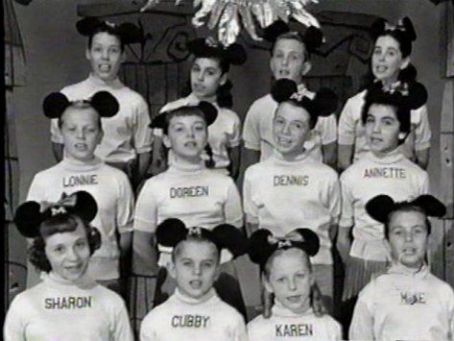
As a kid I can remember hurrying home from school so I wouldn’t miss the Mickey Mouse club on TV. It always began the same way. All the Mousketeers (including every boy’s heart throb, Annette) would sing the theme song. I 03 mousketeersdon’t remember all the words but I’ll never forget the opening words. They composed a question to which everyone knew the answer: “Who’s the leader of the club that’s made for you and me?” If you’re as old as I am you can probably still hear them spell out the answer. In Ecclesiastes 6:11-12 Solomon concludes his arguments on why the most satisfying kind of life is the life that trusts God. These verses include two questions. Everyone already knows the answers: “In the few days of our meaningless lives, who knows how our days can best be spent? Our lives are like a shadow. Who can tell what will happen on this earth after we are gone?” Everyone knows the answer to both questions is “God knows.”

The first question asks, “Who knows what is good for us?” God does! John Piper asks, “What does that mean? It means the same thing that Romans 8:28 means: And we know that for those who love God all things work together for good, for those who are called according to his purpose. God takes ‘all things’ and makes them serve our ultimate good. It doesn’t mean we get everything our imperfect hearts want. It means we get what’s good for us.” Solomon wants us to see that this proves we can trust God,

The second question asks, “Who knows what’s going to happen next?” God does! Wiersbe writes, “In spite of what the astrologers, prophets, and fortune tellers claim, nobody knows the future except God. It is futile to speculate.” Jesus refers to Himself as the Good Shepherd who loves the sheep so much He gave His life for them. Matthew 9:36 tells us that when Jesus “saw the multitudes, He was moved with compassion for them, because they were weary and scattered, like sheep having no shepherd.” Let me ask a couple more questions in closing. Do you feel weary today? Do thoughts of an uncertain future make you feel anxious, worried, and nervous? Does your life seem scattered, out of control, and frenetic? That about sums it up for me. But it does my heart good when I remember that Jesus knows the future, not just the future in general, He knows my future! He is filled with compassion for me as one of His sheep. Ok, one more question each of us will have to answer for ourselves: Who’s the leader of the club that’s made for you and me?

Ecclesiastes 6:10

Promises not Explanations

Ecclesiastes 6:10 begins with what appears to be one of the most fatalistic statements imaginable. It says, “Everything has already been decided. It was known long ago what each person would be.” The New English Translation puts it this way, “Whatever has happened was foreordained, and what happens to a person was also foreknown.” The concepts of predestination and God’s foreknowledge have caused many to stumble in their faith and some to
IMG_3347simply reject their faith. It is impossible for man to fully comprehend the mind and ways of God. The famous English poet Milton who wrote “Paradise Lost,” explains in one of the earliest prefaces that his purpose was to justify God’s ways to man. A. E. Houseman, in his poem “Terrence, This is Stupid Stuff,” presents us with a character who argues “Ale does more than Milton can to justify God’s ways to man.” It’s hopeless! Houseman’s character continues, “Ale, man, ale’s the stuff to drink for fellows whom it hurts to think: Look into the pewter pot to see the world as the world’s not.”

Solomon’s point has been that life is a dead-end street for those following the roads of pleasure, possessions, power, popularity and even productivity. There is no satisfaction to be found at the end of those rainbows. But life is also a dead-end street for those who demand answers to all of life’s complex questions. We must learn to live between the tensions of what appear to be contradictory truths. God is sovereign, yet within His sovereignty we must find room for man’s responsibility. Even so, there are some things in life we were not meant to understand. I like the way Wiersbe explains this. He says, “There are some questions about life that nobody can answer. But our ignorance must not be used as an excuse for skepticism or unbelief. Instead, our ignorance should encourage us to have faith in God. After all, we don’t live on explanations; we live on promises.”

This was brought home tome last week. In the emergency room after I broke my right arm (yes, I’m pecking this out left handed!) I was shown the x-ray of my broken bone. The doctor explained the x-ray to me. He said, “This is a midline numeral fracture. …It is not especially comminuted. If it was higher up / closer to the shoulder we almost always let these heal without surgery. This fracture being a little lower may pose a little dilemma. The muscles actually pull it together but it may still angulate which would not be good.” He went on to explain that they would check it again and “If the angulation is too much you may need an intramedullary rod or a plate and screws.” My point is that while the explanation was helpful, it didn’t heal anything. I have found this to be true in ministry as well. Explanations, answers to peoples’ questions, don’t really solve peoples’ problems. That’s why God didn’t give suffering Job the answers he demanded. He simply challenged Job to trust Him. Indeed we don’t live on explanations, but on promises.

Ecclesiastes 6:6-9

Figure it out for Yourself

I sometimes wonder how personal some of Solomon’s comments are. In Ecclesiastes 6:7-9 he says, “All people spend their lives scratching for food, but they never seem to have enough. So are wise people really better off than fools? Do poor people gain anything by being wise…?” Solomon was the king who was given one wish from God and chose 27 figurewisdom over wealth and fame. God commended him for his choice and granted his wish and along with it came the wealth and fame he didn’t ask for. But does wisdom and its accompanying perks really make that big of a difference? Are wise people really better off? I think Solomon’s wisdom helped him see that everything he gained didn’t change his lot in life. Many people look at great people and wish they could be like them. Solomon’s wisdom made him the envy of the entire world. They would come from many foreign countries just to witness it, yet Solomon knew it didn’t really make him different or better than anyone else. Everyone envied him. But Solomon knew he wasn’t any better than them. They wanted what he had, but he knew they already had it and that led him to conclude in verse 9, “Enjoy what you have rather than desiring what you don’t have. Just dreaming about nice things is meaningless—like chasing the wind.”

One morning during my sophomore year in high school after a fairly significant failure in my life I found a plaque hanging on my bedroom wall that wasn’t there before. I never mentioned it and I still don’t know if it was my mom or dad that put it there, although I suspect it was my dad. I was certain that I’d never measure up to the high standards of those around me. I saw myself as a lower life form, in some ways, than the scholars, the athletes, the super spiritual and the popular kids all around me. The plaque was a framed poem. I didn’t know it at the time but it was Edgar Guest’s poem entitled “Equipment.” It begins, “Look them over, the wise and the great, they take their food from a common plate, and similar knives and forks they use. With similar laces they tie their shoes. The world considers them brave and smart, but you’ve got all they had when they made their start.”

I could only imagine a huge lecture coming my way and dreaded facing my folks that morning. But neither of them said a word about my failure the night before, but I felt that someone had been reading my mail in a much too personal way. They knew something about me that I thought I’d kept very private. The poem went on, “Figure it out for yourself, my lad. You’ve got all that the greatest of men have had; two arms, two hands, two legs, two eyes, and a brain to use if you would be wise. With this equipment they all began, so start for the top and say, ‘I Can’.” I’m wondering this morning if Solomon’s thoughts in verse 9 don’t follow this thread. The NASB (New American Standard Bible) translates this verse: “What the eyes see is better than what the soul desires.” I guess we all have to figure it out for ourselves. I love Dr. Seuss’ quote, “Today you are You, that is truer than true. There is no one alive who is Youer than You.”

Ecclesiastes 6:3-6

Nothing Can be better than Everything

Ecclesiastes 6:3-6 causes me much stress. In essence Solomon says a man who lives two thousand years and has a hundred children is worse off than a child 26 thingswho dies at birth, or is stillborn. How is this possible? Methuselah is the oldest man in the bible and he only lived to be 969 years old. The fellow Solomon mentions lives over twice that long. Further, Rehoboam, Solomon’s son, had 88 children, but as far as I can find no one in the bible had one hundred children. Long life and many children were two measuring sticks in Israeli culture that determined a life blessed by God. Yet an infant dead from the womb is somehow better off!

Solomon seems to be arguing that to feel nothing, know nothing, experience nothing, is far better than living long, prospering, procreating and possessing everything under the sun that should make life satisfying and worthwhile. The only resolution I can find in this strange assertion is the concluding phrase of verse six. It explains that both the 2000 year old man and the stillborn baby end up in the same place. As already argued at length the grave is the destiny of rich and poor, wise and foolish, as well as kings and their subjects. There is no advantage of one over another. But here Solomon says the one who sees nothing, feels nothing, knows nothing and has nothing is better off than the one who has everything. I must ask the same question again. How is this possible?

David Jeremiah gives me the most satisfying answer. In his study on Ecclesiastes entitled, “Searching for Heaven on Earth,” he says, “Here is the very serious point Solomon is making with these illustrations: Living without God and without meaning in life is worse than never having been born at all.” Yes, regardless of the number of years one lives every life will come to an end and to get to the end without ever having tasted of the love and goodness of God is worse than never having lived at all. Jeremiah concludes, “…if you get to the grave without God, you will have lived a meaningless life. Only God brings meaning to prosperity.” Phil Ryken adds some additional insights. He says, “The gifts that God gives us and the power to enjoy those gifts come separately. This is why having more money can never guarantee that we will find any enjoyment. Without God, we will still be discontent. It is only when we keep him at the center of our existence that we experience real joy in the gifts that God may give. The fear of the Lord is not just the beginning of knowledge; it is also the source of satisfaction.”

sewa motor jogja
© Chuck Larsen 2019. Powered by WordPress.