
service genset jogja
Revelation 22:21, 2 Timothy 2:1, Philippians 4:13

Sustained by God’s Grace

God’s sustaining grace is always with us. When things are going well, it’s there, and when things are going bad it’s there. God is good all the time! All the time, God is good. But sometimes it’s hard to see God’s sustaining grace at work when bad things happen. When someone dies before their time, when terrible things happen to innocent people, and when evil people hurt others, it’s often hard to find God’s sustaining grace at work during those times.

Salvation is by grace through faith. I’d argue that salvation is a term that fits both our life’s circumstances in the present as well as our eternal destiny. We are saved by grace through faith. It’s our faith that God puts to the test in order to make us stronger. That’s why he “tested” Abraham’s faith in Genesis 22, when he told him to offer his only son as a sacrifice on the altar. Abraham passed the test and his faith has been the example of what it means to trust God in all the trials of life. He had learned through his life that he could trust God’s word. God said he’d have a son in his old age and he did. God blessed him in numerous ways along life’s path and he learned through all the ups and downs of life that God had his best interest foremost in mind regardless of his circumstances or what God called him to do. He walked by faith. It was God’s grace that sustained him through it all.  But it not only sustained him. It made him stronger! Paul understood this principle well. He said in Philippians 4:13 that he could rejoice in God in every situation of life because he understood God’s promises.  Each beating, each imprisonment, each stoning and each persecution of every kind made Paul’s faith stronger.  But the important thing to notice is that Paul realized that this strengthening was a result of God’s grace. When Timothy was going through tough times in his ministry, Paul wrote to him and said, “You then, my child, be strengthened by the grace that is in Christ Jesus” (2 Timothy 2:1).

Let me call to your attention the fact that the command “be strengthened” or in some translations it says “be strong” is a passive verb in the Greek text. Timothy is not the subject of the action, but the recipient of it. Our strength through trials and pains and sufferings comes not from our own effort, but from the reality of God’s grace at work in our lives. Bill Haynes put it this way, “Relying on God’s strength alone is something each of us must learn. The grace of God does not merely save us (although it does do that), it also continues to sustain us. It empowers our lives, and gives us the ability to stand firm.” As Paul learned, through every thorn in the flesh and hardship of life, “God’s grace will prove sufficient.” Paul and other New Testament writers love to include in their salutation or benediction “grace to you” in various forms. Notice also that the Bible itself ends with Revelation 22:21. It says “The Grace of our Lord Jesus Christ be with you all. Amen!”

Matthew 11:28

Rest for our Souls

Sowing and Reaping is a clear principle in the Bible. It’s even clearer in the real day-to-day world. All of our lives, Muslims, Jews, Gentiles, Hindi, Buddhists and even secular people. We all live in the world in which we make our beds and have to lie in them. What goes around comes around. There’s no such thing as a free lunch. If you don’t work you don’t eat! If you want to dance you have to pay the piper. If it’s to be it’s up to me! We make money the old fashioned way; we earn it! God helps those who help themselves. No pain, no gain! I could go on, but the principle of sowing and reaping is as clear as day. All of our lives are filled with obligations and responsibilities. We all have to set the alarm clocks. We all have to pay the rent or the taxes or the utilities. This principle of life transcends any religion or system of belief. It’s just a part of life. Get used to it! If you want a pay check, you’re going to have to work for it! If you want cable TV or electricity or access to the world wide web you have to pay for it. But it does get weary, doesn’t it?

I can remember my Dad who grew up in the depression sitting at the kitchen table with his coffee and camels lamenting the fact of sowing and reaping although he didn’t call it that. He tried hard to impress upon us the virtues of saving for a rainy day and for being responsible on the job and for putting in full day’s work. I think he was frustrated with his baby boomer kids because we didn’t feel the same pressure to produce that he did. But as much as we wanted to escape the realm of sowing and reaping we too found ourselves slaves to that eternal law of the land; whatsoever a man sows, that he will also reap.

People are really good at reminding us of all our responsibilities. We get our bills every month. We have report cards to tell us how well we’ve done or in my early years how poorly I have done. We have bosses looking over our shoulders wondering if we’ve completed those TPS Reports (See the movie Office Space). There are policemen hiding behind billboards with radar guns. Yes, our lives are simply full of “must do, should do, ought to do.” The religious leaders in Jesus day were really good at laying it on the people. Jesus said of them, “you lay such heavy burdens on people and you do not help one bit to relieve that pressure.” Jesus came to help us with this. He says in Matthew 11:28, “come to me all of you who are weary and heavy laden, and I will give you rest.” Eugene Peterson translates this passage in The Message as “all you who are burned out on religion.” He did not come to lay more burdens and duties and responsibilities on us. He came to relieve us of them. Yes, we’ve all made our own beds, but on the cross of Calvary Christ laid in it for us! We can find true rest for our souls with Him.


Psalm 139:14, Romans 5:8

He knows!

The Psalmist tells us in Psalm 139:16, that “all the days ordained for me were written in your book before one of them came to be.” Theologians often make much-to-do about the Characteristics of God. One of those characteristics that is often discussed is His “omniscience.” “Omni” means all, and “science” means knowledge. God is “all knowing.” I like to think of it in my own language as God simply knows everything. He knows how many stars there are. He made them. He knows the depth of space, He made it. He knows about math and physics and chemistry and every other discipline because He was the one who established them. Again, simply put, God knows everything.


But the Psalmist isn’t talking about that kind of knowledge necessarily. The most personal aspect of God’s omniscience is that He knows all about me. God knows all about my past. I have no skeletons in my closet with God. I’ve not done anything in private. I can say “God, let me tell you about something.” And then when I’m done, God says, “I know.” We cannot surprise God with any confession. He already knows it all. He knows what I’m thinking and what I’m feeling and understands the inner most struggles in my life. There is nothing about me at this moment that God is not fully aware of. He even knows when a strand of hair falls from my head. He has them all counted. That’s how close of attention He pays to us. He also knows every decision we will make in the future. He knows all of our successes and more importantly He knows all of our sins and failures. There is nothing about us that God doesn’t know. He knows it all before it even happens.

I once counselled a mother who had grown children, all of whom were terrible disappointments to her. One was in jail and one had become a drug addict and had several children from various flings. She explained her kids’ failures and said that if she had known how much pain her kids were going to cause her she would have never had kids at all. My point in this writing is that God knew. He knows all about you and me. He knows every way we would let Him down and every way we would Fail Him and he made us anyway. I believe this is what Paul means when he writes in Romans 5:8, “But God demonstrates His own love for us, in this, while we were yet sinners, Christ died for us.”

2 Chronicles 20:17, Exodus 14:13-14, Romans 8:31

Flap, Flap, Flap!

Imagine a passenger getting on an 747 jet airliner. When the plane begins its taxi down the runway the passenger begins to flap his arms, up and down, up and down. When the plane lifts up off the ground, he flaps hard and harder. The stewardess asks “can I help you?” He replies, “no, I’m helping you!. I’m helping us fly.” The Stewardess then replies, “sir, you don’t have to do that. The plan has all the power it needs to get us safely to our destination.” But the passenger insists, “no, I have to help!” Many of us are flapping all over the place to help with every imaginable struggle in our life, when the truth is, we don’t contribute one bit to the success or progress of the mission. Sometimes, the best thing you can do is just relax under the care and sovereignty of a loving God and let Him do what he’s best at.

When Jehoshaphat was overwhelmed by a collation of three nation’s armies against him, he took his problem to the lord. He acknowledged God’s greatness and his own inadequacy. He asked God for help, and expressed his faith and trust in God’s provision and capabilities. He said, “we don’t know what to do, but we have looked to you for help, oh, Lord.” God said in so many words, “step back Jehoshaphat and watch me work. “The Battle is not yours, it is the Lords.” Like us flapping fools, I expect Jehoshaphat wanted to contribute to the effort, but God corrected him and said, “you won’t need to fight in this battle. Just stand strong in your places, and you will see the Lord save you.” (2 Chronicles 20:17). It was a similar charge that Moses gave the children of Israel as they faced the Red Sea on their east and the advancing Egyptian army on the west, with no where to run and nowhere to hide. In Exodus 14:13-14, Moses said, “Don’t be afraid! Stand still and you will see the LORD save you today. You will never see these Egyptians again after today. You only need to remain calm; the LORD will fight for you.”

God, the creator of the entire universe, the sustainer of all life, the manager of the galaxies, the choreographer of the stars (real stars!), is just a prayer away. Jehoshaphat worshiped God for who he was in all His glory and grandeur and then he worshipped God for what He did by delivering them from Egypt and delivering the Promised Land to them. God hasn’t changed. What are we flapping about?

“If God is for us, who can be against us?” Romans 8:31

Acts 17:4, Acts 19:26, Acts 26:28

Are you of the persuasion?

Throughout Church History, theologians have discussed three levels of faith regarding Jesus Christ.  In the Latin these three were recognized as “Noticia, Assentia, and Fiducia.” The first simply means to say yes I see or I notice something. I know that it is there. The second is to take that a step further and say not only do I notice it but I believe it’s true. The third step is not just noticing or assenting, but trusting or believing in it for my personal salvation. There are many discussions attempting to qualify what faith really is and how a person can be sure that they really do believe in Christ for their personal salvation.
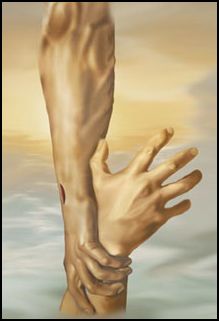
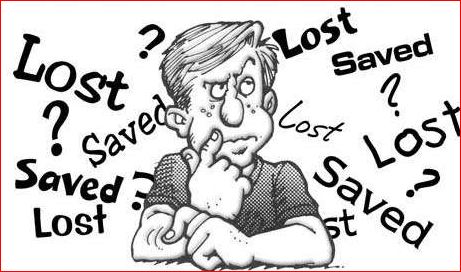
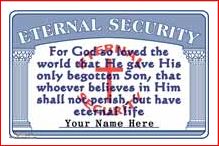
In Acts 17:4, when Paul and Silas arrived in Thessalonica they taught from the “scriptures.” When the New Testament refers to the “scriptures” it means the Old Testament primarily. When they were finished presenting the evidence for Christ from the Old Testament scriptures, Luke writes, “And some of them were persuaded and joined Paul and Silas, as did a great many of the devout Greeks and not a few of the leading women.” Their faith, or act of believing, was referred to as a persuasion. Luke uses the same idea in Acts 19:26 when the makers of Diana idols in Ephesus were riled up against Paul’s preaching. That verse says, “And you see and hear that not only in Ephesus but in almost all of Asia this Paul has persuaded and turned away a great many people, saying that gods made with hands are not gods.” There are other passages as well where faith or believing is referred to as a “persuasion.” Agrippa heard from Paul at Caesarea and after Paul presented the case for Christ,  In Acts 26:28 we read, “And Agrippa said to Paul, ‘In a short time would you persuade me to be a Christian?'”

Are you persuaded of the truth of Jesus Christ? The standard Creeds of Christendom in the past always seem to carry that idea. I believe in God! I’m persuaded that God exists. I believe in His Son, Jesus. I’m persuaded that Jesus is who He said He was. I believe in Christ’s death on the cross as paying the penalty for my sins. I’m persuaded that when Jesus said from the cross, “It is finished,” he really meant it and he meant it regarding me personally and my sins. As for me, I am persuaded.


2 Peter 2:10, Romans 15:4, 2 Corinthians 13:5, 1 John 5:13

Once Saved, Always Saved, If Saved!

The saying “once saved, always saved” has been the saying of those who promote the idea of eternal security of the believer. I think we need to add a couple words to that to understand some of the Biblical statements regarding the issue. I prefer to say “Once saved, Always Saved, If really saved.” It’s not my place to question anyone’s salvation. I always accept everyone’s profession of faith as genuine. That issue is always between them and God. But I am convinced that a true believer can be confident that his or her eternal destiny is secure.  The true question involves our faith. Do we truly believe? We are often exhorted in Scripture to evaluate ourselves to see if our faith is true and sure. Paul urged the Corinthians: “Examine yourselves to see whether you are in the faith; test yourselves. Do you not realize that Christ Jesus is in you—unless, of course, you fail the test?” (2 Cor. 13:5). Peter teaches, “Be all the more eager to make your calling and election sure. For if you do these things, you will never fall” (2 Peter 1:10). Jude adds, “Keep yourselves in God’s love as you wait for the mercy of our Lord Jesus Christ to bring you to eternal life” (Jude 21).

Our security in Christ is sometimes blurred by our lack of personal assurance. When we quiver in our depravity and begin to doubt, it’s truly important to reflect on where our security comes from. It doesn’t come from our feelings of assurance. It comes from our “faith” in God’s Word and our confidence in His keeping His promises to us. Paul writes to the Romans in 15:4, “Everything that was written in the past was written to teach us, so that through endurance and the encouragement of the Scriptures we might have hope.” John declared, “I write these things to you who believe in the name of the Son of God so that you may know that you have eternal life” (1 John 5:13). There are many assurances in the Bible with affirmations that our salvation, once truly received by faith in Christ, can never be lost and we can be confident of that in this life.

God does not wish that we live life always trying to prove ourselves as worthy. God wants us to live as members of His eternal family, once a true child, always a true child. Once we’re truly His, “no one can pluck us out of his hands.” Some who argue against this, see this as offering license for believers to continue in a life of sin. But to me, this is as absurd as saying that because we have Blue Cross/Blue Shield insurance, we will chew on razor blades or guzzle hydrochloric acid.

Isaiah 59:17, Ephesians 6, Job 19:25-26

The Helmet and Eternal Security

The helmet of salvation is protection against the fatal blows of the enemy. It protects our minds. It’s always a battle over our thoughts. The fiery darts of the evil one are directed primarily at what we think. He uses the world (its systems & values) as well as our flesh (our lusts and passions), to incite rebellious thinking in the hopes it will result in rebellious actions. We might not be able to prevent the thoughts from striking us, but the helmet of salvation will help prevent their penetration into our souls. The fiery darts of despair, discouragement, depression and defeat are all instrumental weapons which are used skillfully by our enemy to weaken our faith and open our minds to inappropriate thoughts which will lead to sinful actions. The exhortation in this whole passage on the Armor of God contains the call to “Stand firm” several times. We are not to give way, surrender ground, or retreat from our position in Christ.

Knowledge (mind) of God’s Word is the material with which our helmets are made. The first and most important bit of information we get from God’s Word is the truth of Christ’s salvation by His marvelous grace, through the channel of faith. The Messiah would come, according to Isaiah 59:17, fit for battle against evil. It says, “He put on righteousness as a breastplate, and a helmet of salvation on his head.” As Paul almost literally quotes this passage in Ephesians we see again that what we’re called to put on is His righteousness. Our righteousness will not protect us. His will. It’s His salvation that we use as our helmet also. Our salvation, based on our own efforts, would be most precarious. But His salvation is certain and true. We call this issue “eternal security.”

Amidst the most profound attacks of the evil one, ancient Job, wore his helmet well. In Job 19:25-26, he says, “I know that my Redeemer lives, and that in the end he will stand upon the earth. And after my skin has been destroyed, yet in my flesh I will see God.” He knew there was a redeemer! There is a savior amidst all our pains and struggles in life. Yes, as the old spiritual says, “there’s a balm in Gilead.” That balm is Jesus. He also knew that one day, in his flesh, he would see this redeemer. In his comments on this passage, Norm Geisler adds, “In other words, Job had present knowledge that he had been redeemed (‘my Redeemer’) and that he would see Him in his heavenly resurrected body: I ‘know’ (now) that I ‘will see God’ (later, in heaven). Such knowledge implies his assurance of eternal security.

John 3:36, John 3:16

Assurance and Security

Just a few years before he passed away, J. Vernon McGee, was the commencement speaker at Dallas Theological Seminary. It was a pleasure to hear this 80+ year old man explain some of the more difficult doctrines of our faith in simple, down home, language that we could all understand. He does that well in his writings as well. In one text, he writes about the subject of eternal security. He explains, “There is also a sharp difference between eternal security and assurance. Nevertheless they are two sides of the same subject. It’s like two sides of a door. Eternal security is the exterior—that’s the outside of the door. Assurance is the inside of the door, and that’s internal. Eternal security is objective—it depends on that which is on the outside of us. It doesn’t depend on anything inside of us. Assurance depends on the inside. It is subjective. Eternal security is not an experience at all. Assurance is experienced. And eternal security is theological, while assurance is psychological.”

He goes on to clarify even further when he discusses salvation in general. He says, “There is actually no difference between salvation and security. Will you notice this? The only salvation God is offering is eternal salvation. He’s not offering any other kind. The kind of life that God is offering is eternal life. This is quite simple, and yet it is so important to see.” He uses John 3:36 to illustrate this truth from a biblical passage. It says, “Whoever believes in the Son has eternal life; whoever does not obey the Son shall not see life, but the wrath of God remains on him.” We could find dozens of passages that further support McGee’s observation that the only kind of salvation offered by Jesus is “eternal” salvation. John 3:16 is key also. “For God so loved the world that He gave His only begotten son, that whosoever believes in him will not perish, but have everlasting life.” What kind of life? Everlasting!!

It’s crucial for us to move this truth from the theological realm of eternal security to the internal realm of personal assurance. It’s this truth that Paul was writing to Titus about when he said, “This truth gives them confidence that they have eternal life, which God – who does not lie – promised them before the world began” (Titus 1:2). In his commentary on the book of Romans, John MacArthur rightly observes, “Tragically, many Christians throughout the history of the church, including many in our own day, refuse to believe that God guarantees the believer’s eternal security. Such denial is tied to the belief that salvation is a cooperative effort between men and God, and although God will not fail on His side, man might-thus the sense of insecurity. Belief in salvation by a sovereign God alone, however, leads to the confidence that salvation is secure, because God, who alone is responsible, cannot fail. Beyond that theological consideration Paul is saying that the truth of eternal security is clearly revealed by God to us, so that all believers are able with certainty to know the comfort and hope of that reality if they simply take God at His word. God’s child need never fear being cast out of his heavenly Father’s house or fear losing his citizenship in His eternal kingdom of righteousness.”

sewa motor jogja
© Chuck Larsen 2019. Powered by WordPress.