service genset jogja
Psalm 9:1

Why Can’t believers perform miracles today?

One of the major issues of controversy in Christianity today is the role of miracles in the life of a believer. First, let me say that believers do not perform miracles and they never have. God is the one who does that. All the Old Testament Prophets attest to this fact; Moses, Elijah and Elisha. The New Testament Apostles always credit the miraculous events recorded in the Bible as having their source in God and Jesus Christ also. The miraculous has never been the purview of man. Those through whom God chose to act were mere instruments in the hand s of an omnipotent God.
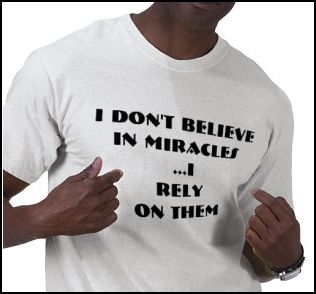
Second, I still believe miracles happen today. I could give numerous examples of unexplainable healings that have happened and often as a result of prayer. God has not changed. He is still omnipotent and still acts in the lives of His people. We all marvel and give God the Glory when we see this happen. I also believe that every conversion, in and of itself, is a miracle. When a person is born again through the agency of the Holy Spirit, that is one of God’s greatest miracles. Further, there are events that happen in our lives that are such a “coincidental” nature that we find them hard to explain. I believe they may also be times when God intervenes in our lives to protect us, keep us from sin and guide us into His ways. These miracles are all subjective experiences that God bless His people with that are miraculous to the recipients, but do not serve as evidence to others of God’s existence and presence in the world.

However, there is a difference, in my opinion, between the miracles of the Bible and the miracles God performs for us personally today. The biblical miracles are acts of God that suspend or override the natural laws of the universe in order to demonstrate his character and person in an undeniable way to many witnesses – rather than a subjective experience, they are objective realities. Jesus raising Lazarus from the dead is a perfect example. God has chosen not to perform those miracles in our day because the reality of Lazarus’ resurrection should be sufficient evidence for us today. Please notice that miracles were not happening all the time in the bible. In a period of 3000+ years there were only four periods in biblical history where God performed miracles like this: The period of the Exodus at the hands of Moses, The period of Elijah & Elisha, the time of Daniel & his three friends in Babylon, and the time of Jesus and His apostles. If miracles were common acts in biblical times and in our times they would no longer be miraculous.

Chuck
“LORD, I will praise you with all my heart. I will tell about all of the miracles you have done.” Psalm 9:1

Romans 1:20

Does Science Support the Bible?

There is an assumed conflict between science and the Bible in our educational systems today because of the infiltration of evolution into nearly every public educational institution in our land. The acceptance of this hypothesis is the basis upon which most educational organizations issue their “union cards.” This conflict has only surfaced in the last 150 years. Throughout history the greatest scientists in the world have never observed any conflict. On the contrary, they have recognized a consistency and complementary nature of science and the bible.

Bible believing scientists from the earliest days (Copernicus, Kepler, Faraday, Newton & many others) have agreed on the complementary nature of the bible and science. They represent two different kinds of revelation from God. Romans, Chapter One, makes it clear that the creation (all nature) reveals the glory and grandeur of God. It points to the obvious conclusion that every effect (the creation) has a cause (God). Science and its laws speak clearly of a law giver. The second kind of revelation is the Scriptures. It’s God’s personal revelation of Himself, in all its sufficient detail, to lead man to saving faith. Between these two, when properly understood, there are no conflicts, since God is the Author of both, and he cannot contradict himself.

The Bible has often anticipated scientific discovery. It argues that the Universe had a beginning. Science affirms that. The evolutionary hypothesis has been accompanied by the theory that the universe is eternal and self existent in itself. But that’s been proven wrong. Agnostic astrophysicist Robert Jastrow wrote that “three lines of evidence—the motions of the galaxies, the laws of thermodynamics, and the life story of the stars—pointed to one conclusion: All indicated that the Universe had a beginning.” Many other examples could be giving. Geisler concludes, “The Bible is not only compatible with true scientific findings, but it anticipated many of them.” He is right; many things discovered “by modern science were stated in the Bible hundreds and even thousands of years in advance. These include the fact that: (1) the sea has paths and channels (2 Sam. 22:16; Ps. 8:8; Prov. 8:28); (2) the sea has boundaries (Prov. 8:29); (3) life is in the blood (Lev. 17:11); (4) disease can be spread by physical contact (Lev. 13).” We could go on and on.

Chuck
“(God’s) invisible attributes … his eternal power and divine nature, have been clearly perceived, ever since the creation of the world, in the things that have been made. So they are without excuse.” Romans 1:20

Matthew 7:22-23

Doesn’t everybody already know about Christ?

Most people in the world already knowing about Christ. But there is a difference between knowing “about” Christ and knowing Christ as your personal savior. All of western civilization knows about Christ. The movement west from Jerusalem was spearheaded by the Apostle Paul and the direction in which the Gospel message was received is the direction in which health, happiness, success, and civilization in a way never before experienced followed. New life, new hope, new purpose and meaning came with the Gospel message. The great advantages the Gospel brought to civilization came to a halt in many ways during the middle ages when the Gospel was replaced by “the church.” But the reformation brought it back. In the wake of the reformation came the advancement of civilization once again and the movement west again to America.

The American civilization was founded on the principles of Christianity. The distribution of power into three branches of Government has its source in the Bible. The key verse for this is Isaiah 33:22 which says, “For the LORD is our judge, the LORD is our lawgiver, the LORD is our king; he will save us.” God oversees the three major aspects of civilization; the judiciary, the legislative and the executive. When these three aspects are in human hands, they are imperfect but serve to balance each other. It was under this form of government founded on biblical principles that America has prospered. In the early days of our civilization Christ was well known and the bible even served as the first textbook in our schools. If you would study the “New England Primer” you’d see nothing but biblical allusions throughout. Thus in those days, more people knew Christ in a personal way and were committed to live according to His standards.

Today our nation still knows about Christ, but they do not know him like we did in the days of our founding fathers. It’s academic suicide in our country today to reject evolution as the principle for the origin of life even though it contradicts the very woof and warp of the Bible. It’s forbidden in our secular society to teach from the bible in our classroom. The Ten Commandments, the basis of all law, is being removed from our courtrooms and other civic and government buildings.

Chuck
“Many will say to me, Lord, Lord, did we not do many mighty works in your name? I declare to them, I never knew you; depart from me, you workers of lawlessness.” Matthew 7:22-23

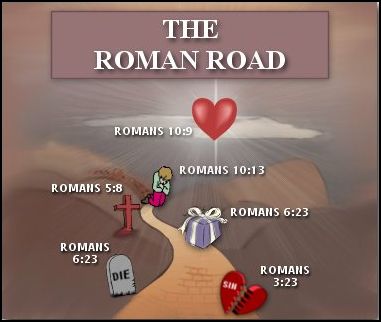
Romans 3:23, Romans 6:23, Romans 10:13

How Do I Tell Non-believers about Christ?

Just as we must be prepared to give an answer (1 Peter 3:15-16) regarding the reason for the hope we have, we also must be prepared to share the good news about Christ with others. One of the easiest approaches I’ve encountered is known as “The Roman Road.” This approach uses three verses (sometimes more) from the book of Romans to explain the essential ingredients of the Gospel message. It begins with Romans 3:23, “For all have sinned and fall short of the glory of God.” When I share this verse, I like to include a personal time I really was made aware of my own sinfulness. No honest person would every say that they’ve never sinned. We all know that we’ve lied, cheated stolen, and often have coveted what we should not have coveted. We need to point out the fact that we’re all judged as sinners – and we cannot deny it.

The second verse is Romans 6:23. It says, “For the wages of sin is death, but the gift of God is eternal life in Christ Jesus our Lord.” Since we’ve all sinned this verse tells us of the difficult situation we’re in. I like to explain that the concept of “death” in this context refers to eternal separation from God. Death is not, like most of us think, extinction. Rather, it is separation. Physical death is separation of our souls from our bodies and spiritual death (or the second death or eternal death as it’s referred to in the Bible) is the separation of our souls from God. Both physical death and spiritual death come as a result of sin. But the 2nd part of this verse gives us hope. We don’t have to die! It tells us the essence of the Gospel; eternal life is offered through Jesus Christ. He lived a perfect life and died on the cross as our substitute to pay the penalty for all our wrongdoing. He graciously offers us forgiveness and heaven as a gift—one that we could never earn or obtain on our own. But it is not enough just to know this; we have to act on it.

That last verses is Romans 10:13: “Everyone who calls on the name of the Lord will be saved.” This verse shows that if we are willing to humbly receive Jesus as our forgiver and leader, then we will be saved. It’s always important to ask the person if they’ve taken that step. If they have not we should have the courage to ask if they are you ready to take this step.

Chuck
“And there is salvation in no one else, for there is no other name under heaven given among men by which we must be saved.” Acts 4:12

1 Peter 3:15, Ephesians 5:2

How Do I Share My Faith With Others?

We can share our faith with others in many different ways. The first and most important way is through our lifestyles. We must live a life that is reflective of our convictions in such a way that it attracts others. Jesus said the 2nd greatest Commandment was to love others and Ephesians 5:2 tells us to “Live a life filled with love, following the example of Christ.” Paul says “I always try to please others instead of myself, in the hope that many of them will be saved. You must follow my example, as I follow the example of Christ” (1 Corinthians 10:33f). We become ineffective when our lives are out of sync with God’s will.

Living a healthy, holy and attractive life is always compelling. When others notice your life they will often be curious and want to know more about it. Peter tells us “if someone asks about your Christian hope, always be ready to explain it. But do this in a gentle and respectful way” (1 Peter 3:15-16). It doesn’t take a Bible College degree or years of Bible study to be able to answer the questions of others about our faith. Yet, the phrase “always be ready” means that we’ll have to spend some time preparing. Every Christian should think through their personal testimony of God’s faithfulness to them and how that has given them a new perspective on life and a hope for eternity. Not all of us have dramatic conversion stories but we all have stories of how God has impacted our lives positively. Every believer has a story to share and every believer must be ready to share it.

Your story should contain three parts. The first part is what your life was like before God acted in his marvelous way to bless you. For those who came to faith in Christ later in life, that is normally our salvation experience. I was in the midst of a divorce and faced the prospect of losing my family and other precious things in life. But for others it’s a personal testing; the loss of a loved one, the loss of a job, a stage of sheer disillusionment with life as a whole, or many other issues that drive us to take a more serious look at our life and very often drives us to our knees and opens our hearts to hear from God. We should not spend too much time on this part of the story, but use it to set the stage for giving God the glory for His wonderful work. The 2nd part of the story is about what God did to resolve my life crisis issue or personal struggle. This part takes some deep reflection because God’s ways are usually mysterious and we need to work at understanding what and how God worked in our hearts during that period. The last part of my story is about how I changed after God’s work in my heart. The difference

Chuck
“Many Samaritans from that town believed in him because of the woman’s testimony…” John 4:39

Luke 9:23-24

What is discipleship?

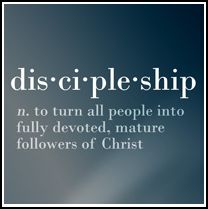
Discipleship involves three major focuses in our lives: loving, learning and living. Discipleship begins with we acknowledge the call of Christ Jesus and receive Him as our Lord and Savior. As the Lord of our life we commit to follow His lead in all areas of our life. Paul puts it this way in Romans 12:1 “offer yourselves as living sacrifices to the Lord… as your reasonable service” as a follower of Jesus. This means we dedicate ourselves to God as the highest priority in life. It’s the commitment to fulfill the greatest commandments of loving God with our whole heart, soul, mind and strength. Then we also embrace the 2nd greatest commandment to love others as we do ourselves. Discipleship begins with committing myself to put God and others first in my life as a follower of Jesus.

A disciple is not only one who loves God and others, but is also one who is always learning more as well. One of the definitions of the word “disciple” is “learner.” Jesus said, “Come to me, all who labor and are heavy laden, and I will give you rest. Take my yoke upon you, and learn from me, for I am gentle and lowly in heart, and you will find rest for your souls.” We learn from Christ by reading the scriptures, studying them, memorizing them and meditating on them. God has given us the greatest resource for learning about Christ in the character and example of others. Paul says, “My friends, I want you to follow my example and learn from others who closely follow the example we set for you” (Philippians 3:17). Thus, a disciple loves God and others and he learns from God and others.

A disciple also lives for God and for others. Jesus made this clear to us while he was still alive. Not only did He wash the disciples’ feet leaving them an example, He exhorted his followers to live like He lived: “Be like the Son of Man. He did not come to be served. Instead, he came to serve others” (Matthew 20:28). Peter explains this perfectly. He says, “Based on the gift each one has received, use it to serve others, as good managers of the varied grace of God” (1 Peter 4:10). But discipleship finds its ultimate fulfillment when obey Jesus’ great Commission and share our faith with others. He said, “Go, Make disciples of all nations” (Matthew 28:19).

Chuck
“If anyone would come after me, let him deny himself and take up his cross daily and follow me. For whoever would save his life will lose it, but whoever loses his life for my sake will save it.” Luke 9:23-24

Romans 12:5

What is the purpose of service?

When we think of “serving” we almost always think of what we do to help others. However, Jesus gave us four powerful illustrations that teach us how important it is for us to be contributing members of the church, not for the sake of others, but for our own wellbeing. Jesus made it clear that we are all dependent on Him, and also on one another, in many different ways. Paul says being connected is God’s plan for us. The letter to the Romans 12:5 says, “Christ made us one body and individuals who are connected to each other.” Paul also says “in Him you also are being built together into a dwelling place for God by the Spirit” (Ephesians 2:22). As parts of a building we all support each other, with Christ being the chief cornerstone. If we’re not vitally connected, carrying our weight in the building, we are left without support ourselves. We need each other. I fill a role and I’m fulfilled as I fill my role!

Jesus teaches us that we’re also a body. Some of us are ears, eyes, toes, hands, feet or any number of other parts or organs of a living body (See 1 Corinthians 12 for this illustration). Paul teaches us that each part is different and has a different function, yet each part is absolutely necessary for the functioning of the whole body. Each individual part is responsible to Christ, the Head, and contributes to the functioning of the whole – that’s service! I need every other part, and every other part needs me! We are all necessary parts if the body of Christ is to function as it should.

The Bible also teaches us that we are vines connected to branch. We are members of a spiritual family. When we fail to serve as we’re created to serve, the body suffers, and we ourselves forfeit the meaning and purpose in life that God has planned for us. If we’re not doing our part as a building we don’t the support ourselves when we need it. If we’re not connected and contributing to the living function of the body we are the ones that pay the price. In a literal body a part that’s not connected to the others usually dies! Vines wither and die if not drawing nourishment from the branch. Family members not loving and living are orphaned or at best prodigals and don’t experience the connectedness God wants for all of His “children.”

Chuck
“We…though many, are one body in Christ, and individually members of each other.” Romans 12:5

1 Corinthians 2:9

Will we work in heaven?

I like to think that there are lots of things we’ll be doing in heaven. We’ll renew old acquaintances. We’ll enjoy great fellowship with family members who have gone on before us. I like to think I’ll be able to finally trace my genealogy all the way back to Japheth, and even to Adam. We’ll get to meet the great heroes of our faith. I have lots of questions for Paul and Moses as I’m sure you do as well. Most importantly, we’ll get to have a personal relationship with our Creator and our Redeemer Himself. There will be worship beyond our imagination in heaven. There will be sights, sounds, smells, sensations, as well as tastes that defy our current imagination. Paul says in 1 Corinthians 2:9 that our senses haven’t experienced these things yet. He writes, “eye has not seen, nor ear has heard, nor has it entered into the mind of man, what God has in store for those who love Him.” But it goes on to say that “spirit has revealed these things to us.” I think that means we know what’s coming, but we’ll have to wait till we get there to experience it all.

If there’s such a thing as time in heaven, I don’t have any idea how much time all of this will require. But, I believe there will be time for work as well. But, work will not be work! I think heaven will be much like God’s perfect creation at the fall. Just as Adam was given complete stewardship and even dominion over all of creation so too will the residents of heaven have meaningful and significant roles to play. Jesus made it clear that those “who have been faithful over a few things, I will make rulers over many things” (Matthew 25:23). I don’t think we can call this “work.” The word contains such negative connotations. It only became dismal and difficult after the fall. Instead of having “work” to do, we’ll have “dominion” to exercise.

Ephesians 2:6 says we have been “seated in heavenly places” with Christ. Just as we are saved now, but yet “will be saved” in the future, I like to think there’s an experiential aspect of the “heavenly places” where we are figuratively now, but will be literally then. Scientists now know that there are more galaxies in the universe than there are people that have ever been born on earth, or who will ever be born! Why did God create all that? What is their purpose, and what is their future? Could it be for our eventual dominion? And we will have all eternity to explore, giving glory to Him in it all, and pleasing Him with our faithful stewardship of the things entrusted to us! (I can dream can’t I?)

Chuck
“What no eye has seen, nor ear heard, nor the heart of man imagined, what God has prepared for those who love him.” (1 Corinthians 2:9)

sewa motor jogja
© Chuck Larsen 2019. Powered by WordPress.