
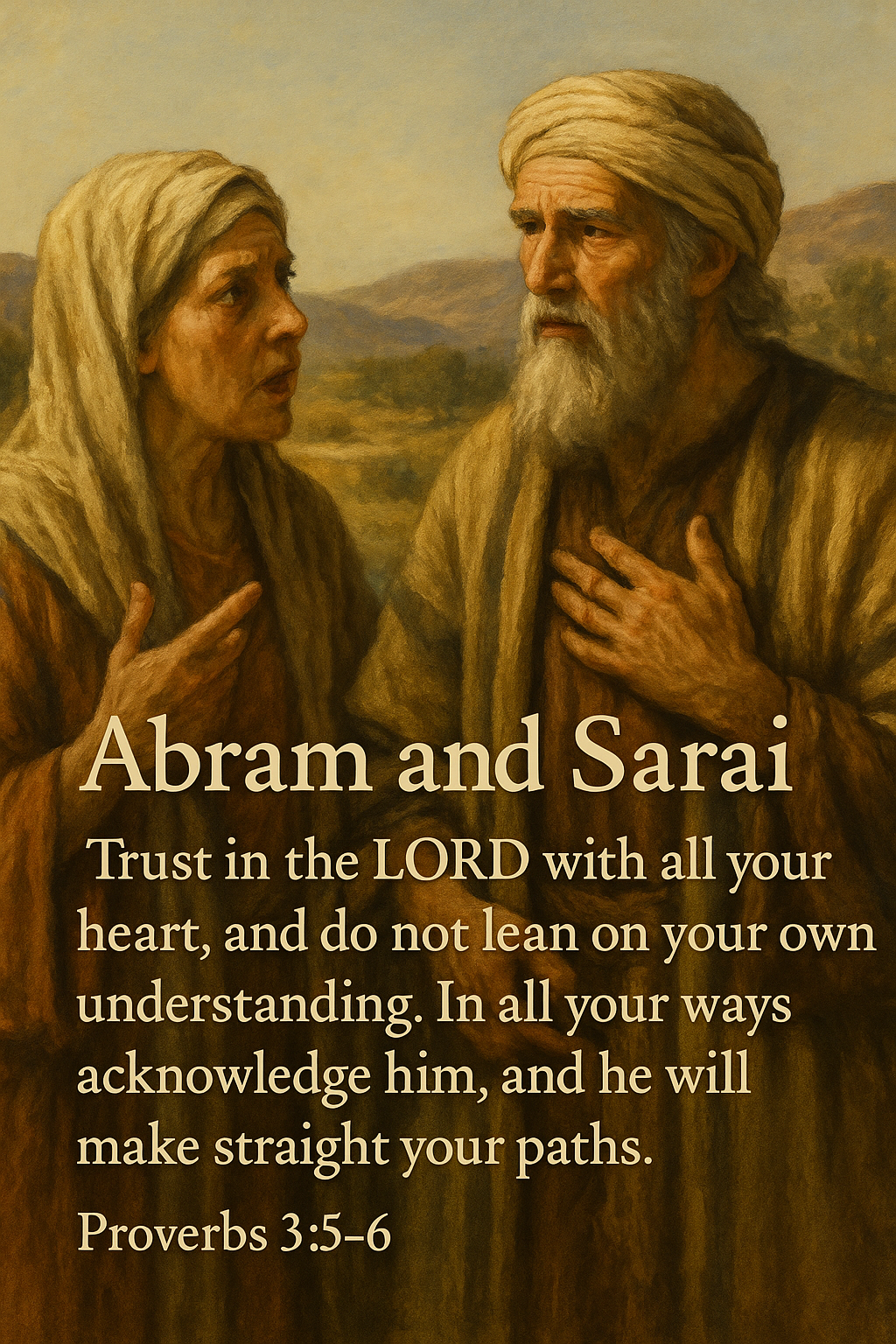
 Abram and Sarai often failed in their “faith.” That’s rather surprising since Abram is known as the example of the faithful. But don’t ever think that his faith never faltered. It did, often! However, one of the major lessons regarding faith in Abram’s life is the lessons that teach us what happens when we fail to trust God. Looking up in faith in God and trusting Him is always the best course of action, even when it seems contrary to wisdom. Herschel Hobbs writes, “A person is not to rely on his or her own understanding or insight. At best, human knowledge is fragmentary. What may seem best to the individual at the moment may not be best in the long haul. Up-sight, not insight, is to be the governing factor of life. Then the person will have no reason to have regrets when viewing life from hindsight.”
Our hindsight is always 20/20. We often find ourselves reflecting on the mistakes we’ve made, wishing for a chance to do things over. It’s a common human experience to see how these mistakes can accumulate and lead to consequences we’d rather avoid. As Alexander Pope wisely observed, ‘To Err is human’ But to ‘make matters worse’ is another human specialty. This is a lesson Abram and Sarai learned the hard way, as their mistakes and their subsequent actions led to a series of unfortunate events.
Genesis 16:1-2 says, “Now Sarai, Abram’s wife, had borne him no children. She had a female Egyptian servant whose name was Hagar. And Sarai said to Abram, Behold now, the LORD has prevented me from bearing children. Go in to my servant; it may be that I shall obtain children by her. And Abram listened to the voice of Sarai.” Sarai gave her maiden, Hagar, to Abram as a sort of surrogate mother. Big mistake! Talk about making matters worse! But it doesn’t stop there. When Hagar does indeed give Abram a son, Ishmael, Sarai makes matters worse by treating Hagar so harshly that she runs away. Notice that neither Abram nor Sarai made any attempt to go after her. This action made matters worse for every generation to follow because Ishmael is to become the father of the Arab nations who will become the permanent enemies of Sarai’s one son, Isaac, and all the descendants to follow. We see this lived out every day in the Mideast. Organizations like Hamas and Hezbollah make it their mission to stand against Isaac’s descendants in any way they can. What a perfect illustration of Proverbs 3:5-6 which says, “Trust in the LORD with all your heart, and do not lean on your own understanding. In all your ways acknowledge him, and he will make straight your paths.”
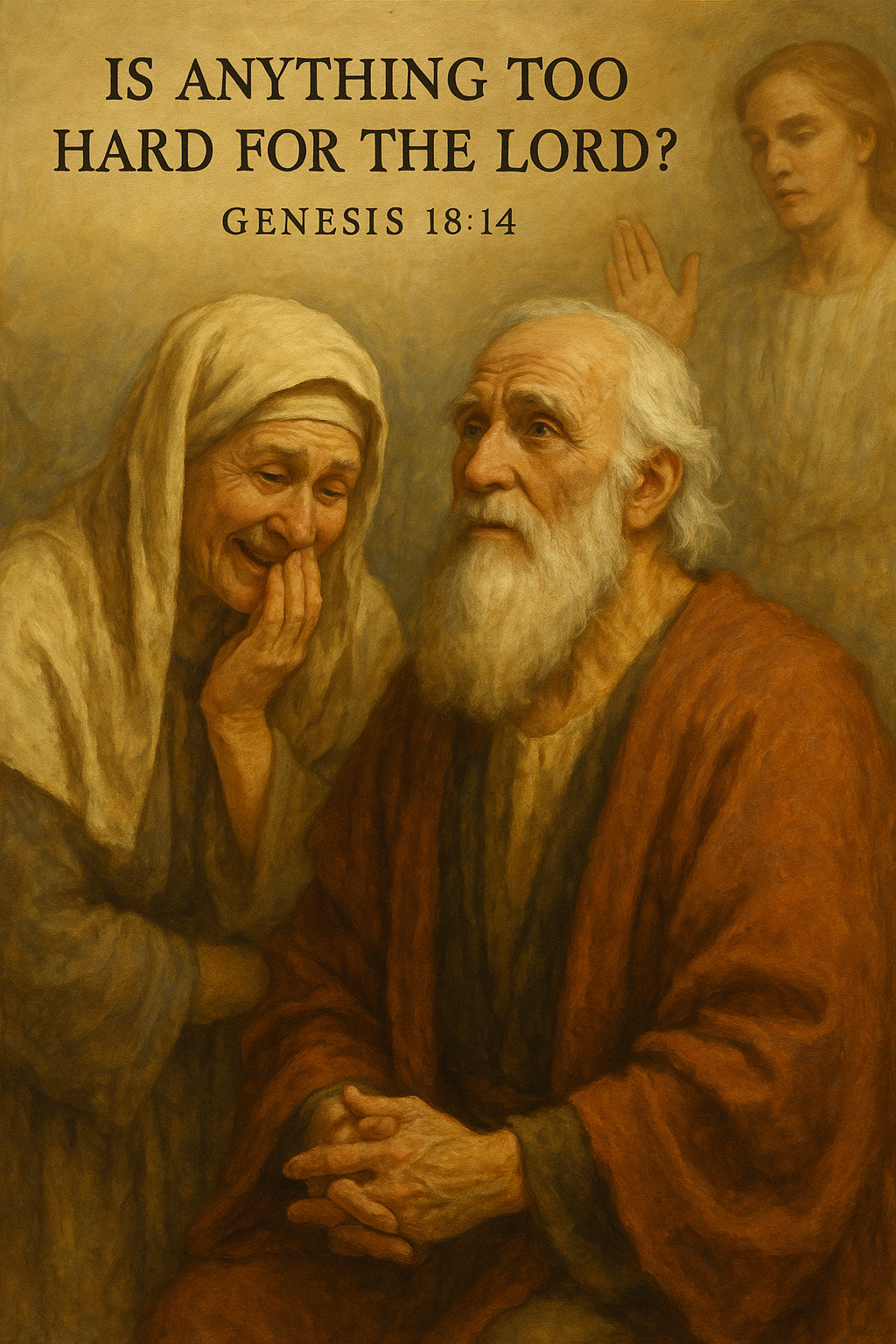 In Genesis 18:14, we read about an angelic visit to Abraham and Sarah. We read a question the angel asked that should be a regular part of our daily thinking. The two angels appear, and Abraham prepares a meal for them. During their discussion, the Angel of the Lord informs Abraham that God is about to fulfill his promise to them of a child. Even though Abraham’s doubt caused him to look at Eleazar as his heir, then Lot, then Ishmael, the Angel now informed him that his wife Sarah was about to have the promised heir. In his “The Message” translation, Eugene Peterson records Sarah’s response: “Abraham and Sarah were old by this time, very old. Sarah was far past the age for having babies. Sarah laughed within herself, “an old woman like me? Get pregnant? With this old husband of mine?” I can hear my wife laugh if an angel said something like that to her, and I’m only 78! Kathy is only 73. Abraham was nearly 100! Sarah was about 90 years old.
 The Holy Spirit’s indwelling work of regeneration is a guarantee of our eternal security. Our destiny is certain! Another facet of the Spirit’s work in our lives that provides confidence in our eternal destiny is the Spirit’s Baptism. Being baptized with the Holy Spirit, we are placed into the body of Christ. 1 Corinthians 12:12-13 says, “For just as the body is one and has many members, and all the members of the body, though many, are one body, so it is with Christ. For in one Spirit, we were all baptized into one body…” When we come to faith in Christ, the scriptures teach us that we are baptized into the Holy Spirit. We are vitally joined to the Messiah. We become members of His body. It is absurd to think a part of Christ’s body could ever possibly fall off of His Body.
 When we come to faith in Jesus, God sends the Holy Spirit to live within us. That Spirit takes up residence and claims our bodies as His sanctuary. Paul tells us that “… your body is a temple of the Holy Spirit within you, whom you have from God…” (1 Corinthians 6:19). The Spirit, living within us, begins His work of regeneration. We are declared to have new life. 2 Corinthians 5:17 states that all things have become new; Galatians 6:15 declares the believer to be a new creature or creation; Ephesians 2:10 teaches that believers have been created in Christ Jesus. The Holy Spirit’s work of regeneration makes one a new creation and creature.
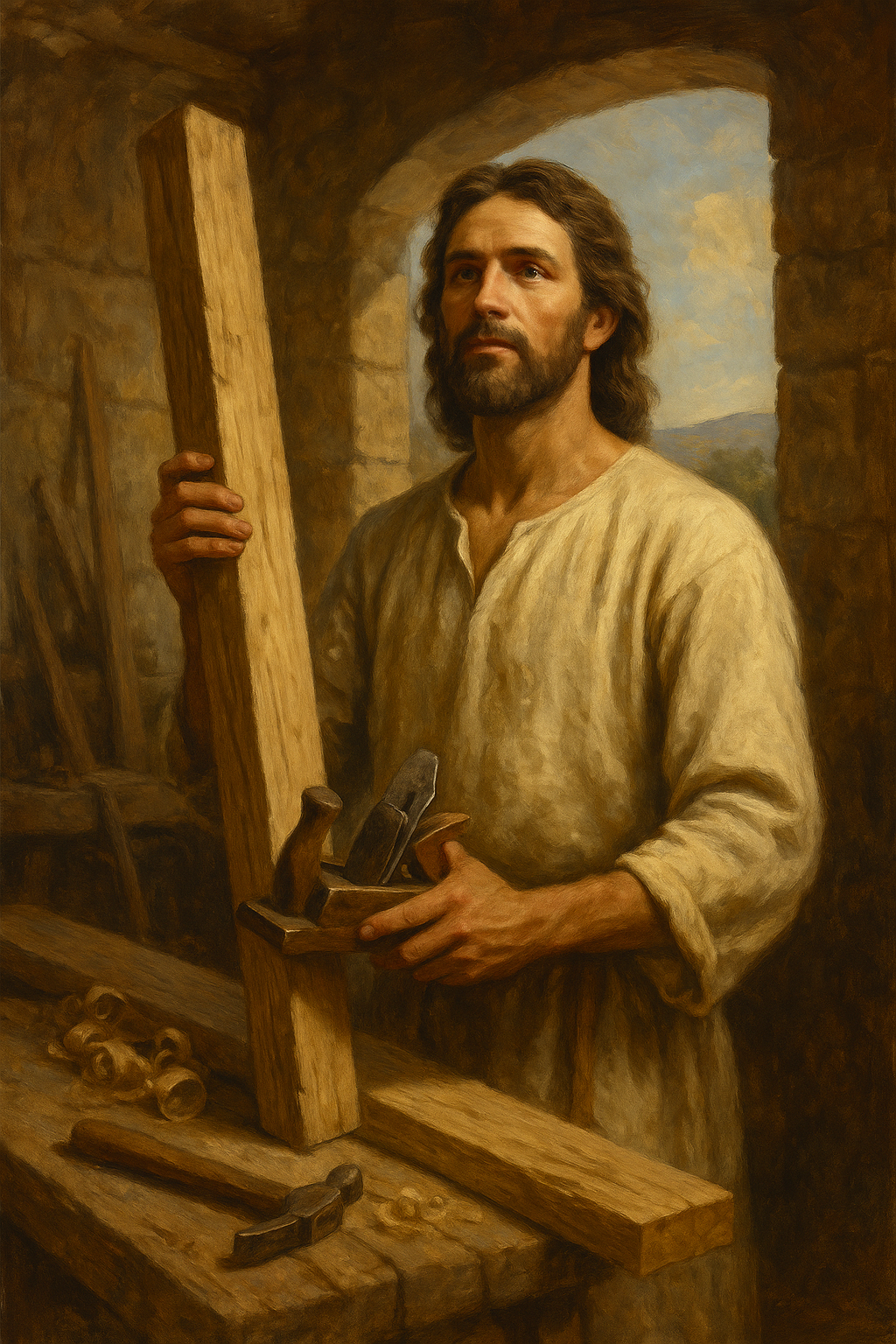 One of the first things we like to find out about people is what they do for a living. When we think about people, we think about them professionally or occupationally. We like to put people in boxes that we can understand. Jesus was a carpenter. Robert Morey writes, “Those who grew up with Jesus in Nazareth assumed that He was, like his ‘father’ Joseph, a carpenter. And, of course, Jesus was a carpenter by trade for most of His life.” In Mark 6:2-3, the religious leaders were astounded by Jesus’ teachings and miracles, and they said, “Where did this man get these things, and what is this wisdom given to Him, and such miracles as these performed by His hands? Is not this the carpenter, the son of Mary, and brother of James, and Joses, and Judas, and Simon? Are not His sisters here with us?” Carpenters don’t teach like that or perform miracles.
 Jesus claimed to have existed before he was born in the flesh. In his great prayer to the Father in John 17:5, he says, “Father, glorify me in your own presence with the glory that I had with you before the world existed.” This doctrine is often called the “Pre-existence of Christ.” Morey says, “While the concept of the pre-existence of Christ does not require the deity of Christ, the deity of Christ does require the pre-existence of Christ. If His pre-existence is eternal, then His deity is established.” The Jews rejected Jesus on the basis of His claims, but they should have noted that the Messiah of the Old Testament was supposed to have been pre-existent.
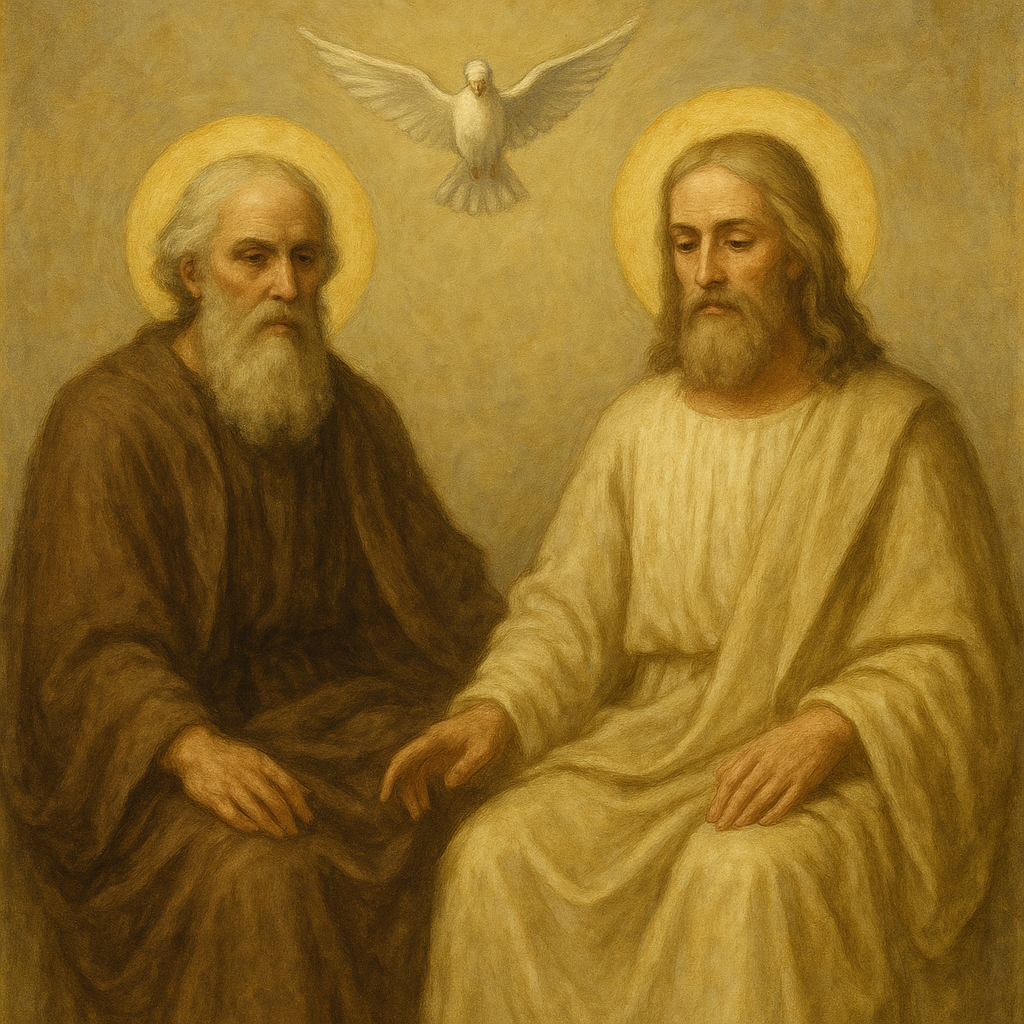 Martin Lloyd-Jones says, “Because of certain exaggerations, excesses and freak manifestations, and the crossing of the border line from the spiritual to the scientific, the political and the merely emotional, there are many people who are afraid of the doctrine of the Holy Spirit, afraid of being too subjective. So, they neglect it altogether. I would also suggest that others have neglected the doctrine because they have false ideas with regard to the actual teaching concerning the person of the Holy Spirit.”
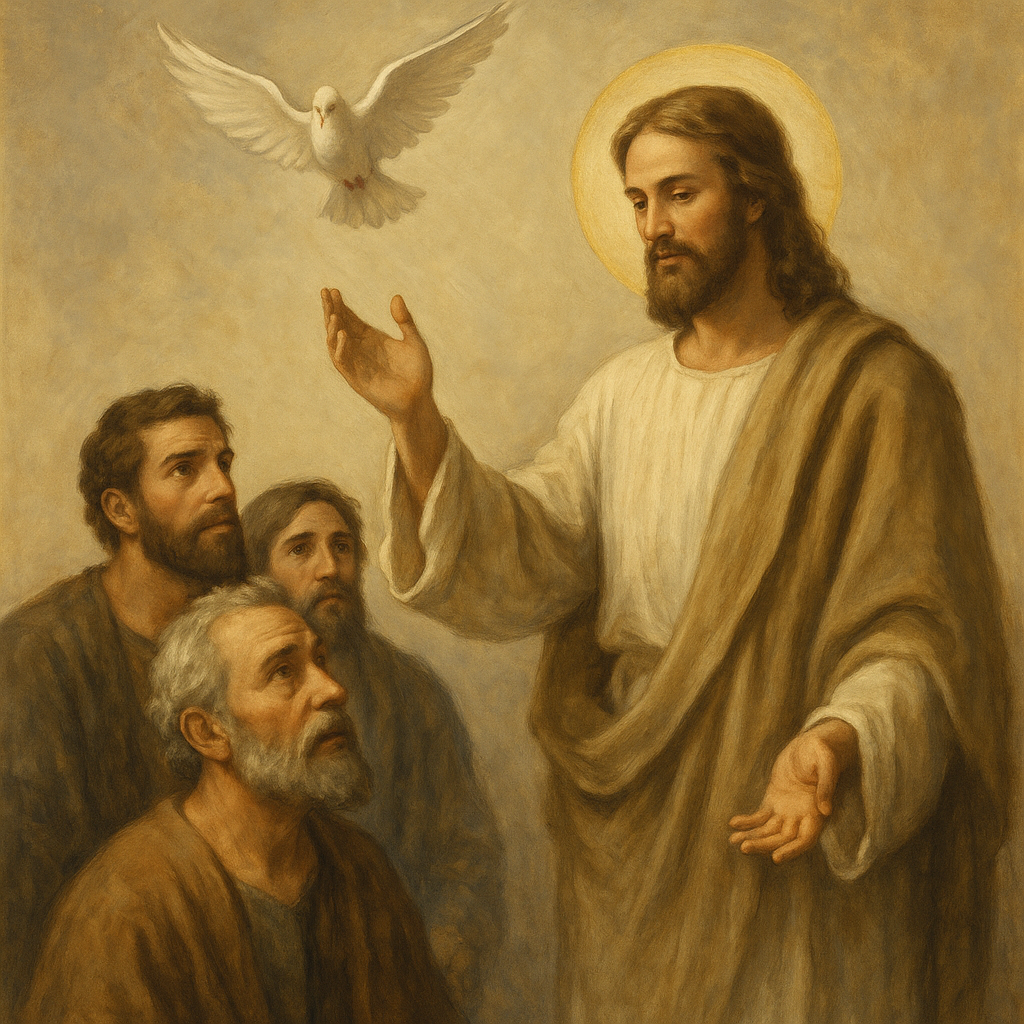 When Jesus discussed His departure with His disciples, He made a promise to them—and to us as well. First, He said in John 14:1, “Let not your heart be troubled…” Then, in John 14:16, He told them that the Father would send someone to them who would fill the void of His absence. He would petition the Father, and the Father would “give you another Helper, who will abide with you forever.”