service genset jogja
Jeremiah 3:21

Just Come Home

When Jesus told the parable of the prodigal son, I think he was speaking about Israel. Even in the Old Testament Israel, referring to both the Northern Kingdom and the Southern Kingdom, was called God’s son. He was their father and that image of God the Father and the 24 come homeNation of Israel being His son is often referred to. The prodigal son took all that was given to him by the father and ran off to a far country to revel in the pleasures of the world. The son was left to make his own choices and ended up with the ravages of sin on his life. He finally came to the end of himself while eating food given to the pigs belonging to his employer. When the hold of the world was finally broken, the son repented and his first thought was his father and all that he had left behind. He wanted to come home and the father was waiting to welcome him.

Jeremiah 3:21 pictures the prodigal son, the Nation of Israel, in the mud sin eating the food given to the swine. Will they come to their senses? Will they remember their Father? Will they come home? The text says no; “A voice on the bare heights is heard, the weeping and pleading of Israel’s sons because they have perverted their way; they have forgotten the Lord their God.” They have come to the end of themselves and to the end of their sin. Craigie puts it this way; “His words conjure up the sound of lament, issuing from a nation that has at last perceived the error of its ways; having forgotten God, their paths through life have become the twisted byways of evil, away from the true source of their existence. In anguish, perceiving the error of their ways, the people turn back to God in entreaty and repentance—or such was the prophet’s desire.”[1] Unfortunately, the prophet’s desire was not realized.

Huey isn’t sure who the people are “weeping to.” He thinks the description is reminiscent of the prophets of Baal in their contest with Elijah. They moaned and screamed and cut themselves but to no avail. He writes, “It is not certain whether he was describing weeping and pleading directed toward God by a repentant people or whether they were pleading with their fertility gods to hear their prayers (cf. 1 Kgs 18:26–29).”[2] The prodigal son’s heart turned towards home and the father. But Israel’s did not. They persisted in their well-worn path to destruction and found themselves without hope in a bitter, meaningless, uncaring world. We are often like that, yet there is a heavenly Father who loves us and calls to come home. He is yearning to place the family crest on our fingers and the cloak of sonship around our shoulders. We just need to come home!

[1] Peter C. Craigie, Jeremiah 1–25, vol. 26, Word Biblical Commentary (Dallas, TX: Word, Incorporated, 1998), 64.

[2] F. B. Huey, Jeremiah, Lamentations, vol. 16, The New American Commentary (Nashville: Broadman & Holman Publishers, 1993), 78.


Jeremiah 3:20

The Empty Pleasures of Sin

When Jeremiah picks up his indictment of Israel again in Jeremiah 3:20, he uses the term “Israel” to refer to both Judah and the Northern kingdom, Israel, with its capital in Samaria. As His child, Israel had become prodigal. God calls them to come home. As a spouse, Israel 23 sin killshad been unfaithful and has forsaken her vows. This verse uses a new word for her infidelity. Jeremiah speaks for God, “Surely, as a treacherous wife leaves her husband, so have you been treacherous to me, O house of Israel, declares the LORD.”

Lange observes that, Israel takes “…it as an affront to be told of their faults, and called upon to amend them; … They are so ignorant of themselves, and of the strictness, extent, and spiritual nature of the divine law, that they see nothing in themselves to be repented of; they are pure in their own eyes, and think they need no repentance. Many ruin their souls by baffling the calls to repentance.”[1] But the idols they refuse to abandon bring no satisfaction in the end. The bleed us dry of life, health and contentment and simply drive us to lust for more. There is a true emptiness in the pursuit of the pleasures of the flesh, the pride of life, and the lust of the eyes. There are no lasting joys in serving these idols. It’s the end of these pursuits that brought the prodigal son to his senses. It was so for many others since then as well.

Spurgeon said, “The worst of crimes—that a wife should be false to her marriage vows, and turn aside from her husband whom she is bound to love; and very seldom is it that a husband calls a treacherous wife back again,—but God in infinite mercy hates putting away. He cannot bear divorce. He holds still to the object of his love; and therefore complains with a sweet fidelity of affection, of the treachery of Israel; and while he is doing it a voice is heard upon the high places, weeping and supplications of the children of Israel, for they have perverted their way, and have forgotten Jehovah their God; and therefore what was there for them but sorrow. They were on their high places offering sacrifice and incense to their new gods; and instead of joy and holy psalms and hymns of delight, they were crying like the priests of Baal, and cutting themselves and torturing themselves. God heard it, weeping and supplications, not to him, for they had perverted their way. Their sorrow did not come from him, for they had forgotten the Lord their God. But that sorrow had something hopeful about it. They found no joy in their new gods, and derived no comfort from their backslidings.”[2]

[1] John Peter Lange, Philip Schaff, and Joseph Packard, A Commentary on the Holy Scriptures: Malachi (Bellingham, WA: Logos Bible Software, 2008), 23.

[2] C. H. Spurgeon, The Metropolitan Tabernacle Pulpit Sermons, vol. 58 (London: Passmore & Alabaster, 1912), 504.

Jeremiah 3:19

Knowing God as Father

The imagery of family is brought back up again. He had used the imagery in the past. The two nations were looked at as spouses that God had dearly loved but who had betrayed His trust and violated their covenant promises and were unfaithful to Him. Here He speaks to 20 god fatherboth nations as children. He had set them up with a special inheritance as any good father would. Jeremiah 3:19 says, “I said, how I would set you among my sons, and give you a pleasant land, a heritage most beautiful of all nations. And I thought you would call me, My Father, and would not turn from following me.”

He wants us to call him “My Father.” This is reminiscent of Jesus’ instruction on how to prayer. We are to begin our prayer by addressing Him as “Our Father.” We can come to Him as a little child comes to their daddies and call out “Abba Father,” which is a term of endearment. It’s also a term of complete dependence and trust. Little children especially can exhibit the most remarkable kind of trust. Jesus once told us that the Kingdom of Heaven was reserved for children or those who can find the faith of a child. When he faced crucifixion Jesus prayed that the cup of suffering that awaited Him might be passed over, but He ended His prayer with a childlike statement of trust. It is God’s will that matters and whatever that holds for me, I know I can trust Him because He is my Father!

John MacArthur quotes Martin Lloyd Jones who expounds on the Lord ’s Prayer. To Jones the most significant aspect of that prayer is the opening instruction on how to address God. He writes, “The sum of it all is that ultimately there is nothing in the whole realm of Scripture which so plainly shows us our entire dependence upon God as does this prayer, and especially these three petitions. The only thing that really matters for us is that we know God as our Father. If we only knew God like this our problems would be solved already and we would realize our utter dependence upon Him and go to Him daily as children to their Father.”[1] Going directly to Jones’ work he explains the importance of knowing God as “Father.” He writes, “We are born under the wrath of God. We do not know Him, and we are evil by nature. Our greatest need is to be reconciled to God, to have our sins forgiven, to know God as our Father, to be blessed by Him, and to start as a child of God. And Jesus came in order that men and women might know this. This is His message—not that we improve the world but that you and I be redeemed.”[2]

[1] John F. MacArthur Jr., Alone with God, MacArthur Study Series (Wheaton, IL: Victor Books, 1995), 90.

[2] David Martyn Lloyd-Jones, Authentic Christianity, 1st U.S. ed., vol. 1, Studies in the Book of Acts (Wheaton, IL: Crossway Books, 2000), 15.

Jeremiah 3:18

A City Without Walls

The religious barriers will be broken down when God comes out of the box (Ark of the Covenant) and abides permanently with His people in Jerusalem. The Messiah, the Great Shepherd, will rule with grace and love and all nations will be gathered to Him. The hatred and 19 cityanimosity that existed between all people will be no longer. Even the bitterness of Judah towards the Northern Kingdom of Israel will be resolved and the nation will gather together to enjoy their common inheritance. Jeremiah 3:18 says just that, “In those days the house of Judah shall join the house of Israel, and together they shall come from the land of the north to the land that I gave your fathers for a heritage.”

Huey observes that, “Jeremiah was not the only prophet who spoke of a future reunification” He argues that Isaiah, Ezekiel, Hosea, and Micah all prophesied a reunion of the Jews and a reoccupation of the Promised Land. (See, Isa 11:12–13; Ezek 37:16–23; Hos 3:5; Mic 2:12).[1] Many scholars see what began in 1948, the establishment of a new Israeli Nation, the beginning of the fulfillment of these prophecies. Jensen says, “Six centuries after Jeremiah delivered this promise of God to Judah and Israel, Paul was inspired to expand the truth in Romans 11, and practically two millennia later the prophecy of the regathering to Palestine has begun its fulfillment.”[2]

The uniting of the two kingdoms is symbolic of uniting enemies. In 931 BC the Northern Kingdom split from David’s line of rulers and established their own capital in Samaria. This is the beginning of the Jewish—Samaritan schism. When Nehemiah brought the remnant back to rebuild the city, the Samaritans that lived in the land wanted to join with them, but the Jews would not allow them to have any part.  The rebuilding of the walls around the city illustrated the Jew’s hatred for the Samaritans. The Samaritans worked hard to prevent them from finishing the work. When Herod began to rebuild the temple for the Jews, a Samaritan raiding party dug up a cemetery and scattered corpses all over the spot where the Holy of Holies would be in order to defile the place. By Jesus day, the Samaritans were outcasts, hated by the Jews. All the hatred and bitterness over thousands of years will be resolved through the presence of the Messiah. To Him every knee will bow and every tongue will confess that He is the Lord of Heaven and Earth. Peace will finally reign supreme in Jerusalem. Zechariah describes Jerusalem as being a city without walls. Guzik observes, “Today Jerusalem is indeed a city without walls, because in modern warfare they are useless in defending the city. Ultimately Jerusalem will be a city without walls because the prince of peace will reign from Jerusalem and He will be her protection.”[3]

[1] F. B. Huey, Jeremiah, Lamentations, vol. 16, The New American Commentary (Nashville: Broadman & Holman Publishers, 1993), 76.

[2] Irving L. Jensen, Jermiah and Lamentations, Everyman’s Bible Commentary (Chicago, IL: Moody Press, 1974), 28.

[3] David Guzik, Zechariah, David Guzik’s Commentaries on the Bible (Santa Barbara, CA: David Guzik, 2013), Zec 2:1–5.

Jeremiah 3:17

Out of the Box

Jeremiah had predicted that the Ark of the Covenant would lose its significance. It would not even be remembered. It was the “box” in which Judah had attempted to keep its God. In Jeremiah 3:17, he explains that God will break out of the box. The passage says, “At that 18 outa boxtime Jerusalem shall be called the throne of the LORD, and all nations shall gather to it, to the presence of the LORD in Jerusalem, and they shall no more stubbornly follow their own evil heart.” Martens explains, “For all the reverence given to the ark in the past, Jeremiah announces, it will not even receive mention in the future because the presence of God will be so much greater and more overpowering. His throne in Jerusalem will be like a magnet to which nations will come. The presence of God will not be symbolized by the ark, hidden in the holy of holies, access to which is by the high priest alone. No, God’s presence will now be symbolized by the entire city, openly accessible to all.”[1]

Constance says, “Jeremiah predicted that Jerusalem would be the throne of God and that all nations shall be gathered unto it. The two long-divided parts of the nation, Judah and Israel, would finally be reunited to dwell in the Promised Land.” I think it’s a little more significant than just the two nations of Judah and Israel. The phrase that “all nations shall gather” makes for interesting reflection when we compare it to what happened in Acts 2. The gathering of God’s people during that Passover season brought pilgrims from every nation to Jerusalem. After Jesus ascension, the Holy Spirit fell upon the Apostles who began to speak to all the people present, and they all heard it in their own language. I would suggest that there was an elimination of religious distinctions, God exploded from the many boxes people put Him in, and all people will be gathered together. Constance goes on to say, “The elements of the promise include godly leaders, the absence of outward elements of worship, the dwelling of God’s presence with them, a godly life, a successful witness to the world, and a unified nation.”[2]

People will then be changed. Their stubbornness will be dissolved and their hearts open to the one true God and to one another. Speaking about the Hebrew term for stubbornness, Mackay explains, “The term describes those who are certain they have the capacity to make decisions for themselves, and once they have made them, there is no deflecting them from their resolution…”[3] There will be no more radical religious hatreds and animosities. The stubbornness of man in keeping God in their personal boxes will be over. God will have broken free and revealed Himself in person to the world, and “every knee will bow and every tongue will confess that Jesus Christ is Lord to the Glory of God the Father” and peace and harmony will reign in the Kingdom of God.

[1] E. A. Martens, Jeremiah, Believers Church Bible Commentary (Scottdale, PA: Herald Press, 1986), 55.

[2] Mrs. T. M. Constance, Jeremiah, vol. 1 (Dickson, TN: Explorer’s Bible Study, 1978), 21.

[3] John L. Mackay, Jeremiah: An Introduction and Commentary: Chapters 1–20, vol. 1, Mentor Commentaries (Fearn, Ross-shire, Scotland: Mentor, 2004), 194.

Jeremiah 3:16

God in a Box?

The religious elite in Judah expected the sacrificial system to be their salvation in contrast to the fate that befell the Northern Kingdom. They trusted in rituals, rites, and regulations to save them. Jeremiah explains how God wants our hearts, not our sacrifices. He wants our17 god box love. Like the bronze serpent, the temple, and the now the Ark of the Covenant had become their idols. They actually thought they had God in the box, i.e., the Ark of the Covenant. The very symbols that had served Israel in the past had become the objects of worship instead of the God who they represented. Speaking of the coming of a new relationship with God, Jeremiah explains that things will be different. He says in Jeremiah 3:16, “And when you have multiplied and been fruitful in the land, in those days, declares the LORD, they shall no more say, ‘The ark of the covenant of the LORD.’ It shall not come to mind or be remembered or missed; it shall not be made again.”

The very object that signified the presence of God in their midst won’t even be remembered nor missed at all. In the context it’s apparent that this is a positive thing. Constance says, “They were no longer to speak of the ark itself because they would have that which the ark was intended to foreshadow. The Lord Jesus Christ, by His coming, has put out of people’s thoughts the material Ark of the Covenant, because its meaning is fulfilled in Him. In Jesus Christ we have a covenant of grace which can never fail and never be broken.”[1] While on the cross the veil in the temple that separated man from God’s presence was split in half from top to bottom. We often think of that as offering us access to God. We can now come freely, one and all, into His presence. But another aspect of it might be that it opened the access from God to man as well. He, in the person of His only Son, came from the Holy of Holies and entered into our presence as well. Jesus surely was “God with us”, or Immanuel!

But He not only “was” God with us. He will literally be God with us in the future and He is now God with us as well. There is a sense of the fulfillment of this prophecy in a mysterious way in the Church itself. Matthew seems to refer to the existence of the Church in this time period as the presence of the mystery form of the Kingdom of God. Ryken says, “We no longer need the ark of the covenant because God himself is with us, by his Holy Spirit. We are no longer divided by pride or race; we all worship together, drawn by the attractive power of God’s presence.”[2]  It was the elimination of religious ritual that Jesus brought to bring God’s people back together. People from every tribe and nation will gather together in the Kingdom to worship the God who will reign with them. Every knee will bow and every tongue will confess that Jesus Christ is Lord!

[1] Mrs. T. M. Constance, Jeremiah, vol. 1 (Dickson, TN: Explorer’s Bible Study, 1978), 21.

[2] Philip Graham Ryken, Jeremiah and Lamentations: From Sorrow to Hope, Preaching the Word (Wheaton, IL: Crossway Books, 2001), 60.

Jeremiah 3:15, John 10:11

The Good Shepherd

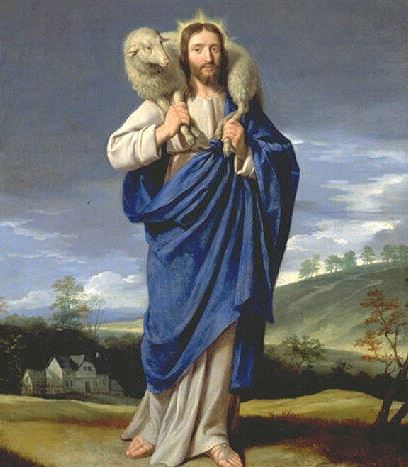
Jesus spoke of the shepherd who had 100 sheep and left 99 to find the one lost one. We often see pictures of him carrying the injured one back home across His shoulders. God calls us all to come home. But more importantly he promises that He will bring us home. Jeremiah 16 good shepherd3:14 says, “I will take you…I will bring you home (to Zion).” This promise is repeated several more times in the book of Jeremiah alone. Other prophets make reference to shepherds also and in Jeremiah 3:15 Jeremiah promises that after He brings them home, “I will give you shepherds after my own heart, who will feed you with knowledge and understanding.”

The use of the term “shepherds” is probably a reference to righteous kings because the kings of Israel and Judah were often referred to as shepherds. Willis says, “The reference to shepherds after my own heart in 3:15 is probably an allusion to kings from the line of David or kings who exhibit a David like character. David, like other monarchs of the ancient Near East, is occasionally referred to as a ‘shepherd’ for his people, and Samuel had said of God’s selection of David, ‘the Lord has sought out a man after his own heart.’” Since God brought these two terms together it seems to indicate as Willis concludes, that “the Lord is planning either to perpetuate the Davidic Covenant (which started with ‘a man after God’s own heart’) or to establish another one on the same basis.”[1] It must be a reference to the coming Messiah.

Jesus refers to Himself as the good shepherd.  It’s in John 10:11, Jesus says, “I am the good shepherd. The good shepherd lays down his life for the sheep.” There are shepherds at home who will help us stay on track and understand truth, but only Jesus is the “Good” shepherd who can lay down His life for the sheep. God is calling us home, but the good shepherd left His home and came looking for us. God’s call is “not like a mother calling her child home for dinner. When God calls you to come home, he does not just say, ‘It’s time to come home now.’” The lost sheep found himself in such a mess that he could not make it home by himself. He needed help. … He needed his father to scoop him up, put him on his shoulders, and carry him home. …When God calls you to salvation in Jesus Christ, he does not just yell down the block; he scoops you up, plants you on his shoulders, and marches you all the way home.”[2]

[1] Timothy M. Willis, Jeremiah/Lamentations, College Press NIV Commentary (Joplin, MO: College Press Pub. Co., 2002), 59.

[2] Philip Graham Ryken, Jeremiah and Lamentations: From Sorrow to Hope, Preaching the Word (Wheaton, IL: Crossway Books, 2001), 55–56.

Jeremiah 3:14, Matthew 11:28

Come Home!

God calls His children to come home to Him. It doesn’t matter where we’ve been, what we’ve done, or how long we’ve been gone. His love will never fade and He’ll always take us back. Even “Faithless Judah” and “Apostate Israel” could repent of their sin and come home. 13 come homeThat’s Jeremiah’s call from God. In Jeremiah 3:14 he pleads with God’s prodigal children, “Return, O faithless children, declares the LORD; for I am your master; I will take you, one from a city and two from a family, and I will bring you to Zion.” God promises to forgive them and to bring them home again to the place of blessing, safety and prosperity.

God’s call to wayward children goes out to all even though He knows most will never hear Him. The verses following this, from 3:14 to 3:18 contain some profound prophecies. I think Jensen is right when he suggests that the it’s not the immediate future in that’s in view. He says, “The near future, in the foreknowledge of God, was to be very dark for Judah and Israel. True, there would be a time of restoration and rebuilding the temple, with revivals of heart. But on the whole, the generations of God’s people would be generations of stony hearts, eventually rejecting the Messiah, Christ. Beyond this, however, in the far, far future, there was a bright picture. God through Jeremiah portrays a touching scene of returners-in-heart when Judah and Israel, led by God (3:14), would walk together out of foreign lands back to the land of inheritance (3:18). The things of the old covenant would give way to glories of the new (3:16), proceeding from the throne of Jehovah in Jerusalem, to which even Gentiles would gather and around which there would be found no evil (3:17).”[1]

Why does God care about a people who cared not for Him? Why would He even want such “faithless children” back? Ryken answers that best. He writes, “Why does God do it? He does it for no reason at all except that he is a God of love. This is the inscrutable grace of God. He is gracious to the ungracious, faithful to the unfaithful, loving to the unloving. His call comes first. God issues the invitation to come back home before anything else happens, before we have made the slightest motion back toward him. This is the priority of the divine call in salvation.”[2] Jesus’ words in Matthew 11:28 take on new meaning when we realize He’s the God of Jeremiah still calling to us out of His love. He says, “come to me all of you who are weary and heavy laden and I will give you rest.”

[1] Irving L. Jensen, Jermiah and Lamentations, Everyman’s Bible Commentary (Chicago, IL: Moody Press, 1974), 27–28.

[2] Philip Graham Ryken, Jeremiah and Lamentations: From Sorrow to Hope, Preaching the Word (Wheaton, IL: Crossway Books, 2001), 55.

sewa motor jogja
© Chuck Larsen 2019. Powered by WordPress.