service genset jogja
Jeremiah 5:23-24

Do You Know God?

The citizens of Jerusalem in Jeremiah’s day had turned from God. They denied the evidence all around them of God’s sovereignty and his majesty, but more importantly, the clear evidence of His love. They lost perspective and 03 know godadopted the conviction that Satan promoted with Adam and Eve in the Garden. They believed that God was keeping good things from them and that He didn’t really care about them but only wanted their praise and worship to salve His own ego. They no longer knew God. They knew about God but they had no relationship with Him anymore. Jeremiah put it this way in Jeremiah 5:23, “But this people has a stubborn and rebellious heart; they have turned aside and gone away.”

Jeremiah 5:24 continues that idea. It says, “They do not say in their hearts, ‘Let us fear the LORD our God, who gives the rain in its season, the autumn rain and the spring rain, and keeps for us the weeks appointed for the harvest.’ Notice that God is presented by Jeremiah as the protector of His people. He keeps the oceans from destroying them. He set boundaries. He’s the provider for His people. He gives all good things to them. He loves us and only wants what’s best for us all. Unfortunately, we don’t know Him as well as we should.

In 1996 U.S. astronaut Shannon Lucid spent 188 days in space along with two cosmonauts from the former Soviet Union. One night after supper she and the two cosmonauts began talking about their childhoods and what life was like for them during the Cold War between the United States and the Soviet Union. Lucid and the cosmonauts surprised each other. She told them she had grown up fearful of the Soviet Union, and most American adults would have felt the same way. But the cosmonauts said they had been equally afraid of the United States. What? Afraid of the United States? The idea that Russians would think we wanted to destroy them is incredible to Americans. These Russian cosmonauts resemble those who do not know God. They think that God wants to harm them, but nothing could be farther from the truth. Although there is a spiritual cold war going on, in which those who do not know Christ are indeed God’s enemies because of their sins, they are not enemies that God wants to destroy. They are enemies that God dearly wants to make his friends.[1]

[1] Craig Brian Larson, 750 Engaging Illustrations for Preachers, Teachers & Writers (Grand Rapids, MI: Baker Books, 2002), 173–174.

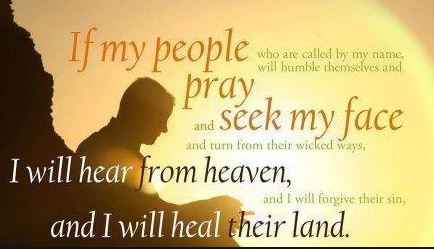
Jeremiah 5:22

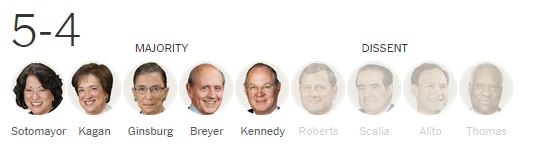
By a Vote of 5 to 4!

Just as the apostles saw the miracles Jesus performed and heard His divine teachings they did not understand what it all meant. They saw but didn’t see. They heard but didn’t hear. Thus, they did not comprehend the reality of the 02 five to fourdivine presence with them in the person of Jesus Christ. One of the latest lessons He taught His disciples was when Peter cut of Malthus’ ear in the garden. Jesus rebuked Peter, replaced the ear which miraculously reattached itself and said, “don’t you know that I could call legions of angels to come fight for me?” Well, they didn’t know! They saw and they heard but they didn’t comprehend. Jesus was indeed the physical presence of God almighty!

Jeremiah suggested that the Israelites saw God’s handiwork as well but didn’t see. God’s greatness, His majesty is apparent to all who will open their eyes and ears to see and hear. Once we do that we will stand in total awe and amazement. In Jeremiah 5:22, he writes to those living in Jerusalem, “Do you not fear me? declares the LORD. Do you not tremble before me? I placed the sand as the boundary for the sea, a perpetual barrier that it cannot pass; though the waves toss, they cannot prevail; though they roar, they cannot pass over it.” God established the basic laws of nature which enable us to live and breathe and exist in the world as we do. William Blake was right, “A fool sees not the same tree that a wise man sees.”

Just as He established the laws that make our lives possible, so too, He established the moral foundations that make our lives meaningful. But, like the citizen of Jerusalem, we see but do not see. We hear and do not hear! I would love to speak the words Jeremiah spoke to Jerusalem to the members of the Supreme Court of the United States. “Do you not fear me? Declares the Lord. Do you not tremble before me? I established marriage in the garden. I set its boundaries. I established its ceremonies and vows and participants. I placed the genders in their proper places and established permanent barriers that should not be crossed. Do you not fear me? Declares the Lord! Jeremiah’s indictment is that God has set bounds for the sea and the sea must obey. He has set bounds for mankind, but mankind has rebelled. I like what T.S. Eliot said; “I had far rather walk, as I do, in daily terror of eternity, than feel that this was only a child’s game in which all the contestants would get equally worthless prizes in the end.”[1] Unfortunately, the United States decided by a vote of five to four that we have no fear of God!


[1] Craig Brian Larson and Brian Lowery, 1001 Quotations That Connect: Timeless Wisdom for Preaching, Teaching, and Writing (Grand Rapids, MI: Zondervan Publishing House, 2009), 126.

Jeremiah 5:21, Mark 8:18

About Seeing and Hearing

It would be interesting to study the book of Jeremiah noting only the things that Jeremiah said that are similar to the things Jesus said. Jesus knew the Word! Inside and out and He obviously knew and understood Jeremiah 01 wise manperfectly. In Mark 8:18, Jesus asked his listeners “do you have eyes but do not see? Do you have ears, but do not hear?” Jesus was speaking to his disciples at that time and he had just fed 5000 people with two fish and five small loaves of bread. They witnessed that yet didn’t put two and two together to grasp the fact of who Jesus really was. They did not recognize Jesus as the Yahweh of the Old Testament. They didn’t know God. They knew all about God, but did not know Him and did not recognize Him as such at that time.

Jeremiah begins his discussion with the people of Judah regarding their failure to recognize the true God as Yahweh also. They too had observed the miraculous and still couldn’t put two and two together. In Jeremiah 5:21-22 we read, “Declare this in the house of Jacob; proclaim it in Judah: “Hear this, O foolish and senseless people, who have eyes, but see not, who have ears, but hear not.” This is especially pointed at the house of Jacob’s descendant representing the southern kingdom of Judah. How could they have witnessed the collapse of Israel to their north as prophesied by the prophets and then continue down the same road?

But that’s often the case with me. In my insanity I reproduce the same actions expecting different results. Only the insane do the same things over and over and think that the effect of that action will change. It’s like watching the end of a movie over and over hoping it will be different. Huey says, “It seems that the only lesson we learn from history is that we learn no lessons from it.”[1] Jeremiah says that it’s “foolish and senseless” to live like that.  A fool never learns from his failures. A smart man learns from his mistakes. But a wise man will calmly observe the world around him and learn from the failures and mistakes of others. The wisdom is seen in the fact that he need not suffer the failures himself. William Blake, the Poet, said, “A fool sees not the same tree that a wise man sees.”[2]

[1] F. B. Huey, Jeremiah, Lamentations, vol. 16, The New American Commentary (Nashville: Broadman & Holman Publishers, 1993), 93.

[2] http://www.brainyquote.com/quotes/keywords/wise_man.html#VAI8m5axbWvsdIm8.99


Jeremiah 4:1-2

Thy Kingdom Come

As I begin my study of Jeremiah chapter 4, it occurs to me that this chapter is a complete section in and of itself. Guest described it in his commentary, “This section is a series of poems, the pithiest to be found anywhere. They were preached as sermons. Like any good 31 kingdomcommunicator, Jeremiah scorned the vague, the colorless, and the irresolute and struck right at the heart. After all, the southern kingdom, to whom Jeremiah’s words were directed, was in serious trouble, and he must reach beyond their complacency and stir them to redemption.”[1] His call to the prodigal nation again is one to leave the pig sty and come home!

In coming home, there is only one place to go. The Israelites had probably moved from one thing to another in their attempt to find happiness and purpose in life. They’ve moved between the god’s of the Babylonians, to the gods of the Assyrian and as far-fetched as it may sound they had even spent time with the gods of the Egyptians. I suppose it’s not a lot different from our own generation. We move from pleasure to possessions to prestige to power all in the hopes of making our lives more meaningful and rewarding. At the end we all wind up as the prodigal son! We’ve wasted our days and wasted our nights.

In Jeremiah 4:1-2, God repeats His plea to His people to simply give up on their own ways and means and come on home. There is only one God, the true God and the light of the world. These verses say, “If you return, O Israel, declares the Lord, to me you should return. If you remove your detestable things from my presence, and do not waver, and if you swear, ‘As the Lord lives,’ in truth, in justice, and in righteousness, then nations shall bless themselves in him and in him shall they glory.” God promises Israel that if they come home to Him the nations will come also. Ryken says, “This is a description of the nation’s joining in a united expression of joy and thanksgiving at the excellence and supremacy of the Lord who has made this provision for their salvation.”[2] Through a believing nation, a world could be won to faith in the one true God! That’s what will happen when every knee will bow and every tongue will confess that Jesus Christ is Lord. I think this is part of what we’re praying for when we say “…thy kingdom come, thy will be done on earth as it is in heaven.”

[1] John Guest and Lloyd J. Ogilvie, Jeremiah, Lamentations, vol. 19, The Preacher’s Commentary Series (Nashville, TN: Thomas Nelson Inc, 1988), 49–50.

[2] John L. Mackay, Jeremiah: An Introduction and Commentary: Chapters 1–20, vol. 1, Mentor Commentaries (Fearn, Ross-shire, Scotland: Mentor, 2004), 204.

Jeremiah 3:25

Corporate Repentance

It’s interesting to hear Jeremiah repent and confess the sin of his people and his nation on their behalf. He uses the “we” in is confession because although he’s held the line, he is still part of the people who have deserted their God and turned to idols. It’s not “their” sin. It’s 30 repentnot “their” shame. It’s his as well. In Jeremiah 3:25 he writes, “Let us lie down in our shame, and let our dishonor cover us. For we have sinned against the LORD our God, we and our fathers, from our youth even to this day, and we have not obeyed the voice of the LORD our God.”

Adam and Eve did not obey “the voice of the Lord our God” when they decided to believe and trust the lies of Satan concerning the fruit of the tree of the knowledge of good and evil. In effect all sin is failing to trust God’s words, or failing to obey the “voice of the Lord our God.” Israel had the words of God as well that Moses articulated for them around Sinai. They entered into a covenant with God while on the mountain. But as time went by they exchanged what mattered most for what mattered least. Craigie says, “The nature of the sin, as it is specified at the end of v 25, is the failure to obey God’s voice: that is, the failure to obey the covenant stipulations for the faith of Israel. Obedience to the divine voice should have sprung from love for the God of covenant; when love had been turned aside from God to the deities of the hillside shrines, true obedience was no longer possible, for the promptings of the divine voice were drowned out by the murmurings on the mountains.”[1]

Feinberg says, “How costly their idolatry was in terms of property and even more in terms of the sacrifices of their sons and daughters! And the malady was of long standing. So at the end of the chapter, we see the nation robbed of her vigor, possessions, and dignity, totally cast down by her sin and willing to endure the grief it has caused. As mourners lie down in dust and cover themselves with it, so the nation lies prostrate on the ground (v.25).”[2] I think he’s wrong! This verse is Jeremiah’s repentance on behalf of his people, but they do not respond accordingly. Huey is correct, “If these words had been an expression of sincere repentance and return to God, the rest of Jeremiah’s ministry would have been unnecessary.”[3] Jeremiah prays the penitent’s prayer for his people. He sets an example of prayer for us. Barrett says, “The prayers of Daniel, Ezra and Nehemiah demonstrate the genuine sorrow over national sin and desire for God’s glory that mark corporate confession. These are just a few, and when you include the New Testament examples of Mary, Paul and Christ Himself there is ample precedent to study and to imitate.”[4]

[1] Peter C. Craigie, Jeremiah 1–25, vol. 26, Word Biblical Commentary (Dallas, TX: Word, Incorporated, 1998), 66.

[2] Charles L. Feinberg, “Jeremiah,” in The Expositor’s Bible Commentary: Isaiah, Jeremiah, Lamentations, Ezekiel, ed. Frank E. Gaebelein, vol. 6 (Grand Rapids, MI: Zondervan Publishing House, 1986), 404.

[3] F. B. Huey, Jeremiah, Lamentations, vol. 16, The New American Commentary (Nashville: Broadman & Holman Publishers, 1993), 78–79.

[4] Michael P. V. Barrett, The Beauty of Holiness: A Guide to Biblical Worship (Greenville, South Carolina; Belfast, Northern Ireland: Ambassador International, 2006), 87.

Jeremiah 3:24

The Altar of the Immediate

Sin is expensive. Not only does it leave nothing of value behind, it prevents you from investing those resources; financial, physical, emotional and intellectual, in any pursuit of something that reaps a positive reward. There are individuals in the family tree that build wealth 27 wasted lifeand reputation for generations that follow. Then there are individuals in the family tree that squander the resources from the past and destroy the heritage for those of the future. This is the very indictment that Jeremiah explains when he describes the cry of the Israelites. Jeremiah 3:24 says, “But from our youth the shameful thing has devoured all for which our fathers labored, their flocks and their herds, their sons and their daughters.”

Ryken explains this situation well. He writes, “Next God’s people confess how costly their sin has been. False gods are harsh taskmasters. They always damage the people who worship them. In this case they have consumed the ‘flocks and herds’ of Israel (Jeremiah 3:24). Worse still, they have even consumed ‘their sons and daughters.’ This is not pleasant to talk about, but the evidence is mounting that God’s people were guilty of child sacrifice. Some of the gods they worshiped demanded the lives of their children, and they were willing to offer them.”[1] Later in Jeremiah chapter 7, we’ll read about the “valley of slaughter” where the future was destroyed as the children were sacrificed for the pleasurable pursuits of the present.

Another commentator says, “Sin would be their bed, humiliation their blanket, but they could not claim that someone else had done this to them. They had made their own bed and must lie in it. The only possibility of a new life lay in recognition of sin, and the words of confession, here stated, opened the door of exit from the bedroom of shame.”[2] MacArthur writes, “We live in an era of immediate gratification. No generation prior to this has ever had access to so many means of fulfilling fleshly desires in a here-and-now fashion. For example, we have credit cards that allow us to own what we can’t afford, go where we wouldn’t be able to go, and do what would otherwise be impossible for us to do. Only later do we have to begin paying. The prevalence of uncontrolled credit-card debt is symptomatic of an attitude that says, “I want what I want when I want it!” The mindset of our age is against postponed pleasures of any kind. We prefer instant gratification, and we all too willingly sacrifice the future on the altar of the immediate.”[3]

[1] Philip Graham Ryken, Jeremiah and Lamentations: From Sorrow to Hope, Preaching the Word (Wheaton, IL: Crossway Books, 2001), 69.

[2] Peter C. Craigie, Jeremiah 1–25, vol. 26, Word Biblical Commentary (Dallas, TX: Word, Incorporated, 1998), 65–66.

[3] John MacArthur, The Glory of Heaven: The Truth about Heaven, Angels, and Eternal Life (Wheaton, IL: Crossway Books, 1996), 46.

Jeremiah 3:23

A Silent Scream

Jeremiah 3:23 can be a little confusing unless you understand the context. It says, “Truly the hills are a delusion, the orgies on the mountains. Truly in the LORD our God is the salvation of Israel.” The thing that caught my attention first was that there are really only two 26 screamcomments in this verse. They both begin with the word “truly.” First, it’s a comment on the unfulfilling character of sin. The pagan practices on the “high places” or “hills” had drawn Israel into some extremely radical religious practices. These practices involved sexual promiscuity and even cult prostitution. The “hills” and the “mountains” of pagan practices, as Craigie puts it, “were in reality a sham; the words spoken there, for all their promise of fertility and prosperity, were essentially no more than “murmurings,” words without true substance.  For Israel, “salvation” (victory, deliverance) could only be found in the one true God of the covenant.”[1]

Feinberg has a similar understanding. He writes, “Once more the way to ruin and the way of deliverance are stated. Idolatry with its wild and clamorous excesses is the way of death, but the way of salvation and life is in the Lord.”[2] When we read the prophets condemnation of the sins of Israel it’s not readily apparent that the same experiences have been part and parcel of every generation of mankind from the days of Adam to our own day. As Ryken observes, “Jeremiah is not just a book about what happened to Judah; it is a book about what happens to anyone who abandons God.” The ultimate cry of the wasted life discovered in the pigsty of prodigal children is not new to any generation. The “vanity” of the pursuit of pleasure, possessions and prestige has been experienced in ever era and is being experienced in our own day as well.

There is ample evidence of that. Ryken continues his commentary, “Loud cries may be heard from the barren heights of our own culture. We hear the cries in modern art, as in Edvard Munch’s painting The Scream, in which a wraithlike figure stands on a bridge, holds his ears, and howls in agony at the world. We hear the cries in modern literature, as at the end of T. S. Eliot’s poem The Hollow Men: This is the way the world ends. This is the way the world ends. This is the way the world end. Not with a bang but a whimper. We hear cries from the barren heights of the families of our nation, like in Merton P. Stromann’s books Five Cries of Youth and Five Cries of Parents. We can even hear them from within the womb in ex-abortionist Bernard Nathanson’s famous film, The Silent Scream. Many people hear the same cry welling up from somewhere deep within the soul. It is a cry from the barren heights, the weeping and pleading of people who have perverted their ways and forgotten the Lord their God.”[3]

[1] Peter C. Craigie, Jeremiah 1–25, vol. 26, Word Biblical Commentary (Dallas, TX: Word, Incorporated, 1998), 65.

[2] Charles L. Feinberg, “Jeremiah,” in The Expositor’s Bible Commentary: Isaiah, Jeremiah, Lamentations, Ezekiel, ed. Frank E. Gaebelein, vol. 6 (Grand Rapids, MI: Zondervan Publishing House, 1986), 404.

[3] Philip Graham Ryken, Jeremiah and Lamentations: From Sorrow to Hope, Preaching the Word (Wheaton, IL: Crossway Books, 2001), 66.

Jeremiah 3:22

What’s On God’s Heart

Several times in Jeremiah he invites the wayward children of Israel to come back home to the God of their fathers. Jeremiah 3:22 is another invitation to come home. It says, “Return, O faithless sons; I will heal your faithlessness.” The last part of the verse expresses what 25 paid in fullJeremiah hopes the people will say, “Behold, we come to you, for you are the LORD our God.” It’s another invitation. In Chapter 3 alone he indicts the nation for their sin but always concludes with an invitation. As Ryken observes, “Four times he speaks in this passage to invite his people to come back home. These invitations need to be underscored.” We should pay close attention to them because in those invitations we can see God’s heart for His people.

The commentators are divided on the interpretation of the last part of verse 22. Martens explains the three interpretation options, “One interpretation is that verses 22b–25 are the people’s response of confession, and that God’s welcome is in Jeremiah 4:1. Another is that as in Hosea 14:2. God is placing words in their mouths to show what ‘turning’ would mean: these are the words they should say. A third interpretation is that these are insincere mouthing’s of repentance, and that 4:1 is essentially a rejection.[1] Again, regardless of the reaction of people, I suggest that the important point of the invitations is that we see what’s on God’s heart.

Ryken goes on to say, “As we listen to everything Jeremiah has to say about sin and judgment, we may find ourselves asking, ‘Where is the grace?’ When I preached a long series of sermons on Jeremiah, someone in the congregation confessed that Jeremiah sometimes made him feel like hiding under his pew. This is understandable. But when the grace of God does come in Jeremiah’s book, it shines like a lighthouse on a stormy night. God’s grace is inviting. ‘Return, faithless Israel … for I am merciful’ (v. 12). ‘Return, faithless people … for I am your husband’ (v. 14). ‘Return, faithless people; I will cure you of backsliding’ (v. 22). ‘If you will return, O Israel, return to me’ (4:1). The message is starting to get through. Even though you have been unfaithful to God, like a cheating wife or a prodigal son, God loves you and wants you to come back home. If God gave gracious invitations in Jeremiah’s day, he gives them all the more in our own day, because now he has given us Jesus Christ. The gospel is full of sweet invitations.”[2]

[1] E. A. Martens, Jeremiah, Believers Church Bible Commentary (Scottdale, PA: Herald Press, 1986), 56.

[2] Philip Graham Ryken, Jeremiah and Lamentations: From Sorrow to Hope, Preaching the Word (Wheaton, IL: Crossway Books, 2001), 66–67.

sewa motor jogja
© Chuck Larsen 2019. Powered by WordPress.