
In 1505, a 21 year old law student at the University of Erfurt Germany, oppressed and afflicted with guilt over his sin, dropped out of school and joined the local Augustinian Monastery known as “The Black Cloister” for the color of the monks’ habits. His  father was furious over what he considered a waste of his son’s education. Desperate to find relief from the weight of his guilt, the young man once spent six hours in the confessional with the vicar of the monastery Johann Von Staupitz. Rumor had it that the comprehensive breadth of his confessions rivaled that of Saint Augustine himself after whom the monastery was named. Staupitz would later say of this young man, Martin Luther, that he would confess for hours on end without confessing “anything interesting.”
In his commentary on Galatians, Luther reflects on his time at the monastery, “When I was a monk I thought I was lost forever whenever I felt an evil emotion, carnal lust, wrath, hatred, or envy. I tried to quiet my conscience in many ways, but it did not work, because lust would always come back and give me no rest. I told myself: You have permitted this and that sin, envy, impatience, and the like. Your joining this holy order has been in vain, and all your good works are good for nothing.” Luther then recalls something his former mentor Doctor Staupitz used to say: “I have promised God a thousand times that I would become a better man, but I never kept my promise. From now on I am not going to make any more vows. Experience has taught me that I cannot keep them. Unless God is merciful to me for Christ’s sake and grants unto me a blessed departure, I shall not be able to stand before Him.”
Luther learned through experience that God is not at all impressed with our many vows, promises, or commitments. Our guilty consciences can never find peace or rest in these things. Luther concludes “The Christian feels the unholy condition of his heart, and it makes him feel so low that he cannot trust in his good works. He therefore goes to Christ to find perfect righteousness.” There is a better man but it’s not the man that I promise to become. It’s Jesus Christ. And the only way to find peace and rest from my guilty conscience is to go to Him.
 about Jesus and hung on to the old laws and rituals and insisted they were essential to true faith. But Paul tells Timothy that some of these legalists “have swerved from the faith.” Ken Taylor in his Living Bible Paraphrase translates 1 Timothy 6:21 with these words, “Some of these people have missed the most important thing in life—they don’t know God.” There is a lot of liberty taken with that translation but I think he captures the main idea.
 interceptions. I remember the days when our defense was a force to be reckoned with, intimidating every team in the nation. Now our defense intimidates no one.
 of which all that now remains is the empty print and trace? This he tries in vain to fill with everything around him, seeking in things that are not there the help he cannot find in those that are, though none can help, since this infinite abyss can be filled only with an infinite and immutable object; in other words by God himself”
 saw signs of all kinds. There were Highway signs, advertisements for fuel, lodging, food and other accommodations one might need when they got weary on the highway. It doesn’t take too long for us to get weary in the car after 6 to 8 hours of driving so when we saw the “Rest Area” sign it was rather encouraging. We need to get out and stretch our legs and get away from those 18 wheelers passing us at 75 miles an hour and all the other stresses on the road. You really have to stay alert and pay attention to everything going on around you. That’s when I began to think of life as the long highway. We all drive the same road. It’s the road of obligation, diligence, and hard work. Everyone has responsibilities in life. We have to work, we have to get up with alarm clocks, we have to struggle with difficult relationships on the job, at school and even in our homes at times. Our lives on life’s road are filled with signs of “must do…, should do…, ought to do,” and responsibilities that make us all weary.
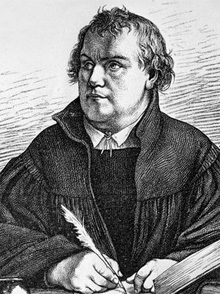 being made right with God was accomplished solely by faith in Christ and not the performance of righteous deeds faced opposition on two fronts. The religious leaders of his day scoffed at the idea that scoundrels and miscreants could attain a righteousness equal to, and in fact superior to, those who dedicated years of their lives in service and ministry to the church. Others argued that if all our righteous acts of service count for nothing, we may as well do as we please, living lives of selfish indulgence.
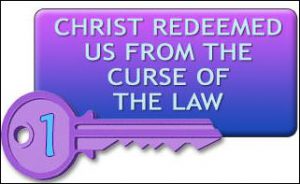 cities that you did not build, and houses full of all good things that you did not fill, and cisterns that you did not dig, and vineyards and olive trees that you did not plant…” If you ask me, this sounds like a violation of the laws of sowing and reaping that God established with Adam when Adam and Eve ate of the tree and bore the consequences of their choice. In Genesis 3:17-19 (ESV) God cursed Adam and said, “…cursed is the ground because of you; in pain you shall eat of it all the days of your life; thorns and thistles it shall bring forth for you; and you shall eat the plants of the field. By the sweat of your face you shall eat bread…” Yet in Deuteronomy, God promises to give Abraham and His descendants all the good things of life without having to “sweat” for them. What’s up with that?