service genset jogja
Psalms 19:1, 57:11

Is God Losing Weight?

In his book, “God in the Wasteland,” David wells coins an interesting phrase describing a current condition in society with reference to the importance of God. He calls this condition, “the weightlessness of God.” This is what he 12 the glory of godsays, “It is one of the defining marks of Our Time that God is now weightless. I do not mean by this that he is ethereal but rather that he has become unimportant. He rests upon the world so inconsequentially as not to be noticeable. He has lost his saliency for human life. Those who assure the pollsters of their belief in God’s existence may nonetheless consider him less interesting than television, his commands less authoritative than their appetites for affluence and influence, his judgment no more awe-inspiring than the evening news, and his truth less compelling than the advertisers’ sweet fog of flattery and lies. That is weightlessness.”
Commenting on this phrase, Philip Ryken says, “We have become children of a lightweight God.” Reading this about the “weight” of God reminded me of my Hebrew vocabulary. The word for “glory” comes from the same root as the word for “heavy.” Sometimes the word appears referring to something that’s physically heavy (Eli the priest in 1 Samuel 4:18) and sometimes it was used referring to someone who was “heavy” with material possessions. Genesis 13:2 says, “Abram had become very wealthy (actually “heavy”) in livestock and in silver and gold.” But primarily the word referred to those who deserved honor and was used for warriors, princes, merchants, priests, and of course the kings. In our vernacular today, we might call such people “heavyweights.”

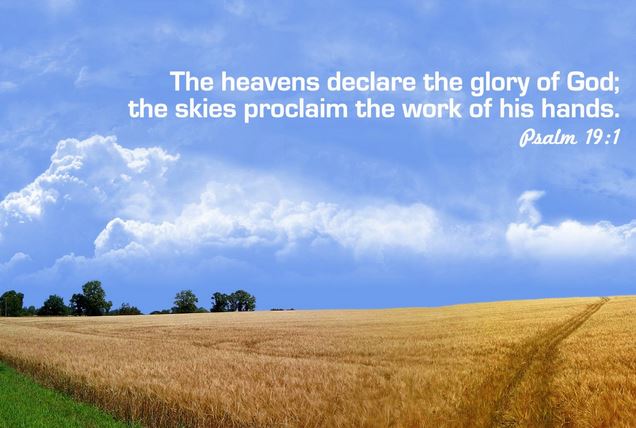
The true “heavyweight” should be God. To glorify God is to recognize His grandeur, his majesty, His Omniscience, His Omnipotence, His Omnipresence. Ryken goes on to say “The Creator God is so heavy that he has left his imprint on the universe like a work boot in wet cement.” When we read the Psalms we get a glimpse of the “heaviness” of God. Psalm 19:1 says, “The heavens declare the glory of God; the skies proclaim the work of his hands.” Psalm 57:11 says, “Be exalted, O God, above the heavens; let your glory be over all the earth.” Take a moment this week and notice how great God truly must be and let’s have God get “heavier” in our lives.

Ephesians 1:13-14, Ephesians 4:30

Signed, Sealed & Delivered!

The Holy Spirit plays a large role with respect to our eternal security. Paul teaches us this truth in Ephesians 1:13-14. He writes, “In him you also, when you heard the word of truth, the gospel of your salvation, and believed in 09 signed sealed deliveredhim, were sealed with the promised Holy Spirit, who is the guarantee of our inheritance until we acquire possession of it, to the praise of his glory.” Yes, through the Holy Spirit, we are signed, sealed and delivered into our inheritance and we’re just waiting for the acquisition. Eugene Peterson, in The Message, translates these two verses like this: “It’s in Christ that you, once you heard the truth and believed it (this Message of your salvation), found yourselves home free—signed, sealed, and delivered by the Holy Spirit. This signet from God is the first installment on what’s coming, a reminder that we’ll get everything God has planned for us, a praising and glorious life.”

As the third person of the God Head, one primary function of the Holy Spirit is our sealing. Fruchtenbaum says, “The Holy Spirit does seal, and the purpose of the sealing is to seal up the believer in Christ so that he can never fall out. The clear emphasis is that the believer has been sealed, not just temporarily, not just until he no longer believes, but has been sealed unto the day of redemption. Having been sealed, the final redemption is guaranteed. Perhaps the sealing ministry of the Spirit is the most vital one, emphasizing eternal security.” Later in Ephesians 4:30, Paul exhorts us to be responsive to the Holy Spirit in our lives, “… by whom (The Holy Spirit) you were sealed for the day of redemption.”

A. W. Tozer writes, “Upon God’s faithfulness rests our whole hope of future blessedness. Only as He is faithful will His covenants stand and His promises be honored. Only as we have complete assurance that He is faithful may we live in peace and look forward with assurance to the life to come.” Knofel Staton adds to Tozer’s thinking. He writes, “Our future rests upon God’s faithfulness. God is always dependable, while we may not be at times. While the Corinthians were not being trustworthy, God kept His trustworthiness. When we face setbacks, God is faithful. When we face guilt, God is faithful. When the bank account goes, God is faithful. When a loved one dies, God is faithful. When we know we have been faithless, God is faithful.”

Matthew 12:41-42

Jesus is the Greatest!

Those of my generation remember Cassius Clay (Mohammed Ali) being frequently quoted as saying “I am the greatest.” It makes me think of a joke about him. He boarded a plane to the Philippines to the “thriller in manila” 31 jesuswhere he fought Smokin’ Joe Frazer for the third and last time. The stewardess came through the first class section and told all passengers to fasten their seat belts to which Ali responded, “Superman don’t need no seat belt!” To which the stewardess answered “Superman don’t need no airplane!” Ali fastened his seat belt.

The scriptures are absolutely clear about who is the greatest. In Matthew 12:41-42, Jesus referred to himself as being “a superior thing” to Jonah and Solomon. Morey says, “One reason why the Jews became so enraged with Jesus is that He claimed to be greater than the most important people and places in Judaism. Jesus was greater than the Patriarchs, such as Abraham and Jacob (John 8:53; 4:12). He was greater than the prophets, such as Jonah (Matt. 12:41). He was greater than the Kings, such as Solomon (Matt. 12:42). He was greater than Moses (Matt. 5:22, 28, 32, 34, 39, 44). He was even greater than the Sabbath (Mark 2:23–28).” The author of the book of Hebrews tells us that Jesus was even greater than all the angels. But the greatest claim Jesus made might be the one recorded in Matthew 12:6. After being accused of violating the law of the Sabbath and desecrating the temple, Jesus said, “I tell you, something greater than the temple is here.” The Jews clearly saw the logical implications of such claims. The only One who was “greater” than all these things was God Himself. Therefore, Jesus was claiming to be God. That is why they picked up stones to kill Him for blasphemy (John 8:52–59).

I love to be greeted by smiling people! People who don’t smile have a negative effect on everyone around them. Decker says, “Your smile even affects you. It lifts your spirits. It generates more energy. You feel the smile throughout your whole body…You will find that good gestures and a smile will free you to share your thoughts fully. You will find a ready audience, because when you smile, the world smiles with you. Your gestures show openness that people find inviting…A warm smile and kinetic gestures go a long way to demonstrating the bold assurance God has given you through his Word. Please smile and say “Jesus is the Greatest.” It makes little sense to tell people that Jesus is the greatest man who ever lived, that he offers the greatest gift ever given, and that this is the best news they have ever heard and to do it without a smile.

Mark 2:3-8, Ephesians 1:7-8, Romans 5:20

God the Son: Believe it or not!

We are saved by grace through faith. Faith in what? I’ve had discussions with people who believe they are Christians and yet reject some of the basic concepts associated with the Christian faith itself. They may not believe the 30 gracebible to be totally reliable. They may not believe in the miracles reported to have been performed by Jesus. But most often, they may believe that Jesus was not God but rather a good man and a great moral teacher. But salvation itself, according to the Bible, is dependent not on faith in what one chooses to have faith in, but on faith in the precepts of Scripture. If salvation, as promised in the Bible, is to be mine, I must attain it by the means prescribed. R. A Torrey says, “In order to be saved we must believe that Jesus can and will forgive our sin.” But this carries with it a presupposition which also must be believed. Torrey goes on, “This faith involves faith in the Divinity of Jesus, for God alone can forgive sin.

Mark 2:3–7 makes it clear that the forgiveness of our sins and the deity of Christ are intimately connected. You cannot have one without the other. It says that four friends brought a paralytic to Jesus for healing, “but when they could not get near him (Jesus) because of the crowd, they removed the roof above him, and when they had made an opening, they let down the bed on which the paralytic lay. And when Jesus saw their faith, he said to the paralytic, ‘Son, your sins are forgiven.’ Now some of the scribes were sitting there, questioning in their hearts, ‘Why does this man speak like that? He is blaspheming! Who can forgive sins but God alone?’” Please notice that Jesus did not correct their thinking. They were right! Only God can forgive sins. But then Jesus went on to demonstrate His divinity by healing the paralytic.

In Colossians 3:13, Paul exhorts all believers to forgive each other “just as Christ forgave you.” When Christ forgives us, God forgives us, because they “one.” Jesus is God, yet He’s not the Father, nor the Holy Spirit, but He’s one of the three persons in the God head. Please notice that as Pfeiffer puts it, “the Pharisees rightly observed (for once) that no man can forgive sins but God only (Mk 2:7). The fact that the Lord Jesus Christ forgives is evidence that he is God.” Please also notice that it’s not that Jesus can forgive. He does forgive! Ephesians 1:7-8 tell us that His forgiveness is lavished upon us…according to the unlimited riches of His grace. As Paul said, “But where sin increased, grace increased all the more” (Romans 5:20). There is more than enough grace to cover your sins and give you love, joy, peace and an overflowing, victorious life.

Isaiah 53:4, Matthew 8:16-17

Eternally Healthy

Although God is one in essence, he is three in His persons; Father, Son and Holy Spirit. Each of the three persons have always existed and are often referred to as the “eternal Father, the eternal Son and the eternal Holy Spirit.” 29 healthy lifeWhen Jesus was about to be executed He prayed in John 17:5 a great priestly prayer. In it he said, “Father, glorify me in your own presence with the glory that I had with you before the world existed.” He came from the eternal state of permanent glory and returned to that state at his ascension. He is now there, sitting at the right hand of God the Father waiting the time of His return. Coming from this glorious state, and taking on the likeness of man, He truly humbled Himself for our salvation. Philippians 2:7-8 tells us that He … “emptied himself, by taking the form of a servant, being born in the likeness of men. And being found in human form, he humbled himself by becoming obedient to the point of death, even death on a cross.”

You would think that if the Divine, eternal Son was to become man, He’d come with all the glory of God. But he left that behind for our sake. In the flesh he did not protect Himself from our infirmities, temptations, limitations, emotions, infirmities and the like. No, indeed, He completely fulfilled what Isaiah 53:4 said about the Messiah. “Surely he has borne our griefs and carried our sorrows.” But it’s not only that Jesus experienced the imperfections of humanity, he took them off of us, put them on Himself, carried them to the Cross, and died with them to be resurrected again in His perfect body. Isaiah goes on to say “by his stripes we are healed.” Matthew tells us that Jesus’ healing the sick was to fulfill the passage from Isaiah. We read “That evening they brought to him many who were oppressed by demons, and he cast out the spirits with a word and healed all who were sick. This was to fulfill what was spoken by the prophet Isaiah: He took our illnesses and bore our diseases” (Matthew 8:16-17). It says Jesus “took our illnesses.” We too will be resurrected in a perfected state because Jesus took them from us.

Eternally healthy! Can you imagine? It’s an exhilarating prospect! Mills says it “…is exhilarating in the extreme by its promise to the person who knows Christ as Savior, a promise of release from the restraints of an aging, material universe and entry into a new, eternal creation, and a close relationship with God and His Son. Then, too, there is the glorious prospect of a new, immortal resurrected body, a body eternally healthy, un-aging and without any of the physical restraints imposed by our present bodies, a body just like Jesus’ resurrection body. And added to that, God will heap glory onto that body for all the things we have done for His Kingdom during our mortal lives in this present mortal body! Ah, my fellow-believer, we face an unimaginably glorious future; may we all hasten (promote) the day of God!!”

Matthew 7:7-12

Our Father

The first word of the prayer that Jesus taught us is “Our Father who art in Heaven…” James Montgomery Boice wrote, “If we are to understand the full importance of these words, we must realize clearly that no Old Testament Jew 26 our fatherever addressed God directly as ‘my Father’ and that, as a result, the invocation of the Lord’s Prayer would have been something new and startlingly original to Christ’s contemporaries.” Further along in his commentary, Boice adds, “Actually, in the time of Jesus the distance between men and God seemed to be widening, and the names of God were increasingly withheld from public speech and prayers.” Jesus broke the momentum of a religious system that focused on man’s effort and returned us to a focus on a personal relationship with God; a relationship in which we can approach God as our father. The word for father might be “daddy” also.

Whenever Jesus prayed he assumed the family relationship with God as His father. He assumed a relationship with God that was foreign and alien to all of his contemporaries as well as those who are recorded as having a connection with God in the Old Testament. He brought something new to you and me! The contemporary religious leaders, the priests and the scribes, thought that His approach to God was highly irreverent and even blasphemous. But just as he came to God as His heavenly Father, He taught us also to come to God as our heavenly father. This is clearly seen in his post resurrection appearance to Mary. He boldly instructs her; “Go to my brothers and tell them, ‘I am returning to my Father and your Father, to my God and your God’ ” (John 20:17). Today it is as God’s children that believers in the Lord Jesus Christ come to him.

Jesus instructs us to go directly to God as our heavenly father. In earlier teachings, Jesus also made it clear what we would find when we approached Him thusly. We will always receive a warm heart, a listening ear, and a compassionate response. In Matthew 7:7-12, Jesus tells us, “Ask, and it will be given to you; seek, and you will find; knock, and it will be opened to you. For everyone who asks receives, and the one who seeks finds, and to the one who knocks it will be opened. Or which one of you, if his son asks him for bread, will give him a stone? Or if he asks for a fish, will give him a serpent? If you then, who are evil, know how to give good gifts to your children, how much more will your Father who is in heaven give good things to those who ask him!”

Romans 3:29-30

The Father of All

God is the Father of all. Paul made that fairly clear for us in Ephesians 3:14-15. He wrote, “For this reason I bow my knees before the Father, from whom every family in heaven and on earth is named…” Every human being is a 25 our redemptionchild of God. God created everything and everyone. As the Universal Father of all, we all belong to Him. We are all created in His image. Through God’s creative miracle each human being is instilled with the image of God and can relate to God in this spirit when nothing else in all creation can do so. God is referred to as the Father of Angels, but it’s never said that they are created in God’s image. Only men and women are created in God’s image. Since every man and every woman have been created by God and in God’s image, every man and every woman deserve respect and honor. God does not make distinctions based on gender, economic standing, or race. Paul asks in Romans 3:29, “After all, is God the God of the Jews only? Isn’t he also the God of the Gentiles? Of course he is.” When John wrote that God so “loved the world..” he meant every human being in it!

But we must not forget that although we are all children of God by creation, we are not all children of God by redemption. Jesus taught that we all must be born again into the family of God to become redeemed children. John taught us that although we’re all created in God’s image and are referred to as God’s children in a universal sense, there is much more involved in becoming complete children of God. In John 1:12 we read, “But to all who did receive him (Jesus), who believed in his name, he gave the right to become children of God.” Looking again at the passage in Romans from above, we add the 30th verse and see that together (Romans 3:29-30) it says, “After all, is God the God of the Jews only? Isn’t he also the God of the Gentiles? Of course he is. There is only one God, and he makes people right with himself only by faith, whether they are Jews or Gentiles.”

It is the relationship that we establish through faith in Jesus that brings true life. It’s not being born of the flesh that gives true life. We know that the destiny of this life is only the grave. Death is the result of sin. The only remedy for death is to adequately deal with the root cause: sin. Jesus did that for us. Real life, true life, abundant life and eternal life begin when we put ourselves in subjection to our heavenly father by faith in His provision for our sin. I love the way the author of the book of Hebrews puts it in Hebrews 12:9. He says, “Furthermore, we had the fathers of our flesh to chasten us, and we gave them reverence: shall we not much rather be in subjection unto the Father of spirits, and live?”

James 1:17-18

Our Father Who Art in Heaven…

I remember when my sister bought a t-shirt that said, “when God created man . . . She was only fooling.” Robert Morey rightly observed, “The modern radical feminist movement …attempts to liberate women from being 24 in heaven‘oppressed’ by white, European, heterosexual males.” He continues, “…many radical feminists feel they must liberate themselves from male dominance in any form, God the Father and the entire Trinity must be either recast in feminine images or rejected all together. This is why the typical radical feminist today dismisses the Bible as so much ‘patriarchal claptrap.’” Mary Daly suggests that the only way to truly liberate women would be the killing off of God the Father. Eliminating the idea and language that God as “father” would somehow, liberate women. She never says how.

God spoke from heaven declaring his fatherhood of Jesus. At Jesus’ Baptism as recording in Matthew 3:17, God spoke from heaven saying, “This is my beloved Son, with whom I am well pleased.” Jesus often acknowledged God the Father. In Matthew 11:27, Jesus said, “All things have been handed over to me by my Father…” Actually, according to Arnold Fruchtenbaum, there are six different aspects of God “The Father.” He says they are, “the Father of the Messiah, the Father of Creation, and the Father of angels, the Father of all men, the Father of Israel, and the Father of believers.” Jesus taught us to pray to “Our Father who art in Heaven.”

Surely some fathers have irreparably marred the meaning of the term in the lives of the children, but to eliminate the thought of the “Fatherhood of God” would destroy much for men and women alike. The scriptures always use the idea of fatherhood as it relates to God as a perfect father. In him is no flaw like in earthly fathers. James says, “Every good gift and every perfect gift is from above, coming down from the Father of lights with whom there is no variation or shadow due to change.” To kill the father would kill the one who takes care of us in our times of need (see Job 29:16). It would eliminate the one who feeds us and clothes us and looks after our every need (see Isaiah 22:21). It would kill the voice of wisdom because the all the Proverbs are written like a father speaking to his child. They show how to live wisely, with dignity, respect and self-control. In human terms there should be nothing more loving, comforting, caring and protecting than the idea of God as our Heavenly Father.

sewa motor jogja
© Chuck Larsen 2019. Powered by WordPress.