service genset jogja
Jeremiah 3:9-11

Obedience or Performance

The Northern Kingdom of Israel fell to the Assyrians in 721 BC. They had turned from the God that delivered them from Egypt to serve the pagan gods in the land that God had given them and that they had failed to drive out. Many of the Old Testament prophets exposed 10 performancethe sins of Israel as the cause of their destruction. They had become a wicked nation and God allow her behavior to have its consequences. The Southern Kingdom had fallen away also. Jeremiah says they were even worse than Israel. In Jeremiah 3:9-11 he says, speaking of Israel, “Because she took her whoredom lightly, she polluted the land, committing adultery with stone and tree. Yet for all this her treacherous sister Judah did not return to me with her whole heart, but in pretense, declares the LORD. And the LORD said to me, Faithless Israel has shown herself more righteous than treacherous Judah.”

It seems like God declared Judah’s rebellion worse than their Northern sister’s rebellion for two reasons. First, Judah failed to learn from what had happened to Israel. She saw it and didn’t take it seriously. The second reason seems to be Judah’s pretensions of righteousness. She kept rituals and gave lip service to regulations and practices but did not truly have a pure “heart” for God. One commentator says, “God wants our love, as we want the love of our children and of our friends, and cannot accept anything, however valuable, in its stead: so Christ wants the pure, deep, lasting affection of our souls. No ceremonies, or services, or even sacrifices, will compensate for its absence (see 1 Cor. 13). And the measure of our love will depend on the depth of our sense of God’s forgiving love toward us.”[1]

Susan Maycinik wrote, “The line between obedience and performance can be a blurry one. Yet it is an important distinction to grasp, because obedience leads to life, and performance to death. Obedience is seeking God with your whole heart. Performance is having a quiet time because you’ll feel guilty if you don’t. Obedience is finding ways to let the Word of God dwell in you richly. Performance is quickly scanning a passage so you can check it off your Bible reading plan. Obedience is doing your best. Performance is wanting to be the best. Obedience is saying yes to whatever God asks of you. Performance is saying yes to whatever people ask of you. Obedience is following the promptings of God’s Spirit. Performance is following a list of man-made requirements.”[2]

[1] H. D. M. Spence-Jones, ed., St. Luke, vol. 1, The Pulpit Commentary (London; New York: Funk & Wagnalls Company, 1909), 194.

[2] Craig Brian Larson, 750 Engaging Illustrations for Preachers, Teachers & Writers (Grand Rapids, MI: Baker Books, 2002), 371–372.

Jeremiah 3:7-8

More Than Rituals

The Northern Kingdom had turned their back on God. They had become enamored by the pagan practices of the Nations living in the land that God had given to them. They had failed to drive out these negative influences and generation after generation fell further and 09 ritualsfurther into the miry pits of their neighbors. God let their rebellion take them as deep into the mud as they were willing to go thinking that sooner or later they would see the errors of their way and come home. In Jesus’ story of the prodigal son that’s exactly what happened and Jesus made it clear that’s always what God wants. Yet, that’s not what happened with Israel. Israel never saw the error of her ways and God let his unfaithful bride suffer the consequences of her sin. Jeremiah 3:7-8 says, “And I thought, ‘After she has done all this she will return to me,’ but she did not return, and her treacherous sister Judah saw it. She saw that for all the adulteries of that faithless one, Israel, I had sent her away with a decree of divorce. Yet her treacherous sister Judah did not fear, but she too went and played the whore.”

Judah could not learn from watching what had happened to the Northern Kingdom for some reason. I’d agree with Willis who says, “They saw what happened to their northern cousins (3:7b), but they assumed their own better fortunes were a result of their goodness or, more likely, because they worshiped in the right place (Jerusalem) and had the right royal family (the House of David).”[1] They had put their confidence not in a personal, loving, and faithful relationship with their God, but rather in the rituals along with their heritage. But they proved no better than their northern neighbor. One commentary says, “Sin has a domino effect. … It is painful for a parent, including the divine Parent, to witness a child launched on a path of self-harm. God was saddened over Judah’s learning deficit, for she failed to learn from the mistakes of others. Judah’s spiritual obtuseness dashed God’s high hopes that she would be an improvement over Israel. God’s disappointment extended to both sisters—Israel and Judah.”[2]

Judah thought that some external ritual would suffice to quench God’s possessive love for His people. But God always wants more than rituals. He wants our hearts. God wants us to love Him as He loves us. Jesus made it clear that the greatest commandment was to love God. The Pulpit Commentary says it well, “God wants our love, as we want the love of our children and of our friends, and cannot accept anything, however valuable, in its stead: so Christ wants the pure, deep, lasting affection of our souls. No ceremonies, or services, or even sacrifices, will compensate for its absence (see 1 Cor. 13). And the measure of our love will depend on the depth of our sense of God’s forgiving love toward us.”[3]

[1] Timothy M. Willis, Jeremiah/Lamentations, College Press NIV Commentary (Joplin, MO: College Press Pub. Co., 2002), 54.

[2] Larry L. Walker, Elmer A. Martens, Cornerstone Biblical Commentary: Isaiah, Jeremiah, & Lamentations, vol. 8 (Carol Stream, IL: Tyndale House Publishers, 2005), 326.

[3] H. D. M. Spence-Jones, ed., St. Luke, vol. 1, The Pulpit Commentary (London; New York: Funk & Wagnalls Company, 1909), 194.

Jeremiah 3:6

Playing the Fool

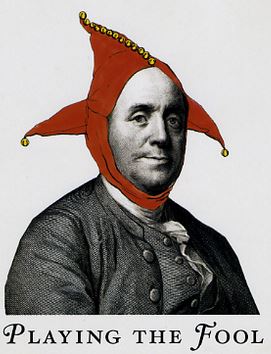
The image of the unfaithful wife perseveres in Jeremiah’s writings. There seems to be a direct reference or at least an allusion to it in every chapter. It pops up again in Jeremiah 3:6. It says, “The LORD said to me in the days of King Josiah: ‘Have you seen what she did, that 06 foolfaithless one, Israel, how she went up on every high hill and under every green tree, and there played the whore?’” Martens explains this verse, “Israel, the kingdom to the north of Judah, had been disowned by God because of her spiritual unfaithfulness. ‘Adultery’ was the word used to describe Israel’s awful behavior. Because of it the Assyrians had overrun the Northern Kingdom. One would expect that Judah, a witness to these events, would learn the seriousness of spiritual adultery. The charge is that Judah has not learned.”[1]

I’ve often heard that the wisest man in the world, Solomon, teaches us in the book of Proverbs about the difference between being a fool, a smart man, and a wise man. The fool is the one who never learns from his mistakes. He repeats the same folly over and over again expecting different results. The smart man is the one who makes the mistakes but the consequences teach him a lesson and he learns to avoid that behavior in the future. The wise man is the one who can watch the mistakes that others make and learn from them without having to make them himself. Jeremiah’s indictment of Judah is that they are being foolish. They’ve seen what the results of pagan pluralism brings to a society, but weren’t wise enough to avoid the same sin.

We find ourselves in a secular culture that promotes its own idols. As the pagan gods of the Canaanites became the “lovers” of the unfaithful bride of God we’re enticed by the same temptations. We’re too smart to be lured away by images carved in stone or cut out of wood, yet the same pull on our hearts is seen repeatedly in our society. We all struggle with these things. Even us professing believers have our own idols that suck our vitality from our God. Ryken is very pointed in his condemnation of the church when he writes, “The church is supposed to be married to Jesus Christ, but we have many mistresses. If we kept a little black book with the names of our lovers, it would read something like this: ‘For a good time, call material prosperity, idle entertainment, political power, sexual license, and self-indulgence.’”[2] We see shipwrecked lives of those all around us that have served these gods to no good end. Do we learn?

[1] E. A. Martens, Jeremiah, Believers Church Bible Commentary (Scottdale, PA: Herald Press, 1986), 52.

[2] Philip Graham Ryken, Jeremiah and Lamentations: From Sorrow to Hope, Preaching the Word (Wheaton, IL: Crossway Books, 2001), 54.

Jeremiah 2:16-17

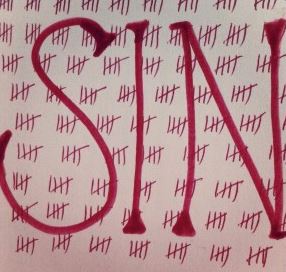
Marks of Sin

God called Israel his first born son when addressing Pharaoh. But now in this context of the book of Jeremiah we read that desiring the good things of life lead them back into slavery. They went from an honored position to a disgraceful one. Jeremiah expresses this in 30 sinJeremiah 2:16-17. He writes, “Moreover, the men of Memphis and Tahpanhes have shaved the crown of your head. Have you not brought this upon yourself by forsaking the LORD your God, when he led you in the way?” Constance concludes, “Lastly they are made captives in Egypt with shame brought upon them, the hair being shaven from their heads. Humiliation and suffering had been inflicted upon them.”[1]

Gingrich sums up Jeremiah’s use of the image of Israel becoming humiliated slaves by saying, “Israel, the Northern Kingdom, had had her cities spoiled and her people carried away captive by the Assyrians and their allies (‘the young lions’) and Judah had had the crown of her head broken by the Egyptians (‘the children of Noph [Memphis] and Tahapanes [a town on the border between Egypt and Palestine]’). Why had these calamities come upon Israel and Judah? Was it not because these nations had forsaken their God Jehovah soon after He led them through the wilderness?”[2]

Many of our problems we bring upon ourselves. I know that’s true for me. The sins of Israel were marked on their heads by Egypt. There was a visible sign of their failure. If I had a notch carved on me for every time I brought problems upon myself I would be unrecognizable except for the scars. The Psalmist often cries out to God in the consequences he has brought on himself by his sin. He pleads with God for forgiveness. Lady Macbeth looks at her murderer’s hands in horror: “Out, damned spot! out, I say!… Hell is murky… Here’s the smell of the blood still: all the perfumes of Arabia will not sweeten this little hand.” Knight says, “…God does not ‘mark’ iniquities at all as iniquities, he ‘marks’ them only as occasions for the showing of his grace and forgiveness!”[3]

[1] Mrs. T. M. Constance, Jeremiah, vol. 1 (Dickson, TN: Explorer’s Bible Study, 1978), 11–12.

[2] Roy E. Gingrich, The Book of Jeremiah (Memphis, TN: Riverside Printing, 2001), 9.

[3] George Angus Fulton Knight, Psalms, vol. 2, The Daily Study Bible Series (Louisville, KY: Westminster John Knox Press, 2001), 287.

Jeremiah 2:14-15

From Sons to Slaves

Jeremiah had used the images of an unfaithful wife and then a broken cistern from which no thirst can be quenched. Now in Jeremiah 2:14-15 he moves on to another image. He says, “Is Israel a slave? Is he a home born servant? Why then has he become a prey? The lions 29 midashave roared against him; they have roared loudly. They have made his land a waste; his cities are in ruins, without inhabitant.” In Exodus 4:22 God instructed Moses to tell Pharaoh that “Israel is my firstborn son.” How then now can she be a slave? Constance says, “Instead of being His children they had become slaves and servants, bound, beaten, abused, and carried off as slaves. Jeremiah likens Israel to one that has fallen victim to a lion’s young, to a wasted land, their homes desolate and the crops stripped from the fields, vineyards destroyed, and their flocks and herds driven away, their cities left in smoldering ruins.”[1] The very land that flowed with milk and honey were left in ruins as were the lives of His own children.

When we think of the deportation we usually think of what we call the “Babylonian Captivity.” Ezekiel, Daniel, Nehemiah and others were taken away to Babylon. Jeremiah however was taken away to Egypt. By 200 AD, the largest population of Jews lived in Alexandria, Egypt. Obviously, they must have been the descendants of the slaves of Jeremiah’s day. It was this group that brought about the translation of the Hebrew Old Testament into Greek. The Septuagint is a work that Jesus often quoted from directly. Obviously, like many in Babylon, many of the Egyptian exiles looked to God’s word for comfort and direction again. It seems that the hardships of slavery again in Egypt brought them back to their senses. That often happens for us all, doesn’t it?

This is fascinating because on several occasions Israel expressed their desire to go back to Egypt to enjoy the leeks, melons and other good things they had when they were slaves in Egypt. Well, be careful what you wish for, you just might get it! We all know the story of King Midas. He thought it would be great to have everything he touched turn to gold. He didn’t think that through, did he? We all learned along with King Midas that gold in the wrong places can become the worst of all ills. In this case, God did send Israel back to Egypt, but the circumstances became the worst of all ills for them. Solomon has been said to have had the Midas touch. Everything he did turned to gold. But because of such bounty in his life he failed to manage his own appetites. At his death the nation split and started its journey to exile in Babylon and Egypt. Wanting the best, Israel went from honored son to humiliated slave. I’m always reminded to watch out myself for this.


[1] Mrs. T. M. Constance, Jeremiah, vol. 1 (Dickson, TN: Explorer’s Bible Study, 1978), 11–12.

Jeremiah 2:12-13

Broken Cisterns & Empty Wells

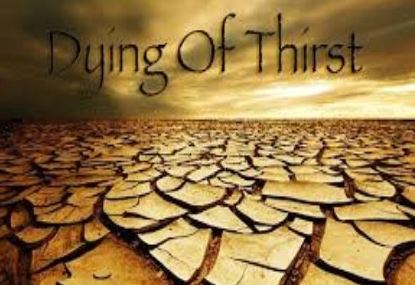
Jeremiah is talking about the bad bargain Israel made in exchanging the knowledge of the one true God for the idols of the nations around them. God had demonstrated His sovereignty over all the idols in Egypt and then again over all the pagan idols of the peoples of 28 dying of thirstCanaan. But Israel deserted their one true God to join in the useless worship of idols. How ridiculous is that? In Jeremiah 2:12-13, Jeremiah calls the heavens to witness this stupidity. He says, “Be appalled, O heavens, at this; be shocked, be utterly desolate, declares the LORD, for my people have committed two evils: they have forsaken me, the fountain of living waters, and hewed out cisterns for themselves, broken cisterns that can hold no water.”

Guest and Ogilvie explain, “They acted against common sense. Why would anyone take something of great value and deliberately exchange it for something worthless? It defies every law of common sense, so much so that the astonishment can only be felt in heaven because the earth has lost its mind (v. 12). Jerusalem’s capacity to comprehend the loss was gone. A shudder ran through the heavens and through the prophet as he contemplated the two evils of verse 13. First, they had forsaken God, the fountain of living waters. …It makes no sense to forsake such satisfaction, such a link to life itself. No one parched by the desert sun would have given a moment’s consideration to such insanity. Yet this was exactly what Jerusalem had done. Furthermore she had compounded that insanity with another. …They have hewn cisterns of their own making. Tanks out of hard rock, without feeding springs, were unable even to retain what little water might flow into them because they were broken. Judah had given up everything and had gone after nothing. She cheated herself. The loss was poignant and all pervasive. There was nothing now to quench her thirst but mire and filthy sediment. How totally without logic has been her course of action…”[1]

There was a woman at a well in Samaria that Jesus encountered. He offered her “living water.” His living water would be refreshment that would swell up from within and bring contentment and meaning and purpose to her life that she had never experienced before. But we chase the wind hoping to find something of substance and always come up empty! Pink says that “These frying experiences, these bitter disappointments, are another of the means which our gracious God employs to save us from the pleasure and pollution of sin. By them He discovers to us the vanity and vexation of the creature. By them He weans us more completely from the world. By them He teaches us that the objects in which we sought refreshment are but ‘broken cisterns,’ and this that we may turn to Christ and draw from Him who is the Well of living water, the One who alone can supply true satisfaction of soul.”[2]

[1] John Guest and Lloyd J. Ogilvie, Jeremiah, Lamentations, vol. 19, The Preacher’s Commentary Series (Nashville, TN: Thomas Nelson Inc, 1988), 35.

[2] Arthur Walkington Pink, The Arthur Pink Anthology (Bellingham, WA: Logos Bible Software, 2005).

Jeremiah 2:10-11

A Bad Bargain!

The nations surrounding Israel all worshipped their own gods. Egypt had many gods all of which were humiliated by the one true God during the Exodus. But did Egypt as a whole repent and change gods? No, they continued on their course of idolatry. The same was true for 27 soulsthe peoples of the land where God led Israel. God demonstrated His mighty power but the nations as a whole remained peoples of idolatry. How astounding is that? One might think that with the grand demonstrations of God’s presence and power all peoples would be like Rahab the harlot in Jericho and abandon their idols and turn to the one true God. But that didn’t happen. But there is something even more remarkable. Israel turned from the one true God to join the nations in their idolatry. That’s what Jeremiah 2:10-11 tells us. It says, “For cross to the coasts of Cyprus and see, or send to Kedar and examine with care; see if there has been such a thing. Has a nation changed its gods, even though they are no gods? But my people have changed their glory for that which does not profit.”

It’s a difficult question. Has a nation ever changed gods? I want to think yes, but the form of the question demands a negative answer. When asking if a nation had ever changed gods, Ryken answers, “Of course not! Travel the world from east to west, no nation has ever changed its gods; Shoes, maybe, or hairstyles, but not gods. Even the pagans are loyal to their gods. They cart them around wherever they go. Did the Canaanites ever abandon Baal or Asherah? Never! Did the Babylonians ever forsake Bel or Merodach? Ridiculous!”[1] And Davidson explains it this way, “Go west to the islands of the Mediterranean, for example Cyprus; east to the desert communities, for example Kedar; search the whole wide world and see if any other nation has exchanged its gods. How ironic that Israel, to whom had been given the privilege of knowing the majesty and splendor of the one true God, should outpagan the pagans, replacing this God with gods who are no gods! We are sometimes told that the ways of God are strange; the ways of people can be even more strange.”[2]

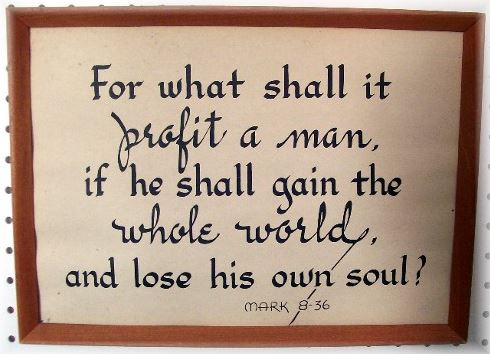
Willis says, “What makes this all the more tragic is Israel is the only nation whose God is real; yet they are the only nation to ‘trade in’ their God for another. Their God possesses Glory, yet they have put their faith in things that cannot profit, things that are worthless. So what Israel has done is not typical, even for nations who would have more reason to do it.”[3] Paul expresses the same truth to the Church in his letter to the Romans. He was utterly amazed at those who traded God for idols (Romans 1:22f). They exchanged natural desires for unnatural ones. They exchanged the truth about God for a lie. Jesus talked about what good it would do for someone to gain the entire world but forfeit their own soul in return. It is a bad bargain. We often go after things in life and compromise everything that truly matters for things that will not last. I like what Moore says, “Realizing your dream at the cost of your soul is always a bad bargain.”[4] It was for Israel and it is for us as well.

[1] Philip Graham Ryken, Jeremiah and Lamentations: From Sorrow to Hope, Preaching the Word (Wheaton, IL: Crossway Books, 2001), 41.

[2] Robert Davidson, Jeremiah, vol. 1, The Daily Study Bible Series (Louisville, KY: Westminster John Knox Press, 1983), 28.

[3] Timothy M. Willis, Jeremiah/Lamentations, College Press NIV Commentary (Joplin, MO: College Press Pub. Co., 2002), 44–45.

[4] Steve Moore, The Dream Cycle: Identify and Achieve God’s Purpose for Your Life (Indianapolis, IN: WPH, 2004), 110.

Jeremiah 2:9, Philippians 1:6

God’s Love Will Never Stop

Jeremiah 2:9 is one of the more debated verses in the Bible. The debate centers on the meaning of the Hebrew word that the English Standard Version and other versions translate as “contend.” The verse says, “Therefore I still contend with you, declares the LORD, and 24 gods lovewith your children’s children I will contend.” Some translations say what I have “against you.” Others say “legal charges.” The King James Version and some other translation say, “Wherefore I will yet plead with you, saith the LORD, and with your children’s children will I plead.” There may not be a radical difference between the various translations but, and I hate to admit this, the KJV captures the thought in a way that pictures a loving father. It’s reminiscent of the father of the Prodigal son. The other translations to me seem to present harsher, less loving and caring approach by God to His children. This, to me, violates the key message of Jeremiah to a people in great suffering. That is recorded clearly in Jeremiah 31:3. God says, “I have loved you with an everlasting love; therefore I have continued my faithfulness to you.” The Complete Jewish Bible (CJB) translates this verse, “I love you with an everlasting love; this is why in my grace I draw you to me.”

Whatever translation you prefer of Jeremiah 2:9, hopefully you won’t miss the fact that God is speaking about all His children; past, present and future. It says “I still contend.” That refers to the fact that from the very fall of man in Genesis God has not given up on us. It says He contends with us. He has not given up on us. It says He will always contend with His children. God’s everlasting love will never stop. He will always deal with us according to our needs. He’s always loved us. He loves us now. He will always love us in the future. He promises this in spite of our tendency not to love Him back.

This truth has not been more powerfully presented to us than in the book of Hosea. Jeremiah speaks to us about an unfaithful bride, Hosea illustrates it for us. According to Shank, “Hosea describes the Lord as one who is faithful in the face of utter unfaithfulness. Even the punishments sent by the Lord on Israel are viewed as part of his faithfulness to his people. As Hosea builds a fence across the path that Gomer takes to her lover’s house, so the Lord’s discipline is a fence to turn Israel back to their first love. God will not give up on his people, no matter how many times they give up on him.”[1] Briley observes, “The church now bears the same awesome responsibility to reveal God’s glory to the world, but with the same reassurance that God will not give up on his people.”[2] Paul reminds us of this truth in Philippians 1:6; “…He who began a good work in you will bring it to completion at the day of Jesus Christ.” I like what Richison says, “Many people are bedeviled by the idea that God may lose control of their situation. But God will not give up on us. He will let us go about as far as a dog on a leash. When we run from the Lord and come to the end of our leash we come to a terrible jerk.”[3]

[1] Harold Shank, Minor Prophets, The College Press NIV Commentary (Joplin, MO: College Press Pub. Co., 2001–), 32.

[2] Terry R. Briley, Isaiah, The College Press NIV Commentary (Joplin, MO: College Press Pub., 2000–), 156.

[3] Grant Richison, Verse by Verse through the Book of Philippians (Bellingham, WA: Logos Research Systems, 2006), Php 1:6.

sewa motor jogja
© Chuck Larsen 2019. Powered by WordPress.