service genset jogja
1 Peter 3:19

Did Jesus Preach to Fallen Angels?

1 Peter 3:19 is a difficult verse and has aroused several questions from people who read my “descended into hell” devotion from last Friday. Some have argued that this verse is the basis for Jesus descent into hell because it says “…He went and proclaimed to the spirits in prison.” The context makes it clear that the “spirits in prison” are the evil angels of Genesis 6:1–4 (or their offspring). This is also clear in that their disobedience is mentioned in 2 Peter 2:4 and Jude 6. The context makes it clear that it took place after his resurrection, not before. Also verse 18 concludes with “He was made alive in the spirit, in which he went…” The phrase “in the spirit” is often used to refer to third person of the trinity, whose major mission is to declare and to convict of the glorious success of Jesus’ ministry on earth. Further, “in prison” may not be the same as the Hell of eternal damnation for unrighteous humans.

The ESV uses the word “proclaim” instead of “preach.” It’s much better because it captures the original idea. It means to make an official announcement. The issue is not the gospel as some argue. If so, it implies that those who die will have a second chance to be saved. The scriptures make it clear that “it is appointed for man to once die, and then the judgment.” There’s not a 2nd chance after death to come to faith. Rather, the issue is the victorious proclamation to fallen angels of His unequivocal victory over temptation and sin. Verse 20 clearly indicates to whom the proclamation is being made. Jesus is asserting his triumph over the sin issue. Jesus came to undo the original fall. He brings redemption to fallen man and he proclaimed his victory over the fallen angels who were tested and failed. Jesus was tested and succeeded.

The story of the fallen angels of Genesis 6 tells of an angelic infiltration into the human race. These angels could not repent but they were brought to subjection. Verse 22 says that Jesus “who has gone into heaven and is at the right hand of God, with angels, authorities, and powers having been subjected to him.” Norm Geisler puts it this way, “1 Peter 3:19 is about Christ announcing the victory of His death and resurrection to the fallen spirit world that was defeated by His actions. There is no reference to leading saved spirits out of a compartment in Hades and taking them to heaven.”

Chuck
“Having disarmed principalities and powers, He made a public spectacle of them, triumphing over them in it” (Colossians 2:15).

Hebrews 10:22-23, John 3:16

Assurance & Security

Can a person be saved, but not be absolutely certain about it? This question rightly deals with the difference between assurance and security. I’d agree with those who say that assurance is the subjective side of the issue and security (or eternal security) is the objective side of the issue. That’s to say that assurance has to do with how one feels and is related to sense experience regarding salvation while the issue of security relates to the biblical fact or truth or reality concerning the issue.

We learn that obedience to God’s instructions in our day to day lives is one way to build assurance into our lives. The New Testament assures us of this truth, but it also reminds me that sometimes “our conscience condemns us” (1 John 3:20) when God does not. There seems to be times when a person can be truly secure but not feel that way. I remember the illustration that was used about the two passengers on a plane. One was comfortable and relaxed and read a novel and enjoyed his meal. He was comfortable and confident that he’d get to where he was going. The other gripped the arm rest with all his might, sweated, imagined terrible crashes and just worried about a safe arrival. The plane landed as scheduled. The first passenger was secure and assured. The second was just as secure but had no assurance, yet he too arrived safely at the destination. The security on the flight did not have anything to do with how the individuals felt toward it. It was solely dependent upon the worthiness of the vessel and those in charge of it just as our salvation is. Yet a person may be on the plane, (believe that Jesus died for them), and because of the weakness of our flesh still not feel like it all the time.

The New Testament is clear about God’s desire for all His believing children to not only have the security of their eternal destiny established firmly in their minds, but to live each day with that sense of deep assurance that should come from that doctrine. The writer to the Hebrews says, “And we desire each one of you to show the same earnestness in realizing the full assurance of hope unto the end.”

Chuck
“Let us draw near with a true heart in full assurance of faith … Let us hold fast the confession of our hope without wavering for he who promised is faithful.” Hebrews 10:22-23

Ephesians 4:9

Did Jesus Descend into Hell?

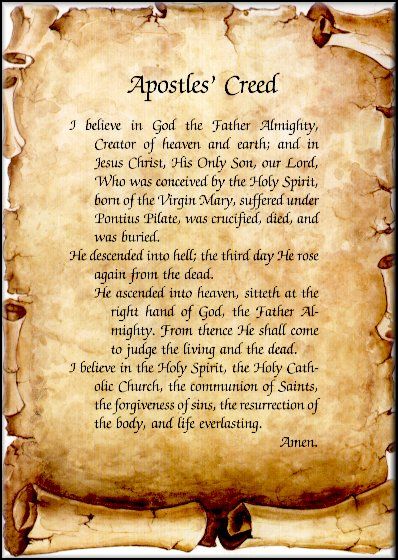
The next question I’d like to address is, “Did Jesus descend into Hell between His death and resurrection?” First, you must notice that the statement “descended into Hell” was an addendum added to the Apostles Creed somewhere around the 4th Century AD. There has been much debate regarding it and many believe the phrase should not have been added and would prefer to remove it. There is no true biblical support for the phrase. Paul says, in Ephesians 4:9 that Jesus “descended into the lower parts of the earth.” Many suggest, such as Kenneth Copeland, that this means that Jesus went to hell for three days to release the spirits of Old Testament saints.

I believe that when the Old Testament saints departed this earth, they went directly to heaven. God took Enoch to be with himself (Genesis 5:24, Hebrews 11:5). Elijah was caught up into “heaven” when he departed (2 Kings 2:1). Abraham’s bosom in Luke 16:23 is a description of heaven. Geisler says, “When Old Testament Saints appear before the cross, they appear from heaven, as Moses and Elijah did on the Mount of Transfiguration.”

The question is what happened to Jesus while he was in the grave for three days. The phrase “descended into the lower parts of the earth” is referring to Christ’s body being buried. He was crucified, He died, and He was buried like all humans. He took that death experience as His own. The Phrase simply means caves, enclosures or graves. Psalm 139:15, uses the phrase “lowest parts of the earth” to refer to a woman’s womb. It might mean “from the enclosure of the womb before birth (as Jesus took upon himself with Mary) to the enclosure of the tomb that he took for us after His death on the cross. We all come from the womb of a woman and go to the tomb at our death. Further, Philippians 2:10 tells us that Hell is not in the “lowest parts of the earth” rather it is “under the earth.”

Jesus’ body, like ours, went into the grave. His Spirit on the other hand went to heaven. He said to the thief on the cross, “this day you will be with me in paradise.” He also said to His Father in Heaven, “Into your hands I commend my spirit.” The Spirits of all believers go to be with the Lord immediately at death. There is no purgatory or temporary place for it. Hallelujah!

Chuck
“Absent from the body is to be present with the Lord.” 2 Corinthians 5:8

Matthew 10:15

Degrees Of Punishment in Hell

The Bible is fairly clear that there will be degrees of punishment in hell. As Matthew 10:15 points out, it will be “more tolerable” for some that for others. The author of the letter to the Hebrews asks, “How much worse punishment, do you think, will be deserved by the one who has spurned the Son of God…” Further, that each one will be judged according to his works strongly suggests that each one will receive his own unique punishment, just as each believer will receive their own unique rewards.

Never forget that our God is a moral and a just God. That truth is recited numerous times in the Bible. Geisler rightly points out To equally punish a “white lie” and genocide would be unjust; murder should receive greater punishment than petty theft. However, there is no evidence that judgment proportionate to the sin is always meted out in this life; the wisest man who ever lived complained of this life’s inequities (Eccl. 3:16–22). Yet we know that with God there will never be any injustices.

The liberal movement of the day teaches that there is no real punishment for the wicked, but only annihilation. But the degrees of punishment doctrine, Geisler goes on to say, “The fact that people will receive differing degrees of punishment in the judgment is proof that ungodly people will not be annihilated at this occasion. That would have implied that all would have received precisely the same punishment, whether they did much or little evil.” I believe the Bible teaches that the duration of punishment in hell is eternal; there are degrees of that punishment. Only God is able to determine what those degrees are, and He will assign the consequences with perfect justice according to the responsibility given to each individual

Chuck
“And I saw the dead, great and small, standing before the throne, and books were opened…And they were judged, each one of them, according to what they had done.” Revelation 20:12-13

Genesis 1:24-25

Do Dinosaurs Exist?

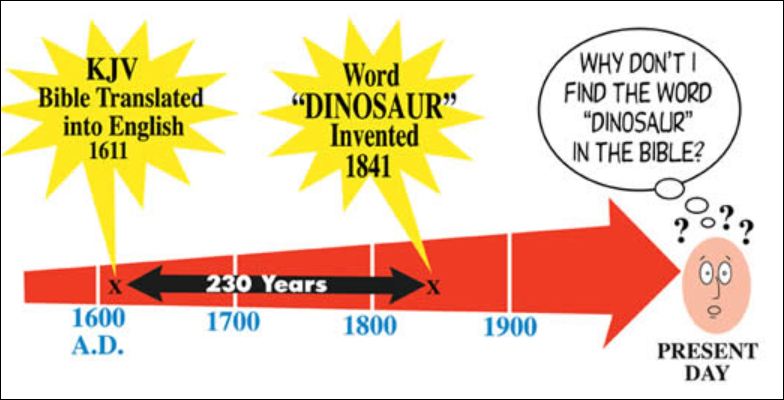
The 2nd question is “What does the Bible say in reference to the dinosaur’s existence?” Well, first of the Bible is clear that God made every living creature. Every kind of creature came from God’s creative genius. Genesis 1:24-25 says, Let the earth bring forth every kind of animal—cattle and reptiles and wildlife of every kind. And so it was. God made all sorts of wild animals and cattle and reptiles. And God was pleased with what he had done.” Commentators are quick to recognize that these verses identify general categories of creatures; the domesticated animals, the undomesticated (wild), and also “reptiles.” Dinosaurs are reptiles. The word “Dinosaur” is a modern word that actually means “terrible lizard.” Although the Bible does not use the word Dinosaur, it does use the term lizard, reptile, and often refers to all living creatures.

I would argue that they coexisted with humans before the flood. I also think they coexist with us today, but they are not nearly as big as they were then. Reptiles, unlike humans, continue to grow until death. Seeing that many people in the bible lived as long as 900+ years, imagine how large a dinosaur could grow given that much time. Some interpreters hold that many of the biblical references to Leviathan (Job 41:1–34; Pss.74:14; 104:26; Isa. 27:1), dragons (Ps. 74:13; Isa. 27:1; 51:9), and the behemoth (Job 40:15–24) are specific references to dinosaurs. Dennis Lindsay, in his book “Dinosaur Dilemma – Fact or Fantasy,” makes a pretty convincing argument for this position, but there are many who disagree.

Without question we should acknowledge that these creatures should mentally be connected with their Creator, and parents should teach children to make the connection. I don’t understand why the discovery of the remains of these monsters is such a problem for some Christians. Discoveries like this and of live species of insects not specifically mentioned in the Bible simply illustrate the brilliance of God’s creation. God should be praised for his incredible creative genius. All life, including the extinct dinosaur, is a declaration of the Glory of God. Psalm 148 is the Psalm that calls for all things to give praise & glory to God, their creator. It includes angels, armies, sun, moon, stars, sea monsters, mammals, birds, and reptiles.”

Chuck
“Let everything that has breath praise the LORD!” Psalm 150:6

2 Corinthians 5:10, 1 Corinthians 3:12-15

The Judgment Seat of Christ

For the rest of the summer, we’re doing a sermon series at Country Bible Church entitled, “I’m glad you asked.” Anyone can submit anonymous questions regarding the Bible and/or spiritual issues and we’ll do our best to answer them in Sunday Sermons. To make sure that everyone’s question gets answered, I’ll be dealing with them all one at a time in the morning devotions as well. My daily answers will be as brief and to the point as possible. I’ll give the question, exactly as it was received and then give the best answer I can. The first question is, “if we accept Jesus as our savior and have eternal life why are we judged when we get to heaven and what effect does our judgment have on getting into heaven?”

First, let me assure everyone that the Bible teaches clearly that Jesus paid the penalty for the sins of all who believe. No one who has placed their faith in Christ will be judged for their sins. The debt that we owe God as a result of our sins has been paid. Christians will not stand before the great judgment seat of God to answer for and pay for their sins. Jesus did that for us. Instead, all believers will stand before what Paul calls, “The judgment seat of Christ” (see 2 Cor 5:10). This is often called the “bema seat of Christ.” This judgment has no effect on our acceptance into heaven because it actually takes place in heaven. It is totally concerned with the rewards we earn in this life for our service. A key passage on this is 1 Corinthians 3:12-15. It says, “ Now if anyone builds on the foundation with gold, silver, precious stones, wood, hay, straw— each one’s work will become manifest, for the Day will disclose it, because it will be revealed by fire, and the fire will test what sort of work each one has done. If the work that anyone has built on the foundation survives, he will receive a reward. If anyone’s work is burned up, he will suffer loss, though he himself will be saved, but only as through fire.”

People are pardoned individually as they come to faith in Jesus. The result of the acceptance of God’s pardon offered in Christ is eternal life. Rewards will be given out to every believer who serves Christ in this life at the judgment seat of Christ. Just as there are degrees of punishment in hell, so too are there degrees of rewards in heaven. Each believer will receive the rewards he has earned for serving Christ in this life. Believers are always encouraged to live with an eternal perspective.

Chuck
“Do not lay up for yourselves treasures on earth, where moth and rust destroy and where thieves break in and steal, but lay up for yourselves treasures in heaven, where neither moth nor rust destroys and where thieves do not break in and steal.” Matthew 6:19-20

2 Peter 3:9, Revelation 21:4

Why Evil?

In life crises and suffering I often hear voices of deep frustration and pain cry out “why?” to God. We preach a God who is loving, kind, good, and has our best interest foremost in mind in all things. The scriptures are clear about the goodness of God. In Matthew, Mark and Luke, Jesus addresses the issue of God’s goodness and says, “Why do you call me good? No one is good except God alone.” Beyond the cry of pain and frustration comes the question why there is any evil in world. I often hear the argument that If God is sovereign and can do whatever He pleases, then why is there evil in the world? Surely, a God who is all-powerful could eliminate evil, and a God who is all-good would want to do so. Yet evil is not eradicated—it is alive and well on planet earth. Hence, it would seem to follow that no such sovereign God exists.

First, this is simply illogical. That God has not YET vanquished evil does not mean He never will. The last two chapters of the Bible make it perfectly clear that God’s intention is to completely eradicate evil from the world. Second, God acts according to his infinite wisdom and divine nature. As the creator and sustainer He knows much better than anyone the absolute best way to achieve the absolute best world. This is why Jesus said “only God is good.” Our relationship with God is based on our recognition of His divine goodness and our trusting Him to always have our best interest foremost in mind. That’s really what faith is all about. The author of Hebrews reminds us that without faith it is impossible to please God. I’d say we can never please God without trusting him through circumstances and situations that are painful and don’t make sense to us. Third, God is not a tyrant. He did not create automatons who robotically obey God. He created humans with free will. He will not violate his creation by forcing His will on anyone. The greatest value of God is “Love.” We see that frequently affirmed in the Bible, but love is only love when offered freely. You cannot force anyone to love. You cannot take love from anyone.

Peter explains to us why God has allowed so much evil for so long. He says in 2 Peter 3:9, “The Lord is not slow in keeping his promise, as some understand slowness. He is patient with you, not wanting anyone to perish, but everyone to come to repentance.” God is an ever good God. God is an ever loving God, God is a patient God. It will not go on like this forever. John tells us in Revelation 21:4, “He will wipe away every tear from their eyes, and death shall be no more, neither shall there be mourning, nor crying, nor pain anymore, for the former things have passed away.”

Chuck
“Trust God, my friends, and always tell him each one of your concerns. God is our place of safety.” Psalm 62:8

Mark 1:9, Hebrews 13:21

The Obedience That Pleases God!

Baptism is a step of obedience in many ways. It’s symbolic of the commitment of believer’s to live their lives for Christ. It’s symbolic of the purification from our sins by the sacrificial work of Christ on the cross. It’s symbolic of our personal identification with Christ and other believers. It’s symbolic of a believer’s immersion into the Body of Christ and the work of Christ. When a believer chooses to be obedient to the Commands of Christ, it always results in pleasing God. Hebrews teaches us that “without faith it is impossible to please God.” Baptism pleases God in that it’s the profession of our faith in an outward action. James affirms the reality that actions, based on appropriate faith, please God. James 2:24 says, “You can now see that we please God by what we do and not only by what we believe.”

In the Gospels we read that after Jesus’ baptism the skies opened and a “voice came from heaven, saying, ‘you are my beloved Son in whom I am well pleased.’” (Mark 1:9). The believer tests everything in life, “trying to learn what is pleasing to the Lord” (Eph. 5:10). A man who lives to please people by making their approval of more importance than God’s stands condemned. Gal. 1:10 says, “If I were still trying to please man, I would not be a servant of Christ.” This is also the case for those who are determined to please only themselves (see Romans 15:1-3). When Paul closes his first letter to the Thessalonians, he writes, “Finally, then, brothers, we ask and urge you in the Lord Jesus, that as you received from us how you ought to walk and to please God, just as you are doing, that you do so more and more.

The Word of Life Study Bible adds this comment, “Success is pleasing, and we often obtain success by pleasing others—our bosses, customers, shareholders, and so forth. But who do you most seek to please? Yourself? Other people? Or God? There is no inevitable conflict. Sometimes you can, with integrity, please all of these. But sometimes there is a dilemma because it’s not always possible to please everybody. Preferences and standards may contradict each other. So when you have to make the tough decision about whom to please and therefore whom to displease, perhaps a better question is, how much does pleasing God really matter to you?”

The step of obedience in Baptism is well pleasing to God.

Chuck
“I pray that God will make you ready to obey him and that you will always be eager to do right. May Jesus help you do what pleases God.” Hebrews 13:21

sewa motor jogja
© Chuck Larsen 2019. Powered by WordPress.