service genset jogja
Titus 1:7

My way or the Highway!

Biblical leadership always begins with our example. If we’re not living the life, nothing we say calling others to the life will be of much value. You’ve heard it said that what you do speaks so much louder than what you say that I can’t hear what you say. Paul has already instructed Titus to look for people with good reputations regarding their sexual conduct and their family priorities. Now he adds that a person must not be “self-willed.” The phrase describes the uncooperative spirit that demands its own way regardless of the views of others or regardless of the consequences.

Self-willed people are often successful people by the world’s standards. The aggressive, self-assertive people gain the reputation of being able to get things done. But this characteristic is not what biblical leadership is all about. Every believer must be continually on guard against self-will, self-fulfillment, self-assertion, and self-glory. It not only disregards and belittles the views and welfare of others, but also can even disregard and attempt to replace God’s will with its own.

When things don’t go your way, do you pout and dig in your heels? Do you take a stubborn attitude that resists authority and insists on your own way? That’s the response that Dathan and Abiram had to Moses’ invitation to a meeting (Num. 16:12). Their attitude seemed to be the all-too-common one of “My way or the highway!” The tragic outcome of Korah’s rebellion is a lesson in conflict resolution. Stubbornness can be a valuable asset in overcoming obstacles. But when the “obstacle” standing in one’s way is a divinely appointed authority, as Moses was, then resistance is not the right course. How do you go about resolving conflict and dealing with disappointment? Have you worn out your shoes—and your relationships—by digging in your heels too many times? Why not try a different approach?

Chuck
“Submit yourselves for the Lord’s sake to every human authority…” 1 Peter 2:13

6 Sermons

Titus: Making Disciples for Dummies

This is a six part study on the book of Titus on the subject of making disciples.


Sermon Videos
Click a link below to watch the video. Click the same link again to close.

1) Making Disciples for Dummies: Part 1

2) Making Disciples for Dummies: Part 2

3) Making Disciples for Dummies: Part 3

4) Making Disciples for Dummies: Part 4

5) Making Disciples for Dummies: Part 5

6) Making Disciples for Dummies: Part 6

Titus 1:6

A Family Man!

True Biblical leadership is leadership by example. Paul told Titus to keep his eyes open for people whose lives are above reproach. Leaders must be those who have good reputations. The first thing that destroys a person’s reputation is sexual impurity. Leadership begins at home! The relationship one has with their spouses is of first importance as far as reputation is concerned and the second thing is the family in general. Paul charges Titus, Timothy and all of us to give highest priority in disciple making to the members of our immediate family; our children.

Paul tells Titus to look for leaders among those whose children are faithful and not given to “dissipation.” This last term refers to older children who are rebellious. In my day they were called “juvenile delinquents.” In a study conducted several years ago, sociologists Sheldon and Eleanor Glueck of Harvard University identified several crucial factors in the development of juvenile delinquency. They created a test that can, with about 90 percent accuracy, predict future delinquency of children five to six years old. They listed four necessary factors in preventing juvenile delinquency. First, the father’s discipline must be firm, fair, and consistent. Second, the mother must know where her children are and what they are doing at all times and be with them as much as possible. Third, the children need to see affection demonstrated between their parents and from their parents to them. And fourth, the family must spend time together as a unit.
Similar studies suggest that right parent-child relationships normally occur in contexts where the parents genuinely love one another, where discipline is consistent, where the child senses that he or she is loved, where the parents set a positive moral and spiritual example.

John MacArthur summarizes these findings this way: “The bottom line is this: The example you live out before your children is what most affects them. Many parents make the mistake of being overly concerned about how they are perceived in the church and in the community, while completely disregarding the way they live before their children. Nothing makes the truth more distasteful to a child than to have a hypocritical or spiritually shallow parent who affirms the truth publicly but denies it in the home.”

Chuck
“If someone does not know how to lead the family, how can that person take care of God’s church?” 1 Timothy 3:5

Titus 1:6

Sexual Purity

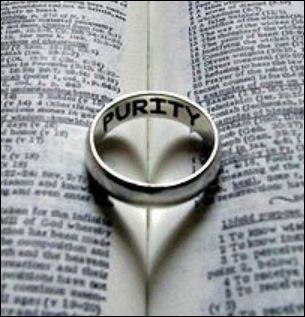
True biblical leadership is leadership by example. Paul told Titus to be sure to look for leaders whose lives were above reproach. Find people whose lifestyles give no “handle of offense” by which a watching world can grab hold and find fault. He then begins addressing the very specific “handles” that must be avoided if a true believer is to honorably carry out his mission of making disciples of Jesus Christ. The first specific character trait essential for effective ministry is sexual purity.

Nothing will ruin a reputation faster and destroy a ministry more thoroughly than sexual sin. The wisest man in the world, Solomon, in the book of Proverbs asks a telling question regarding marital infidelity. In Proverbs 6:27-29, He asks, “Can a man take fire in his bosom, and his clothes not be burned? Or can a man walk on hot coals, and his feet not be scorched? So is the one who goes in to his neighbor’s wife; whoever touches her will not go unpunished.” The consequences related to marital infidelity are unlike any other. You can reimburse someone for what you’ve stolen. You can find forgiveness for any offense. But as Proverbs 6:32 says a person who commits adultery “will find wounds and disgrace.” There is no way restitution can be made and “their reproach will not be blotted out.” The one caught in sexual sin can never be “above reproach.” Their reputations are ruined.

Leaders must lead by example. The standards for biblical leadership are extremely high because everyone is watching. They must have reputations of sexual purity and complete faithfulness to their spouses. When leaders fail, so too does their ministry. No matter how accurate our teaching or how spiritual our words, or how strongly we call for truth and righteousness, if the life of a leader does not back it up, it will avail for nothing. Will Houghton became president of Moody Bible Institute in the 1940’s. He played a huge role in the life of a famous agnostic who was contemplating suicide. The skeptic was desperate, but he decided that if he could find a minister who lived his faith he would listen to him. So he hired a private detective to watch Houghton. When the investigator’s report came back, it revealed that this preacher’s life was above reproach; he was for real. The agnostic went to Houghton’s church, accepted Christ, and later sent his daughter to Moody Bible Institute.

Chuck
“The one who commits adultery…destroys his own life.” Proverbs 6:32

Titus 1:6

Handle of Offense

Paul is instructing Titus to appoint leaders in all the church in Crete. Actually, Paul tells him to find those who are already leading by the example they are setting by the way they live. Leadership by example is truly the biblical model according to Paul. Peter agrees with Paul. He explains leadership in 1 Peter 5:3. He tells the leaders not to try to be “domineering over those in your charge, but being examples to the flock.”The author of Hebrews also describes biblical leadership as leadership by example. He tells us all to find those whose lives are exemplary and follow them. He writes in 13:7, “Remember your leaders who have spoken God’s word to you. As you carefully observe the outcome of their lives, imitate their faith.”

The first thing Paul tells Titus to look for in a leader is their reputation. He tells Titus that those who are “above reproach” are those who are living out their faith. That speaks to their reputation in the world as a whole. The Greek word for “above reproach” might literally be translated “handle of offense.” It means that we live our lives in such a way that others will not find any blatant practice in our behavior that “they could get a hold of” to accuse us of misconduct. At a social function, J. C. Penney, a solid Christian, took ginger ale, and someone mistakenly reported that he drank a cocktail. So he said, “I am sure that a reputation which I value has been endangered by my drinking ginger ale. Hereafter it will be plain water or tomato juice for me.”

Since I’m quoting believers who are known by their initials, let me quote A. W. Tozer. He tells us what makes our reputation. There are seven things according to Tozer: 1. What we want most. 2. What we think about most. 3. How we use our money. 4. What we do with our leisure time. 5. The company we enjoy. 6. Who and what we admire. And finally, 7. What we laugh at. Let me close with a couple lines from Edgar Guests little poem: He writes, “…the best of all the preachers are the men who live their creeds, for to see the good in action is what everybody needs.”

Chuck
“…And he must have a good reputation with those outside the church…” 1 Timothy 3:7

Titus 1:5

Lead By Example!

The second thing that was left undone on the Island of Crete was the appointing of Leaders in the local churches. Without the right leadership nations as well as churches will fall. Paul understood this important truth and commanded Titus to find the right leaders and get them official installed as such before the congregation. He called these leaders “elders.” If we study the whole New Testament, however, we find that the Greek terms for pastor, elder and bishop are used interchangeably. Further study reveals that each church was to have more than one of them. They are always referred to in the plural. The point I want to focus on however is that what was left undone in the churches in Crete was the solid establishment of leadership.

The selection of leaders was to be done on the basis of character traits of the individuals, not on their social position, education or financial status. Leaders were to be those who personified the character traits mentioned in the following chapters of this letter. Paul tells us that we’re at war with evil and we need the accoutrements for battle. Leaders must be strong and Courageous to set the example. Moses called Joshua to be strong and courageous as an example for the people. Joshua called the nation to be strong and courageous as they entered the battle. When Joshua died the following generation had not leadership! The nation fell into chaos. This chaos was upsetting the churches in Crete. What was described in the book of Judges before official leadership was established for the nation was “chaos” in the land, i.e., “everyone did that which was right in his own sight.” Leadership is absolutely essential to good order.

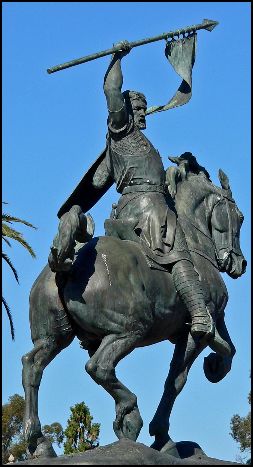
The film El Cid illustrates this concept. Charlton Heston in the title role was leading a Spanish army in a series of battles against the invading Moors, and just before the climactic confrontation, he was mortally wounded. His presence on the battlefield, however, was so important to the morale of his army that the few people who knew how badly he was hurt fastened him in his saddle and propped him upright so he could lead his troops into the fray.  Seeing their leader before them, the Spanish soldiers took heart and fought on to victory. If El Cid had not been there, or if he had slumped in the saddle, his army might have lost heart and gone down to defeat. The Church needs godly leaders as examples to follow.

Chuck
“Brothers, join in imitating me (Paul), and keep your eyes on those who walk according to the example you have in us.” (Philippians 3:17)

Titus 1:5

Do we need braces?

Paul told Titus why he left him on the Island of Crete. There were two reasons. The first reason is so that he might “set in order” what hadn’t been “set in order” yet. The root word from which the phrase “set in order” comes from is orthoo (or-tho-o). We get the medical specialties of orthodontics and orthopedics from that word. It literally means to make straight. Orthodontists straighten teeth, or put them in their proper order. Orthopedics is the setting of broken bones, or straightening of bent limbs. Apparently the church on Crete had some crooked teeth and some broken or malformed bones.

To push this analogy beyond the reasonable, the crooked teeth that needed to be “put in order” were those church members or teachers who refused to submit to the authority of the Apostles’ teachings or to the Apostles’ appointments of qualified leaders in the churches on the Island of Crete. They had their own agendas and caused great turmoil. Paul goes on to add a second reason for leaving Titus on the Island of Crete: that he “appoint elders in every church.” I could go on to push the analogy further and say that the “broken bones” in the church in Crete were those unqualified, self-appointed leaders who rejected apostolic authority and taught their opinions as doctrines of God causing great cacophony amongst the believers in the church. They were making disciples of their own personal opinions rather than making disciples of Jesus Christ. They added a system of works that confused the very Gospel message of salvation by grace through faith. This always results in division in the church and destroys the wonderful intended life of harmony amongst the believers of Jesus Christ.

Nothing functioned the way it should. The church looked like a mouth full of crooked teeth, uncooperative with order of God’s intended design. The church looked like a body with all it’s bones out of joint, a grotesque perversion of God’s creative order. God is a God of order. There is a rhythm in everything God created. You see it in the movement of the planets and stars, in seasons, in the beauty of the flowers of the field, in the surf of the sea, the beat of the human heart. God put all creation in perfect harmonious order. When we get out of tune, trouble results, strife erupts. Paul told the Romans and all the churches from their day to ours to “live in harmony with one another” (Romans 12:16).

Chuck
“I appeal to you, dear brothers and sisters, by the authority of our Lord Jesus Christ, to live in harmony with each other. Let there be no divisions in the church. Rather, be of one mind, united in thought and purpose.” 1 Corinthians 1:10

Titus 1:3

Preach the Word!

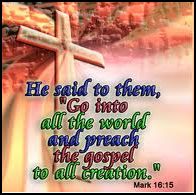
Paul continues to instruct Titus about the true principles involved in making disciples for Jesus Christ in the first chapter. It requires a commitment to God as Lord and Master. It requires commitment to the Mission the Lord has given us (See Matthew 28:19f). It requires commitment to the message of Jesus Christ specifically as contained in God’s Word, the Bible. It also requires a commitment to the “proclamation” of that truth. Today there is a strong trend toward the social gospel. I understand that to be a focus on doing good deeds locally and around the world without a proclamation of the Good News of Jesus Christ. But Paul always connects his actions with his faith just as Peter did in Acts Chapter 4. When he healed the crippled man, he declared to everyone that he did not do it, but that Jesus of Nazareth was the source of that healing. Both Peter and Paul made it a point to connect their good deeds with the message of Jesus Christ. When we do good for others, do we want them to think how good we are, or to see Jesus working in their lives through our ministry?

Paul writes to Titus in 1:3 that the message of Jesus is “the proclamation with which I was entrusted.” He’s recognizing that God as his Lord and master, has given him a sacred mission, and that sacred mission included God’s message about Jesus. Neither Paul nor Peter would cower to the pressure of society or the religious leaders of other faiths to silence that message. We shouldn’t either. Paul tells the Romans, the center of the Political world, “I am not ashamed of the Gospel because it is the power of God for the salvation of all who believer, to the Jew first and then to the Gentile.”

Paul illustrates his commitment to God’s Lordship, His God given mission, the message as revealed in Scripture, and to the proclamation of that to all who would hear. Paul was developing Titus as a disciple of Jesus Christ by his example. In other passages of Paul’s writings he tells other disciples that he was “set apart from his mother’s womb” for this mission. We were too! He tells the Colossians “he was made a minister according to the stewardship of God bestowed on him” for the benefit of others. We were too! He said he was “under compulsion” to preach God’s word. We should be also! He told the Corinthians, “woe to me, if I don’t tell others about Jesus.”

Chuck
“But life is worth nothing unless I use it for doing the work assigned me by the Lord Jesus—the work of telling others the Good News about God’s mighty kindness and love.” Acts 20:24

sewa motor jogja
© Chuck Larsen 2019. Powered by WordPress.