service genset jogja
Titus 1:9

Leadership & God’s Word

True Biblical leaders must lead by example. Paul gave Titus some very specific instructions regarding what kind of example leaders should be setting. He addressed alcohol, sexual conduct, reputation, anger, greed and many other things. Then he turns to a leader’s relationship with God’s Word.
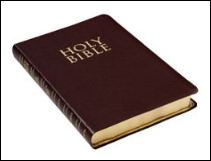
Jesus commissioned His followers to “Make Disciples” in what we often refer to as “The Great Commission.” He prefaces this commission with the phrase “all authority has been given to me in heaven and on earth, therefore go…” I’ve learned that the authority of Scripture is so rooted in and closely linked to the authority of Jesus Christ that the two are virtually indivisible. To attempt to distinguish them is like asking which blade of a pair of scissors is more important, or which leg of a pair of pants is more necessary. We know Christ through the Bible, and we understand the Bible through the knowledge of Christ and the Spirit he sent. Christ’s authority is given to us and we find that commission in the Bible.

The role of scripture in biblical leadership, disciple making, is indisputable. We can learn all about man’s social condition, his psychological makeup, his judicial systems, his educational disciplines, but the key to true leadership rests in a clear and comprehensive understanding of Scripture. Mortimer J. Adler, in “How to Read a Book,” has observed that the one time people read for all they are worth is when they are in love and are reading a love letter. They read every word three ways. They read between the lines and in the margins. They read the whole in terms of the parts, and each part in terms of the whole. They grow sensitive to context and ambiguity, to insinuation and implication. They perceive the color of words, the order of phrases, and the weight of sentences. They may even take the punctuation into account. Then, if never before or after, they read carefully and in depth.” Howard Henricks, a Professor at Dallas Theological Seminary, made us read that book and said that if you desire to be a leader of God’s people, you must Love God’s word and read it like a true lover. It’s God’s love letter to us. It is an absolute prerequisite to leadership and disciple making.

Chuck
“I have treasured the words of his mouth more than my portion of food.” Job 23:12

Matthew 6:12-14

Forgiveness – Good Medicine!

Studies are now showing forgiveness is not only good theology, but good medicine also. According to the latest medical and psychological research, forgiving is good for our souls—and our bodies. People who forgive:

• Benefit from better immune functioning and lower blood pressure.

• have better mental health than people who do not forgive.

• feel better physically.

• have lower amounts of anger and fewer symptoms of anxiety and depression.

• maintain more satisfying and long-lasting relationships.

In his book, “To Forgive is Human: How to Put Your Past in the Past,” Michael McCullogh, the director for the National Institute for Healthcare Research, said, “When we allow ourselves to feel like victims or sit around dreaming up how to retaliate against people who have hurt us, these thought patterns take a toll on our minds and bodies.”

I read that John Stott quoted the administrator of the largest psychiatric hospital in London who said, “If the people here only knew what it means to be forgiven, I could dismiss half of them at once.” I also read that Billy Graham said he believes that 75 percent of patients in hospitals would be made whole if they would forgive. Forgiveness, given and received, is medicine for our souls and for our bodies. When we get back what we give to others, it’s often called “taking your own medicine.” Forgiveness is always the best medicine.

Chuck
“…and forgive us our trespasses as we also forgive those who trespass against us…For if you forgive others their trespasses, your heavenly Father will also forgive you…” Matthew 6:12-14

Jeremiah 31:34

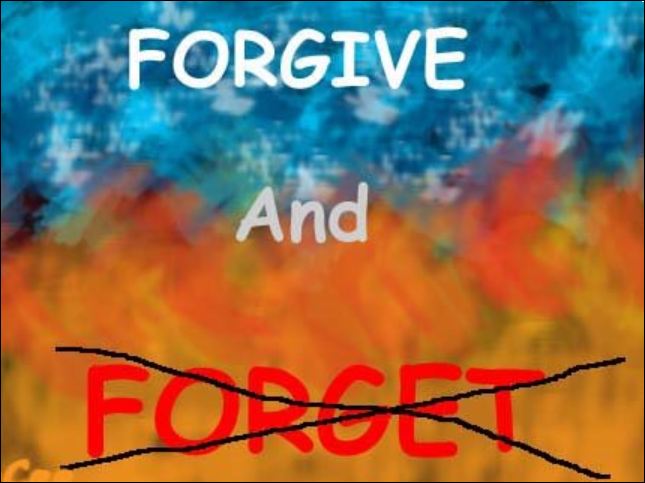
Forgive & Forget!

It’s easier to forgive than it is to forget. I’m often asked by people who are deeply struggling with pain suffered at the hands of others. They confess that they have forgiven, but they just can’t forget. I know about this from experience and I know the difficulty it brings in our lives. God forgives us, and he even forgets our sins. He promised to bury them in the deepest part of the sea. He promises to remove them from us as far as the east is from the west. But for me, I forgive, but I very often just can’t forget! Many feel that if they can’t forget about it, then they haven’t forgiven. I would argue that you don’t have to forget to forgive. Forgiveness can be sincere even though you still remember.

Forgiveness is a choice. Forgetting is often too intimately connected with our emotions. When we choose to forgive we face the sin and deal with it rather than avoiding or ignoring it or suppressing it. If you feel you must forget before you can forgive you will find forgiveness nearly impossible at times. We all remember sinful acts done against us and when those memories flash across our minds the feelings associated with them are always aroused again and again. But if we remember that forgiveness is a choice then you can say at each time of remembrance, “No matter how many times I remember the pain you have caused me, I have chosen to forgive you and will never retaliate or strike back. I leave justice in the hands of an all knowing God.” It is through this act of the will that we will eventually workout the pain and with God’s help, learn to forget.

The alternative to forgiveness is to live in constant slavery to your emotions. If that’s the case, we often live in a ceaseless process of hurt, bitterness, anger, resentment and self-destruction. I like the way one writer spoke about it. He said, “Forgiveness is a miracle of the will… and even has creative power to move us away from a past moment of pain, to unshackle us from our endless chain of reactions, and to create a new situation in which both the wrongdoer and the wronged can begin a new direction in life.”

Chuck
“For everyone, both great and small, shall really know me then, says the Lord, and I will forgive and forget their sins.” Jeremiah 31:34

Luke 23:34

A Word of Forgiveness

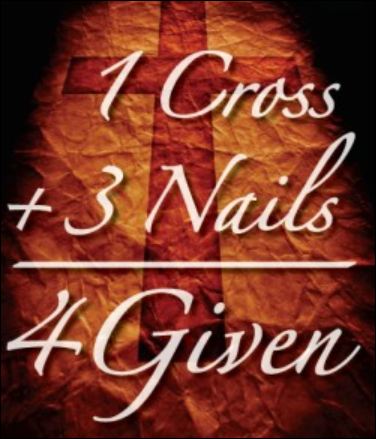
While on the cross, Jesus spoke seven distinct phrases. The first word from the cross was a word of forgiveness. He said, “Father, Forgive then…” (Luke 23:34). We all understand what forgiveness is because we’ve all needed it from others and we’ve all had to offer it to others. To forgive someone is to release them from the debt they owe because of a wrong they’ve committed against us. There are three elements associated with forgiveness; first, a wrong has been committed. Second, a debt is accrued because of that wrong. Third, there is a cancelling of that debt. It acknowledges the hurt but releases one from any obligation towards the debt.

The essence of forgiveness is also threefold and is seen in the three words that Jesus spoke from the cross. First, The source of forgiveness is the Father. The source of all forgiveness is God. Human beings cannot forgive the debt of sin that we owe to God. The church cannot forgive the debt of sin we owe to God. Religious ceremonies and liturgies cannot forgive the debt of sin we owe to God. Only one person can forgive sin. Second, the means of forgiveness is Jesus. He said “forgive.” All sin must be recompensed, the debt must be satisfied. Jesus is the mediator of all sin. He came to earth for this purpose, to suffer and die and rise again so that through Him we could be forgiven by a perfectly righteous God. Finally, the benefactors of forgiveness are all of us associated with the word “them.” It’s Jesus offering Himself, on the cross, as the payment for all sin to cancel our debt and to set us free from our obligation because of our sin. We can be the benefactor of God’s forgiveness through Christ if we but acknowledge the wrong and accept Christ’s sacrifice on our behalf.

It costs to forgive…forgiveness takes place when the person who was offended and justly angered by the offender bears his own anger, and lets the other go free. Anger cannot be ignored, denied, or forgotten without doing treachery in hidden ways. It must be dealt with responsibly, honestly, in a decisive act of the will. This is how God dealt with His wrath on sinful man. He bore His own wrath on the Cross for us and through our faith in Christ, He sets us free.

Chuck
“But with you, O Lord, there is forgiveness…” Psalm 130:4

Nehemiah 9:17

Do Not Forsake Me!

One of the most profound truths we glean from the Bible is the truth about God’s character. From the creation account in the book of Genesis to the final countdown in Revelation we see God’s omnipotence (He can do anything), His Omniscience (He knows everything), and His Omnipresence (He’s everywhere at the same time). But what matters most of us as human beings is the nature of God as He relates to us, His fallen creatures. How will this “Omni” God deal with us in our frail moral character? God wants us to understand what He’s like and how He relates to us. That’s why he gave us the Bible.

With respect to our weaknesses he wants us to always remember that He’s a God who forgives. He will not forsake us! That is, He will never leave us to face the world and sin alone. He will always be there for us and is standing ready to forgive and restore at every moment, even when we turn away from Him. As Nehemiah reviewed the history of Israel’s people, he inspired the new generation with the reminder of this character trait of God. He tells them, “They refused to obey and were not mindful of the wonders that you performed among them, but they stiffened their neck and appointed a leader to return to their slavery in Egypt. But you are a God ready to forgive, gracious and merciful, slow to anger and abounding in steadfast love, and did not forsake them” Nehemiah 9:17.

I remember the old movie “High Noon.” I have the song with the same name sung by Tex Ritter in my mp3 collection. Yet, I like Frankie Laine’s version better. It begins with the words, “Do not forsake me…” This phrase shows up a remarkable number of times in the bible. Do not forsake me (Ps. 27:9; Ps. 38:21; Ps. 119:8); do not leave me to my oppressors (Ps. 119:121); do not turn away the face of your anointed (Ps. 132:10); do not cast me from your presence (Ps. 51:11); do not cast me off in old age (Ps. 71:9; Ps. 71:18); do not forsake me when my strength fails (Ps. 71:9); do not forsake the work of your hands (Ps. 138:8); do not forsake us (Jer. 14:9); do not reject us forever (Ps. 44:23); may he not leave us nor forsake us (1 Kgs. 8:57). The bottom line is that He will never forsake us!

Chuck
“Do not fear or be in dread …for it is the LORD your God who goes with you. He will not leave you or forsake you.” Deuteronomy 31:6

Titus 1:8

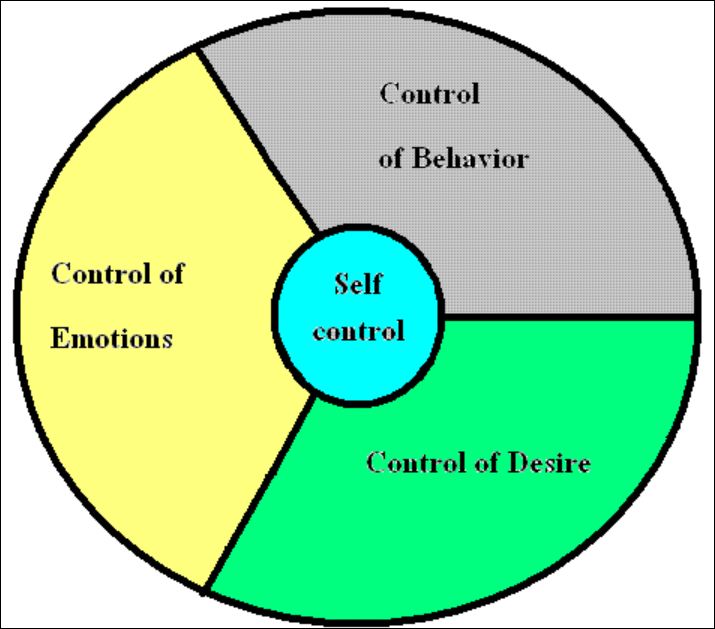
Self-Control

Paul instructs Titus to look for people who exercise self-control, because they are the ones who lead best by example. Self-control is one of the fruits of the Spirit according to Paul’s letter to the Galatians; “love, joy, peace, patience, kindness, goodness, gentleness, faithfulness and self-control.”

Self-control is not a popular idea in today’s market. We are prompted to have everything and anything we want right now and there’s no need to wait. We are even taught in the media that unfulfilled or repressed desires and drives lead to great harm. Yet, the very opposite is true. When desire gains the upper hand it is always deadly. It always results in more pain and seldom comes through on it promises. Self-control is nothing more than delaying gratification at the moment for some greater gratification in the future. Self-control is learning to put off the pleasures of the moment for greater rewards in the future. The rewards of the moment are always temporary and according to Jesus will not last. That’s why he tells us to lay up for ourselves rewards in heaven where neither rust nor decay can touch them.”

Self-control serves us all well as proven by one psychologist. At a preschool on the Stanford University campus he told children that they could have a single treat, such as a marshmallow, right now. However, if they would wait while the experimenter ran an errand, they could have two marshmallows. Some preschoolers grabbed the marshmallow immediately, but others were able to wait what, for them, must have seemed an endless 20 minutes. To sustain themselves in their struggle, they covered their eyes so they wouldn’t see the temptation, rested their heads on their arms, talked to themselves, sang, even tried to sleep. These plucky kids got the two-marshmallow reward. The interesting part of this experiment came in the follow-up. The children who as 4-year-olds had been able to wait for the two marshmallows were, as adolescents, still able to delay gratification in pursuing their goals. They were more socially competent and self-assertive, and better able to cope with life’s frustrations. In contrast, the kids who grabbed the one marshmallow were, as adolescents, more likely to be stubborn, indecisive, and stressed.

Chuck
“God gave us a spirit not of fear but of power and love and self-control.” 2 Timothy 1:7

Titus 1:8

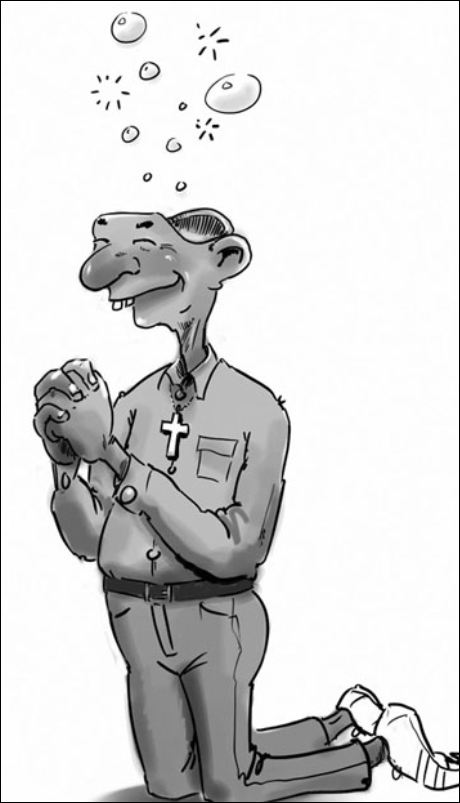
Piety

Piety is often misunderstood. When Paul instructed Titus to look for those who were “pious” he didn’t mean to look for those who “looked” pious. Looks can be deceiving. Jesus was always confronting those who “looked” pious and put on religious heirs before the public, yet they were filled with decay on the inside like a casket. It doesn’t matter how beautiful the casket. When Howard Carter and his associates found the tomb of King Tutankhamen, they opened up his casket and found another within it. They opened up the second, which was covered with gold leaf, and found a third. Inside the third casket was a fourth made of pure gold. The pharaoh’s body was in the fourth, wrapped in gold cloth with a gold face mask. But when the body was unwrapped, it was leathery and shriveled. Whether we are trying to cloak a dead spiritual life, or something else, in caskets of gold to impress others, the beauty of the exterior does not change the absence of life on the interior.

Paul doesn’t tell us we “cannot” observe rituals or ceremonies, but he does tell us not to be controlled by them. Further, he does not condemn works of righteousness. He commends them! James suggests that it is good deeds that make faith pure. He says, “Religion that is pure and undefiled before God, the Father, is this: to visit orphans and widows in their affliction, and to keep oneself unstained from the world” (James 1:27). It seems that without these acts we cannot be pious, but it is not these acts that make us pious. Piety is more associated with motive than behavior.

I once read that There are four great compelling motives that move men to action: Fear, Hope, Faith, and Love—these four, but the greatest of these is Fear. Fear is first in order, first in force, first in fruit. Indeed, fear is “the beginning of wisdom.” Scripture summarizes the chief cause of sin and crime: “There is no fear of God before their eyes.” Indeed, piety is seen in those who fear the Lord.

Chuck
“And let us work toward complete holiness because we fear God.” 2 Corinthians 7:1

Titus 1:8

A Sense of Fairness

Another thing that Paul tells Titus to be on the lookout for in the lives of people is their sense of fairness. The word “dikaios” in this context refers to that which is equitable and just and right in our dealings with others. Those who reflect this character trait are reflecting God’s nature and are excellent examples for others to follow. Paul focuses his attention on this when he writes to the Colossians. Colossae was a rich city. Philemon, the slave owner, lived there as did many other very wealthy families. Paul addresses them directly when he says, “Masters, treat your slaves justly and fairly, knowing that you also have a Master in heaven” (Colossians 4:1).

We’re all leaders and we all set an example whether we are aware of it or not. There are others watching us all the time and honesty is always the best policy. True leadership begins with character. Our behavior says so much more about us and teaches what we value so much more thoroughly than what we say, that one must be constantly aware of and in charge of their actions. I remember reading a story about Johnny. As young Johnny reached for the ringing phone one Saturday, his dad sighed through his teeth: “If it’s the guy from the office, tell him I’m not home.” That evening the family went out for dinner. Before leaving the restaurant, Johnny’s mother looked at the check and mentioned that the waitress had undercharged them. “That’s their tough luck,” mumbled the father. On the way home, they joked about the box that dad had bought for the dashboard of the car. He called it the “fuzz buster” and bragged that it had already paid for itself when considering the speeding tickets he might otherwise have received.
Later that night, as Johnny finished his Sunday-school lesson, he thought what a good Saturday it had been. How much better than last weekend—when his father had grounded him for cheating on his arithmetic test.

I can’t speak for everyone, but I agree with the guy who said, “The probability of someone watching you is proportional to the stupidity of your actions.” The more stupid the action, the more certain you can be that there are others watching you! But the Scriptures teach us to develop a character that’s the same whether someone is watching or not. We’re not supposed to be one way when others are watching us and another way when we’re alone.

Chuck
“For God is closely watching you, and he weighs carefully everything you do.” Proverbs 5:21

sewa motor jogja
© Chuck Larsen 2019. Powered by WordPress.