
service genset jogja
Jeremiah 9:23-24

The Perfect Gift

Gifts are a big part of Christmas and the day is rapidly approaching for families to gather together and exchange them. We’ve made lists of all the favorite things our loved ones delight in, purchased our selections accordingly, wrapped them lovingly, and secured them with hopeful expectation under our trees. All that remains is the anticipation of how our gifts will be received. Do we really know our loved ones? Do we know them well enough to predict what they would like or not like? Will our selections bring them delight or disappointment? Will they illicit joy and excitement or will they be tossed aside to make room for the next one? It’s no wonder Christmas is so stressful!

What gift are you giving God this Christmas? Do you know Him well enough to find the right gift? Do you know what kind of gift He would truly delight in? Thankfully, the Bible tells us. In Jeremiah 9:23 the Lord says “Let not the wise man boast in his wisdom, let not the mighty man boast in his might, let not the rich man boast in his riches.” Okay then, God does not delight in your wisdom, your might, or your riches. You’ll have to look elsewhere for your gift for Him. The next verse says “But let him who boasts boast in this, that he understands and knows me, that I am the Lord who practices steadfast love, justice, and righteousness in the earth. For in these things I delight!” Ah, there it is! God’s favorite things are steadfast love, justice, and righteousness.

Before you rush off to do your shopping, scrounging around those bargain bins for discount love, half-price justice, or last year’s righteousness, please know this: you can only present God with one gift, and underneath God’s tree is a gift which has already been sealed and delivered. It’s from Christ Himself and it contains all of His matchless love, His divine justice, and His perfect righteousness. And He signed it from the both of you. Every other gift God opens will be tossed aside to make room for the next one. But when He opens the gift Christ picked out for Him, He will be filled with pure delight! Because no one really knows the Father and what He likes, except the Son. So rejoice! Your shopping around for a gift that would please God is no longer necessary. Your gift is already there, presented by Christ, beautifully wrapped and waiting under His tree with your name on it. You can be genuinely and confidently excited and filled with joy to see Him open it because He is going to LOVE it!

Genesis 1:1, Romans 5:8

God is the subject!

The Bible begins with a prepositional phrase: “in the beginning.” The next word gives us the subject of the sentence; “God.” Then follows the predicate which goes on to tell us what the subject did: “created the heavens and the earth.” We can learn a lot about God by studying what He created. Everything in the world shouts out the greatness of God. It’s obvious that if God is the cause of everything that exists, He’s greater than what He created and everything just “declares” His glory as the Psalmist says. Although we can see the glory and majesty of God in the creation we can only learn about his character, his nature, his interests and his dealings with both the created order and mankind from the Bible. The Bible was written to teach us about God. God is not only the subject of the first sentence of the Bible, He’s the subject of the whole Bible.
To a large extent churches miss this truth and reduce the Bible to a selection of self-help practices. We hear sermons on Joseph teaching us how to manage our affairs. Abraham teaches us that we must surrender even our most precious things to God. The prayer of Jabez becomes a step by step process of how we can get God to increase our influence in life. Jonah becomes a story about the futility of running from God and resisting God’s call on our lives. David’s victory of Goliath becomes a series of lessons on how we too can fell the giants in our own lives. Bryan Yawn writes, “Fact is, the same sort of life lessons could be derived from any contemporary biography or history. The meanings and applications we’ve given these events have nothing at all to do with what’s going on in the true story.” Bryan is absolutely right!

Only the Bible can teach us about God! It’s about God’s love for His people and His divine redemption of them through His one and only son Jesus Christ. It’s not about what man has done to impress God. It’s about what God has done for man. The Bible is not about how God would occasionally step into time to applaud the faith of a few individuals. It’s not at all about how we can learn to become better people! It’s about our failure to be the people we should be and how God loves us and sends His son to die for us anyway. Romans 5:8 tells us that “God demonstrates His love for us in this; while we were still sinners, Christ died for us.” Trying to live up to the standards of Biblical figures drives me to the realization that I fall way short. I don’t need an example to follow. When I’m drowning I don’t need a man standing on the dock making swimming motions and yelling, “go like this!” I don’t need someone to throw me a life saver either. I need someone to jump into the ocean of my sin and save me! Guess what! That’s what the Bible is about: Jesus!

Genesis 4:2-5, Isaiah 64:6, Ephesians 2:8-9

The Works of our Hands

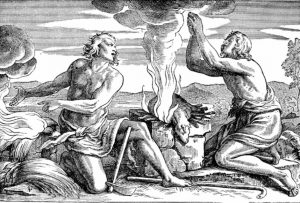
In Genesis 4:2-5 we read about the the sacrifices of Cain and Abel: “Now Abel was a keeper of sheep, and Cain a worker of the ground. In the course of time Cain brought to the LORD an offering of the fruit of the ground, and Abel also brought of the firstborn of his flock and of their fat portions. And the LORD had regard for Abel and his offering,  but for Cain and his offering he had no regard.” What was it that made Cain’s sacrifice unacceptable? It seems that we see grain offerings and first fruit offerings pleasing to God in the Bible so what caused God to disregard Cain’s offering?
I think the answer is found in the way the translators of the English Standard Version handle verse 2. Abel was a “keeper” of sheep. I believe he recognized that the sheep were not his but were something that God had given him. He might feed them and care for them but  only God can produce them. As Abel saw them, they were resources entrusted in his care by God. On the other hand, Cain was a “worker”of the ground. You only get from the ground what you sow into it. It was hard work because the ground had been cursed in the previous chapter requiring the labor of sweat to produce its yield. As Cain saw them, they were the wages of his own hard work with which he expected to earn God’s favor. The problem with Cain’s approach is that he thought he could earn or deserve God’s favor by making a sacrifice from the works of his own hands. But according to Isaiah 64:6 all of our “righteous deeds are as filthy rags” to God. I expect Cain’s spirit was a proud and boastful one and thus when his sacrifice was not regarded as highly as Abel’s  he became angry. It is clear in Ephesians 2:8-9 that we are saved “by grace alone and not by works” so that no one has any reason to boast. Abel simply gave back to God what God had given him. Cain brought the crops which he saw as the product of his own labor.

I often feel that if I give God something I can earn favor with God. But once again I see that it’s not about what I do for God or give to Him. It’s all about what He did and what He gave to me.  When Abraham was ready to offer His own son as a sacrifice God stopped him. God did not want Abraham to believe He had to give something to God but rather God Himself provided the sacrifice by way of the sheep caught in the bushes near by. It was this lamb that Abraham offered on the Altar at Mount Moriah. And as John the Baptist made perfectly clear Jesus was “the lamb of God that would take away the sins of the world.” It was this lamb that was offered as our sacrifice on Mt. Moriah years later.  With new meaning I sing, “nothing in my hand I bring, solely to the cross I cling.”

Isaiah 9:6

A Son is Given

All throughout Scripture, God demonstrates His sovereignty over the affairs of men, inviting us back into a relationship of trust and dependence on Him. I couldn’t even begin to enumerate the multitude of ways He did this. When mankind was thriving and families were growing into nations, God said to Abraham “I will make you into a great nation.” When men were conquering and possessing vast territories, God said to Abraham “I will give you all your territory.” God  chose to make for Himself this nation and give them their land to demonstrate to the whole world His majesty and sovereignty over all our affairs.

One aspect among the affairs of men over which God was most fond of demonstrating His power and authority was regarding childbirth. In all Abraham’s travels, it appeared to him that men everywhere in every nation were having all the children they wanted, whenever they wanted them. But God made childbirth for Abraham and Sarah impossible in order to demonstrate to the world that He Himself is the one who gives children. Not only was Sarah not able to have children but even if she could, God took Abraham and Sarah well beyond the years where childbirth would have been possible before He stepped in and gave them a child.

Abraham named him Isaac which means “laughter” and when he was born, Sarah said “God has given me laughter! And everyone who hears about this will laugh with me, for who could ever believe that I would have a child!” This was truly something remarkable and we know Isaac gave this a lot of thought because Genesis 24:63 says he was fond of meditating out in the fields. So when he realized his wife Rebekah was also childless, he knew he could turn to the Lord as he does in Genesis 25:21, and God heard his prayer and gave him twin sons, Esau and Jacob.

When Jacob’s wife Rachel was also childless, she demanded he give her children. This made Jacob angry and he said “Am I God? He is the only one able to give you children!” Rachel must have taken this to heart because she began praying and in Genesis 30:22, God answered her prayers and gave her a son. Yes, this was a people and a nation created by the will of God with a territory inherited by the promise of God. Many years later when God needed to send a judge for His people, he gave a child to a childless woman who named him Samson and many years after that, when God needed to send a prophet to His people, he gave a child to a childless woman who named him Samuel.

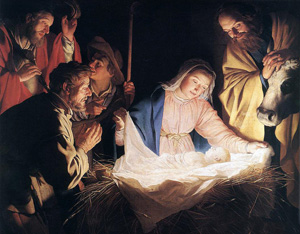
Many years later, when the oppression of this people’s sin cast them into darkness, the prophet Isaiah reaffirms this promise from God: “Nevertheless, this time of darkness and despair will not go on forever… The people who walk in this darkness will see a great light… For God will break the chains that bind His people and the whip that scourges them.” How would He do this? By giving them a son! “For unto us a child is born; unto us a son is given!” The miracle of this child being born to a virgin was a sign given to affirm this promise God made to His people so when the world witnessed the sign of a virgin birth, we would know this promise would be fulfilled.

Christmas is a memorial. It’s the time of year those of us who have faith in this child remember that we were once slaves to sin. We were bound hand and foot with the chain of its oppression and tormented by the whip of its condemnation. In a world where men fought to free themselves, God says “I will be your salvation.” The child He sent was bound in our chains, whipped with our condemnation, and dragged down to the depths of death itself. Then He shattered the chains, broke the whip, and rose again! Our chains have been broken! Our torment has ceased and death has no more power over us! Joy to the world! The Lord, our deliverer, our salvation, has come!

Genesis 1:2-3, John 1:2-3, Isaiah 9:2-6

Christmas Lights!

We enjoy driving around Blair at night checking out all the Christmas lights. Some people really get into the Christmas spirit and you can see it all over their houses. I haven’t gone by a house quite like the one Chevy Chase decorated in the “Christmas Vacation” movie, but we have some good ones! The lights really seem to bring our city to life. The lights seem to bring each house to life as well. Isn’t that what Christmas is all about?
I think of the very first passage in the Bible that tells us that at creation “darkness was over the face of the deep and the Spirit of God was hovering over the face of the waters. And God said, ‘Let there be light,’ and there was light” (Genesis 1:1-3). Now skip forward to the Gospel of John. It begins the very same way that Genesis begins; “in the beginning.” In John we read about Jesus coming into the world. John 1:2-3 says, “In him was life, and the life was the light of men. The light shines in the darkness, and the darkness has not overcome it.” And again, one of our favorite Christmas passages in Isaiah says, “The people who walked in darkness have seen a great light…For to us a child is born, to us a son is given; and the government shall be upon his shoulder, and his name shall be called Wonderful Counselor, Mighty God, Everlasting Father, Prince of Peace” (Isaiah 9:2-6).

I love the Christmas lights! I’m reminded that Christmas is about Jesus coming into the world and as the “light of the world” he brings the whole world to life. “In Him was life.” He lights up the world the same way Christmas lights light up the city; one house at a time! I love the Christmas lights because I know there is still a lot of darkness in the world. We see it in the news everyday! There is also a lot of darkness in some homes in Blair and in the world, but the lights remind me that light shines best in darkness and the darkness will never overcome the Light. I’m praying that the light will disperse the darkness, both in the world and in our homes. Merry Christmas!

Psalm 100:4-5

Unfailing Love

He took my death and called it His own
But my death was swallowed up by His life
Because in Him is life everlasting
He gives me His life and calls it my own
Now life everlasting is mine!
His unfailing love continues forever

He took my sin and called it His own
But my sin was swallowed up by His righteousness
Because in Him is righteousness beyond measure
He gives me His righteousness and calls it my own
Now righteousness beyond measure is mine!
His unfailing love continues forever

He took my shame and called it His own
But my shame was swallowed up by His glory
Because in Him is glory everlasting
He gives me His glory and calls it my own
Now glory everlasting is mine!
His unfailing love continues forever

He took my defeat and called it His own
But my defeat was swallowed up by His victory
Because in Him is victory without end
He gives me His victory and calls it my own
Now victory without end is mine!
His unfailing love continues forever

He took my sorrow and called it His own
But my sorrow was swallowed up by His joy
Because in Him is joy everlasting
He gives me His joy and calls it my own
Now joy everlasting is mine!
His unfailing love continues forever

He took my disobedience and called it His own
But my disobedience was swallowed up by His obedience
Because in Him is perfect obedience
He gives me His obedience and calls it my own
Now perfect obedience is mine!
His unfailing love continues forever

I am my beloved’s and He is mine
And I will be called by His name
For He has made an everlasting covenant
And it shall stand for all time


“Enter His gates with thanksgiving, go into His courts with praise. Give thanks to Him and bless His name. For the Lord is good. His unfailing love continues forever, and His faithfulness continues to each generation.” Psalm 100:4-5

Romans 9:16, John 8:34

The Chariot of Iscariot

At the last supper, as recorded in each of the four gospels, Christ made two predictions. The first was that one of their number, one they considered a friend and shared meals with, would betray Him. And of course we all know He was referring to Judas Iscariot, one of His disciples. He signified the inevitability of this prediction by quoting the prophecy from Psalm 41 which reads “the one who shared my food has turned against me.” In fact, John 6:64 makes it very clear that Christ knew all along who would betray Him. Even the price of His betrayal, 30 pieces of silver, was prophesied centuries earlier in Zechariah 11:12.

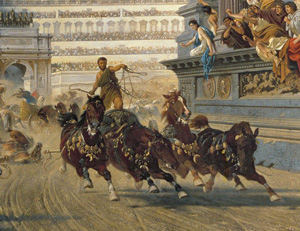
Judas was a man who was not free. His will was in bondage to his own sinful nature. It’s as if he was bound hand and foot, blindfolded, and chained to a chariot charging headlong toward destruction. He was unable to recognize his perilous condition, incapable of freeing himself from his bondage, and far from able to grab the reigns of his chariot and bring it to a halt, let alone turn it around. This is the condition of man described by Paul in Romans chapter 1. We are a rebellious people, driven along in bondage to sin, leading ultimately to all kinds of immoral and shameful behaviors. Judas had no interest or desire whatsoever to do what was right and was carried away into sin.

The other prediction Christ gave at the last supper was concerning His remaining eleven disciples. Christ told them that they would each desert Him and be scattered. In Matthew, He signified the inevitability of this prediction by quoting another prophecy from Zechariah which reads “God will strike the Shepherd and the sheep of the flock will be scattered.” Peter, who I believe we can agree was the most strong willed of the group, refused to concede. “Even if everyone else deserts you, I never will!” he exclaimed. Jesus reveals to Peter that his desertion will be the most egregious, for Peter will in fact deny that He even knows Jesus. And not just once, but three times. In Matthew we read that Peter vows this would never happen and in fact, all the other disciples vowed the same. Of course we all know they did scatter and desert Him when a throng of armed men led by Judas marched into the garden to arrest Him. And Peter, the most adamantly committed to his vow, did in fact deny Jesus three times.

You see, Peter and the rest of the disciples, just like Judas, were not free men. They were in fact, men in bondage to their own sinful natures. They were each bound hand and foot, blindfolded, and chained to the same chariot which drove Judas so relentlessly. And like Judas, they were unable to recognize their perilous condition, incapable of freeing themselves, far from able to grab the reigns of this chariot and slow it down, let alone turn it around. This is the condition of man described by Paul in Romans chapter 2. These are those who say “We would never do those wicked things!”, the things mentioned in chapter 1, and yet they do them all anyway. Paul warns them that their punishment and destruction is assured just as much as these others. Peter and the disciples had EVERY desire to do what was right, but were carried away into sin regardless.

Jesus made it clear countless times throughout His ministry that salvation is from God. As Paul says in Romans 9:16, our salvation “depends not on human will or effort, but on God who has mercy.” Jesus tried to warn His followers that they were slaves to sin in John 8:34 but they refused to recognize their perilous condition, insisting that they were free men. Jesus then asks and answers his own question, “Why can’t you understand what I’m saying?” He answered “because you are unable to do so!” In fact, Jesus explained that this lie, this denial of our bondage to sin, shows us to be sons of our father the Devil for he is the father of this lie and all lies. In John 6:63 Jesus said “It is the Spirit who gives eternal life. Human effort accomplishes nothing” and in John 15:16 He tells His disciples “You did not choose me, I chose you.”

It is both the greatest comfort and the strongest assurance to affirm that I did not choose God, God chose me! My will and my choices are meaningless, insignificant, and utterly powerless. Jesus warns us not to make any vows in Matthew 5:36 because by our own will we can’t even turn a single hair on our head white or black. Instead, like Paul says in Philippians 3:3 “We put no confidence in human effort. Instead, we boast about what Christ Jesus has done for us.” I have been saved by the will of God and not by my own will and my salvation is as sure and eternal as the God who willed it. Paul challenges us in I Corinthians 4:7 to ask ourselves whether we have anything at all which we have not received as a gift from God. And if we have received it – all of it – as a free gift, why do we boast as if we have earned any part of it?

Luke 2:34, Exodus 28:35

I Love Those J-I-N-G-L-E Bells!

Christmas is a time for bells. Sleigh bells, jingle bells, silver bells. Pretty much any kind of bell in fact. Bells are generally associated with celebrations and in our country especially, with freedom and liberty. The most famous bell is the Liberty Bell which is on display in Philadelphia, Pennsylvania. It is believed this bell was rung to mark the reading of the Declaration of Independence.

In contrast to the bell, the hammer is generally considered a symbol of judgement, oppression, and condemnation. The hammer along with the sickle was the symbol of the former Soviet Union. A hammer is an instrument of labor mostly appropriated for breaking things apart or forcing things together. It’s heavy, blunt, and makes a most unpleasant sound. It symbolizes effort and striving. Whenever you hear the sound of a hammer, you know someone is hard at work.

Bells aren’t tools used for anything and require no effort. You can hear bells all day simply by attaching them to any part of your clothing. Attach one to your cat and you’ll hear it ringing all day long from a creature who doesn’t even have opposable thumbs! According to Exodus 28, bells were attached around the hem of the robe worn by Aaron, the high priest, as he ministered in the Holy Place. Verse 35 tells us that the sound of the bells would be heard as he entered and as he left so that he would not die. Here we see how the sound of bells signaled God’s mercy instead of His judgement.

Christmas is a time to put down our hammers and put on our bells. Because God’s grace and mercy have come, we are delivered from judgement, oppression, and condemnation. Christ has purchased our freedom and delivered us from our bondage to sin! In Luke 2:34, when he saw baby Jesus, Simeon said to Mary “This child will be rejected by many… but He will be the greatest joy to many others.” I hope for you this Christmas, Christ is your greatest joy and you can join me and a host of angels in proclaiming “Glory to God in the highest, and on earth peace, good will toward men.” Let our freedom in Christ jingle!

sewa motor jogja
© Chuck Larsen 2019. Powered by WordPress.